How to Spray Paint Plastic Step by Step
To spray paint plastic, start by cleaning the surface with soap and water. Then, sand lightly using 180-220 grit sandpaper to create a smooth base for the paint.
Next, wipe away dust and clean the area with mineral spirits or alcohol. Make sure the surface is completely dry before you move on to the next step.
Apply a plastic-specific primer in thin coats. This helps the paint stick better and lasts longer.
When you’re ready to spray paint, hold the can 8-12 inches away from the surface. Use smooth, overlapping motions with light layers to avoid drips and uneven coverage.
Let each coat dry completely before applying the next one. This will give you a smooth, lasting finish that looks professional.
Keep going to uncover tips for a flawless result!
Key Takeaways
- Thoroughly clean and sand the plastic surface to remove dirt and create texture for better paint adhesion. This step is super important because it helps the paint stick better.
- Apply a plastic-specific primer in thin, even coats and let it dry completely before painting. You want to be patient here to avoid any peeling later on.
- Spray multiple light coats from 8-12 inches away, using smooth, overlapping strokes at a 45° angle. Don’t rush it; light coats work better than one heavy one.
- Wait 30-60 seconds between coats and ensure each layer dries fully to avoid drips and uneven coverage. This little pause makes a big difference.
- Allow proper curing time after the final coat for a durable, professional-quality finish. Trust me, giving it time to cure pays off in the long run.
Preparing and Priming Plastic Surfaces

Before you start spray painting plastic, make sure you thoroughly clean the surface with soap and water to remove any dirt, grease, or chalking. This preparation step is essential for proper paint adhesion.
Once the surface is clean and dry, lightly sand it using 180-220 grit sandpaper to create a smooth, rough texture that helps the primer stick better. After sanding, wipe away all dust with a dry cloth.
Lightly sand with 180-220 grit sandpaper, then wipe dust away for better primer adhesion.
Then, use a damp rag soaked in mineral spirits or isopropyl alcohol to remove any remaining particles. When the surface is completely clean and dry, apply a plastic-specific primer in thin, even coats.
This primer enhances adhesion and prevents peeling during paint application, ensuring a durable finish. Always let the primer dry fully before moving on.
Applying Spray Paint and Finishing Techniques
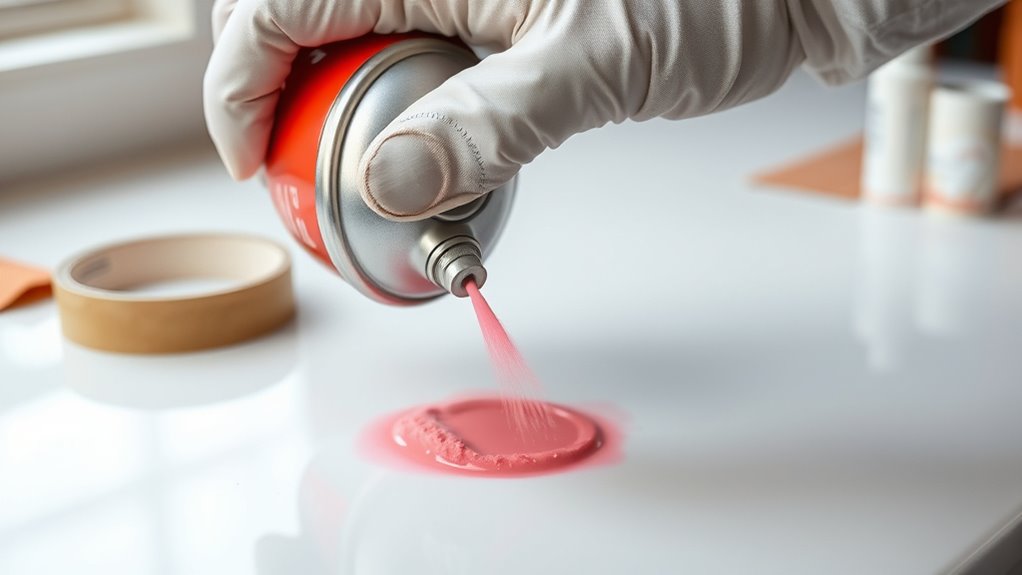
When you’re ready to apply spray paint, start with multiple light coats rather than one heavy layer. This helps avoid drips and guarantees even coverage.
Hold the spray can at the proper distance of 8-12 inches from the surface. Use smooth motions, spraying at a 45° angle, and overlap each pass by about one-third to prevent streaks.
Begin and end each pass off the surface to avoid paint buildup on edges. Between coats, wait 30-60 seconds to let the paint set. This layering ensures consistent color and durability.
After applying the final coat, make sure to allow adequate curing time as recommended by the manufacturer before handling or adding topcoats. Proper surface preparation combined with these finishing techniques will give your plastic a flawless, long-lasting finish.
Frequently Asked Questions
What Is the Easiest Way to Spray Paint Plastic?
The easiest way to spray paint plastic is to use a spray paint made specifically for plastic. You’ll want to clean, sand, and prime the surface first.
Then, apply multiple light coats, holding the can 8-12 inches away for the best results. This helps avoid drips and gives you a smooth finish.
Do I Need to Prime Plastic Before Spray Painting?
You know what they say, “An ounce of prevention is worth a pound of cure.”
Yes, you should prime plastic before spray painting to make certain better adhesion, prevent peeling, and achieve a smoother, longer-lasting finish.
Priming really helps the paint stick better and makes your project look more professional. It’s a small step that can save you a lot of hassle down the road.
What Kind of Spray Paint Works Well on Plastic?
You should use spray paints formulated for plastic, like Krylon Fusion or Rust-Oleum Plastic Primer. These bond well and last longer.
Avoid regular spray paints unless they’re labeled for plastic. Also, consider using primers if you’re working with acrylic options. It really helps with adhesion and durability.
What Should I Wipe Plastic Down With Before Painting?
You should wipe plastic down with a clean, damp cloth to remove dust and dirt. For greasy spots, use isopropyl alcohol or mineral spirits.
Make sure the plastic is completely dry before you start painting. That way, the paint will stick better and give you a smoother finish.
Conclusion
Now that you know how to prepare, prime, and spray paint plastic properly, you’re set to transform any item with a smooth, lasting finish.
Did you know that over 60% of DIYers say their biggest challenge is paint not sticking well to plastic? By following these steps, you’ll avoid common pitfalls and get professional-looking results every time.
So, grab your spray paint and get ready to refresh your plastic projects with confidence! With the right preparation and technique, spray painting plastic can be easy and rewarding. Just take your time, follow the steps, and watch your plastic items come to life with a durable, vibrant coat. Happy painting!