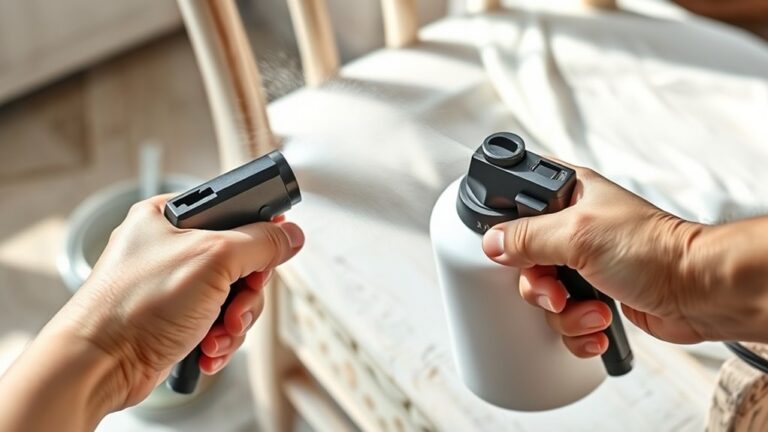
How You Can Spray Paint Vinyl Step by Step
To spray paint vinyl, start by cleaning the surface thoroughly with a degreaser. This step is crucial because it removes dirt, oils, and grime that can prevent the paint from sticking properly. After cleaning, rinse the vinyl well and dry it completely to prepare for painting.
Next, apply a vinyl-compatible primer. This primer ensures that the paint adheres well to the smooth vinyl surface and helps the finish last longer. When you’re ready to paint, shake your spray can thoroughly. Hold the can about 10-12 inches away from the surface and spray light, even coats. This technique helps avoid drips and uneven coverage.
Allow each coat to dry for about an hour before applying the next one. Finally, let the paint cure fully to ensure durability and a smooth, long-lasting finish. Follow these simple steps carefully, and you’ll achieve great results with your vinyl spray painting project.
Key Takeaways
- Clean vinyl thoroughly with a degreaser and dry completely before painting to ensure proper adhesion. This step is super important because you want the paint to stick well.
- Apply a suitable primer to the vinyl surface to enhance paint durability and bonding. The primer really helps the paint last longer and look better.
- Shake the spray paint can well. Then, apply multiple light, even coats from about 10-12 inches away. Make sure to let each coat dry before adding the next one.
- Let the painted vinyl dry and cure for at least 24 hours in a dust-free environment before handling. This waiting time helps the paint set perfectly.
- When everything’s dry, remove masking tape and coverings carefully. This way, you keep your paint job looking smooth and professional.
Preparing Vinyl Surfaces for Spray Painting

Before you start spray painting, thoroughly clean the vinyl surface with a degreaser like Krud Kutter to remove dirt, oils, and grime. This step is key to making sure the paint sticks properly.
After degreasing, rinse with water and wipe dry using a clean, damp cloth to remove any residue. Make sure the vinyl surface dries completely and is free of debris before you move on.
To protect surrounding areas, use protective tape around edges and cover chair legs or hardware with plastic bags to prevent overspray. Only once the surface is clean and dry should you apply primer.
Primer helps the paint stick better and makes the finish more durable. Taking these steps means your spray paint job will last longer and look professional.
Applying and Finishing Spray Paint on Vinyl

Once you’ve prepared the vinyl surface properly, shake the spray paint can vigorously and hold it 10-12 inches away as you apply light, even coats. When painting vinyl, avoid heavy layers to prevent drips and uneven coverage.
Apply multiple thin coats, allowing each to dry for about an hour before adding the next. Use masking tape or plastic coverings to protect areas you don’t want painted.
After completing your final coat, let the vinyl dry outside for at least 24 hours to ensure the paint cures fully and reduces tackiness. Once dry, carefully remove all masking tape and coverings to avoid smudging or peeling.
Following these steps will give your vinyl a smooth, durable finish that looks professional and long-lasting. It’s worth taking your time to get it just right!
Frequently Asked Questions
What Kind of Spray Paint Works on Vinyl?
You need spray paint specifically designed for vinyl or plastics, like Dupli-Color Vinyl or Rust-Oleum Vinyl Spray. These products are made to stick well without damaging the surface.
Choose flexible, vinyl-safe paints with built-in primers. This helps guarantee strong adhesion and prevents cracking or peeling over time. It’s all about keeping your paint job looking fresh and durable.
Can I Spray Paint Vinyl?
Yes, you can spray paint vinyl, but you’ll need vinyl-specific spray paint and proper prep like cleaning and sanding.
Apply thin coats and use a plastic bonding primer for durability.
Let it cure fully for best results.
What Is the Best Way to Paint Vinyl?
You want the best way? Start by cleaning vinyl thoroughly, then use a plastic-specific bonding primer.
Next, spray multiple thin coats of vinyl spray paint, letting each dry fully. Mask areas carefully to avoid mess.
What Are Common Mistakes When Painting Vinyl?
You often make mistakes like not cleaning vinyl thoroughly, using wrong spray paint, or applying thick coats. These can really mess up the finish.
Skipping masking or rushing drying times are also common slip-ups. Avoid these to guarantee smooth, lasting paint on your vinyl surfaces. Just take your time and prep well!
Conclusion
Now that you know how to prep and spray paint vinyl, you’re ready to transform dull items into vibrant pieces. For example, imagine revitalizing an old vinyl chair with a bright color—once properly cleaned and primed, your paint will stick beautifully and last long.
Just take your time with each step, and you’ll be amazed at how a little effort can give your vinyl a fresh, new life. Spray painting vinyl might seem tricky at first, but with the right preparation and technique, it’s totally doable.
Remember, the key to success is in the prep work—cleaning, sanding lightly, and using a primer designed for vinyl. This ensures your spray paint adheres well and provides a smooth, durable finish. So go ahead, grab your spray paint, and bring those vinyl items back to life with vibrant, lasting color. You’ve got this!