How to Paint Glass With Spray Paint Step by Step
To paint glass with spray paint, start by cleaning your glass thoroughly with soap, water, and rubbing alcohol. This step is super important because it removes any residue that might stop the paint from sticking properly.
Next, protect your workspace and stabilize the glass to avoid smudges or accidental spills.
Choosing the right spray paint is key—make sure it’s designed specifically for glass surfaces. Hold the can about 8-12 inches away and apply several thin, even coats. Begin with a tack coat to prevent drips and give a smooth base.
Let each layer dry completely before adding the next.
Once you master these basics, you’ll be all set to dive into more detailed techniques and create a flawless finish that really pops!
Key Takeaways
- Thoroughly clean glass with soap, water, and rubbing alcohol to remove dirt and improve paint adhesion.
- Protect the work area and stabilize the glass for even spray paint application.
- Use spray paint labeled for glass, applying multiple thin coats from 8-12 inches away with sweeping motions.
- Start with a tack coat on vertical surfaces to reduce drips, then apply several light layers for uniform coverage.
- Allow each coat to dry completely before applying the next, and avoid handling until fully cured for durability.
Materials Needed and Surface Preparation

Before you begin painting glass with spray paint, gather your materials and prepare the surface carefully. Start by selecting glass or crystal items that you want to paint glass on, making sure they’re clean and free of dust or smudges.
Wash them thoroughly with soap and water, then wipe with rubbing alcohol using a lint-free cloth to remove any residue. This step works really well to help the paint adhere better.
Clean glass thoroughly with soap, water, and rubbing alcohol to ensure paint sticks perfectly every time.
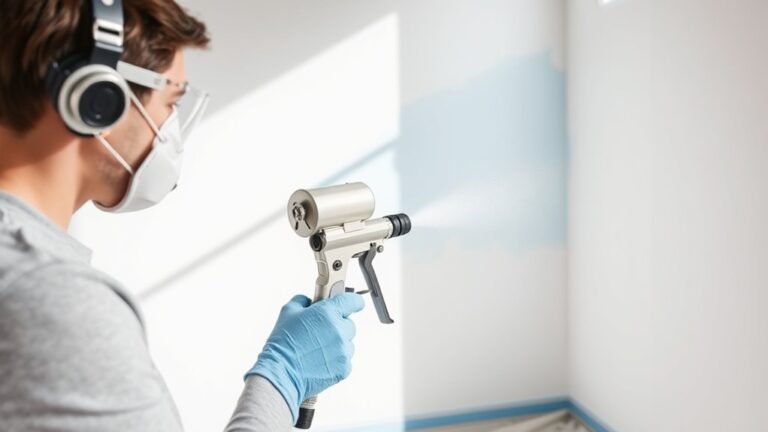
Next, protect your work area with newspaper, cardboard, or a spray shelter to prevent the paint from overspraying and damaging other surfaces. Elevate or stabilize your glass piece to ensure even coverage and easy access to all sides.
Choose a spray paint labeled specifically for glass to prevent the paint from peeling or chipping. It really makes a difference in how well your project turns out!
Step-by-Step Spray Painting and Finishing Techniques

When you start spray painting your glass, apply several thin coats instead of one thick layer to prevent drips and make certain of even coverage. Make sure to use a tack coat first on vertical surfaces; this works really well to minimize runs.
Hold the can 8-12 inches away and use a light, sweeping motion, overlapping each pass slightly. For the best results on your glass projects, finish with a final light coat or sponge application, then allow it to dry completely before handling.
| Step | Technique | Tip |
|---|---|---|
| 1. Tack Coat | Apply thin initial coat | Helps paint adhesion |
| 2. Multiple Coats | Several thin layers | Prevents drips |
| 3. Consistent Hold | Keep 8-12 inches distance | Ensures even coverage |
| 4. Final Finish | Light coat or sponge finish | Polished look for painted glass |
Frequently Asked Questions
Can You Spray Paint Directly on Glass?
Yes, you can spray paint directly on glass, but you’ll need to clean it thoroughly and use paint designed for glass.
Apply thin coats, let each dry, and avoid handling until fully cured to guarantee lasting results.
It’s a pretty simple process once you get the hang of it! Just take your time and be patient with the drying.
What Kind of Spray Paint Will Stick to Glass?
You’ll want to use spray paints labeled for glass or multi-surface use, especially ones with primers or bonding agents.
Opaque, high-pigment paints or those designed for frosted glass stick best and provide vibrant, long-lasting coverage.
These types of spray paints really grab onto the glass surface and don’t peel easily. So, your project will look great for a long time!
Will Rustoleum Spray Paint Adhere to Glass?
Yes, Rustoleum spray paint will adhere to glass if you clean the surface thoroughly and apply a glass-specific primer first.
You’ll get the best results by using multiple thin coats and letting each dry completely. This approach helps the paint stick better and look smoother.
How Long to Let Spray Paint Dry on Glass?
Patience is a virtue—let your spray paint dry on glass for 2-4 hours between coats. Avoid rushing; full curing takes 24-48 hours.
Thin, multiple coats dry faster, so don’t handle or expose it too soon. It’s better to wait a bit longer than to mess up your finish!
Conclusion
Now that you’ve mastered painting glass with spray paint, remember that patience is key—“slow and steady wins the race.” Take your time prepping the surface and applying even coats for the best results.
With each step, you’re transforming plain glass into something uniquely yours. Keep practicing, and you’ll get smoother finishes and longer-lasting designs.
Enjoy the process and the beautiful creations that come from your careful, creative touch! Painting glass with spray paint is a fun way to add a personal touch to your decor. Just keep at it, and soon you’ll be creating stunning, durable pieces that show off your skills perfectly.


3 Comments