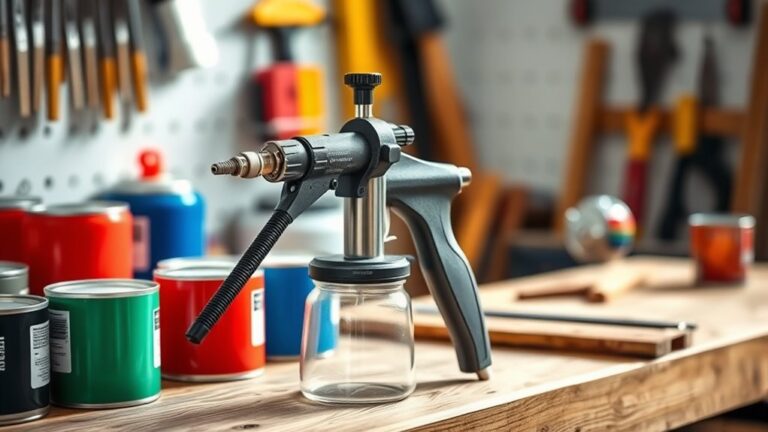
How You Can Spray Acrylic Paint for a Smooth Finish
To spray acrylic paint for a smooth finish, start by shaking the can well to mix the paint thoroughly. Test the nozzle first to guarantee an even spray, so you avoid any surprises on your surface. Holding the can about 10-12 inches away is key to getting that professional look without over-saturating any area.
Use steady, overlapping strokes as you paint. This helps create an even coat that looks flawless once it dries. It’s better to apply several thin layers rather than one thick one.
Let each coat dry for 30-45 minutes to prevent drips or streaks from forming.
Keep your hand steady throughout the process and check your spray pattern regularly. With a little practice, these simple steps will improve your technique and help you achieve a smooth, professional-level finish every time.
Key Takeaways
- Shake the acrylic paint spray can vigorously for at least one minute before use to ensure proper mixing. This really helps get the paint ready to go.
- Hold the can 10-12 inches from the surface and spray in a steady, continuous motion for even coverage. Try to keep your hand moving smoothly.
- Apply multiple thin coats, allowing 30-45 minutes drying time between each for a smooth finish. It’s better to do several light layers than one heavy one.
- Test spray on a scrap surface to check nozzle function and adjust spray distance and pattern. This little step saves you from surprises later.
- Maintain a consistent spraying speed and overlapping motion to avoid streaks and drips. Keep it steady and even for the best results.
Preparing and Testing Your Spray Paint
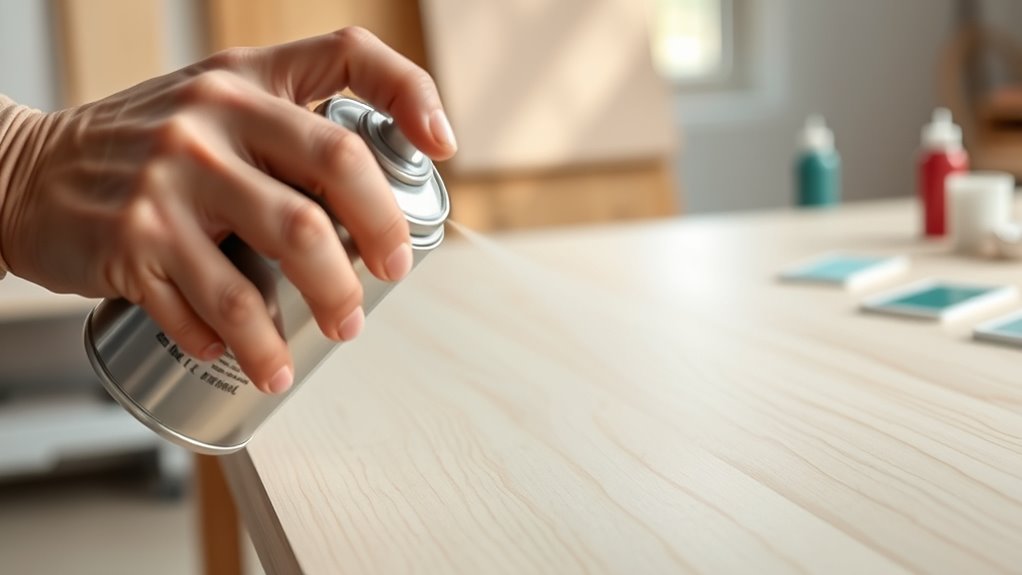
Before you begin spraying, shake the can vigorously for at least one minute to mix the paint and propellant thoroughly. This step guarantees the spray pattern stays consistent and the finish smooth.
Shake the spray can vigorously for at least one minute to ensure a smooth, consistent finish.
Next, do a test spray into the air or on a scrap surface. This lets you check the nozzle for even coverage and helps you get a feel for the right distance—usually 10-12 inches—from the surface.
If the nozzle clogs or spits, clean it or swap it for a new one to avoid uneven spray patterns. Practice spraying on a test object to master your technique and maintain a steady hand.
Taking these steps will help you achieve a professional and flawless finish with your acrylic spray paint.
Effective Spraying Techniques for Acrylic Paint
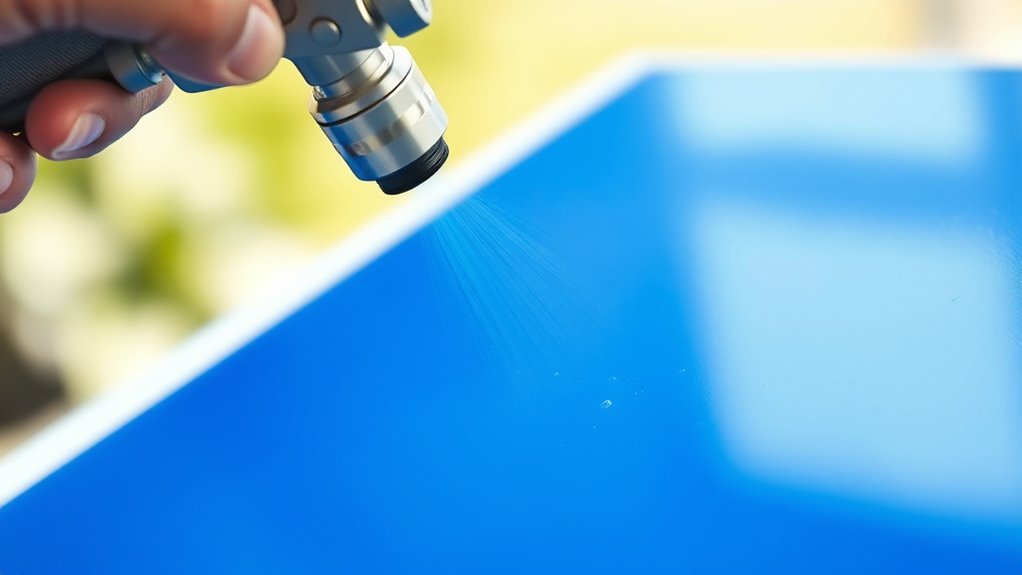
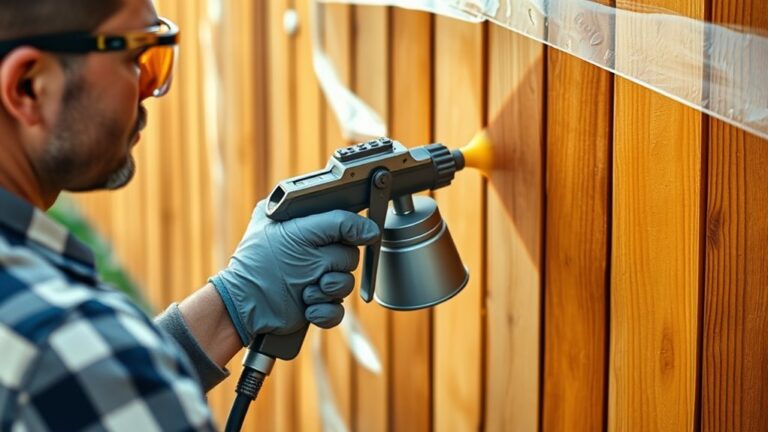
When you hold the spray can about 10-12 inches from the surface, you guarantee even coverage and a smooth finish. Start spraying off the edge and move steadily in a smooth, continuous motion to avoid brush strokes or drips.
Apply multiple thin coats rather than a heavy coat to prevent uneven texture. Between each coat, let it dry for 30-45 minutes to ensure proper drying time.
Maintain consistent pressure and speed to keep the spray paint uniform. This technique helps build a uniform finish without streaks.
Always test spray on a scrap surface first to adjust your method. By applying multiple coats with thin layers and letting each coat dry, you’ll achieve a flawless, professional look with even coverage every time.
Frequently Asked Questions
How to Make Acrylic Paint Have a Smooth Finish?
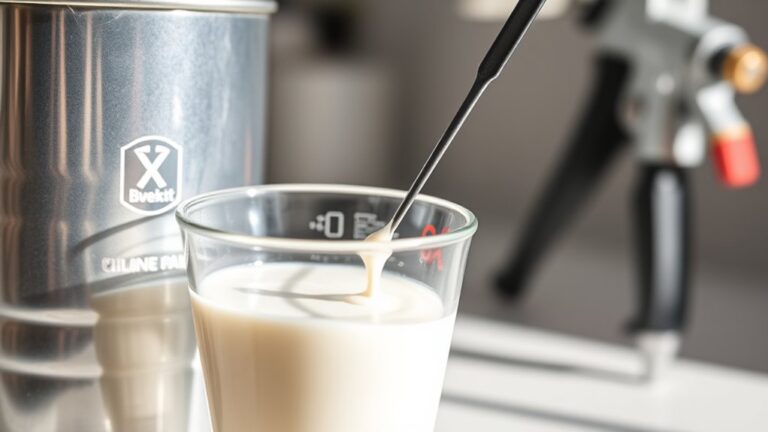
You’ll get a smooth finish by thinning acrylic paint to pancake batter consistency. Spray light, even coats from 10-12 inches away, and let each layer dry before the next.
It really helps to practice on scrap pieces first for the best results. This way, you can get a feel for how the paint behaves and adjust your technique as needed.
How Can I Achieve a Smooth Finish With Spray Paint?
You’ll get a flawless, showroom-worthy finish by spraying in thin, even layers from 10-12 inches away. Move smoothly and never rush.
Let each coat dry fully, then sand lightly. Your surface will look like glass!
What Is a Good Finishing Spray for Acrylic Painting?
You’ll want to use Winsor & Newton Artists Gloss Picture Varnish. It’s clear, durable, and won’t yellow over time.
This makes it perfect for giving your acrylic paintings a professional, long-lasting finish. Plus, it really enhances the colors beautifully without compromising the artwork’s integrity.
Can Acrylic Paint Be Sprayed?
You might worry acrylic paint won’t spray well, but yes, you can spray it! Just thin it properly, use the right nozzle, and apply multiple light coats for a smooth, even finish without clogging or drips.
It’s pretty straightforward once you get the hang of it. Just remember, patience is key to avoid any mess or uneven spots.
Conclusion
Now that you’ve mastered preparing and spraying acrylic paint, imagine a flawless, glossy surface shining back at you. With each smooth, even stroke, you’re not just painting—you’re creating a masterpiece.
Keep your hand steady, your spray light, and watch as those tiny droplets blend seamlessly into a vibrant finish. It’s all about patience and practice.
These are the secrets to getting that perfect smooth finish with acrylic paint. Remember, spraying acrylic paint isn’t just a technique; it’s your ticket to turning ordinary projects into stunning works of art you’ll be proud to show off. Keep practicing, and soon you’ll achieve that professional-looking, smooth acrylic paint finish every time.