7 Reasons a Paint Sprayer Is Better Than a Roller
You’ll work faster and easier with a paint sprayer, covering large surfaces in one pass and cutting your project time dramatically. Using a paint sprayer for your painting projects really speeds things up. It’s perfect for big areas where a roller might slow you down.
It preserves surface textures without brush marks and guarantees smooth, even coverage—even in tight spots. No more worrying about streaks or uneven paint. Plus, sprayers get into those tricky corners that rollers just can’t reach.
Sprayers provide precise control, keeping your work clean and professional-looking. You can switch colors quickly, which saves you from long clean-up times. Less prep work means your job gets done more efficiently.
Keep exploring to discover how sprayers can truly transform your painting projects. You might just find that a paint sprayer is the best tool for your next paint job!
Key Takeaways
- Paint sprayers cover large surfaces faster, significantly reducing project time compared to rollers. This means you can get your painting done quicker and move on to the next task without the wait.
- They apply paint evenly without brush or roller marks, ensuring a smooth, professional finish. So, you’ll have a flawless look every time, without the hassle of fixing streaks.
- Sprayers reach tight corners and textured surfaces easily, minimizing the need for touch-ups. It’s great because you won’t have to struggle with tricky spots or miss any details.
- Adjustable spray settings provide precise control, reducing overspray and promoting a clean application. You can customize the flow to suit your project perfectly, which really helps keep things neat.
- Paint sprayers reduce prep work and allow quick nozzle or color changes, streamlining workflow and saving effort. This makes switching tasks faster and keeps your momentum going without unnecessary delays.
Work Faster and Easier
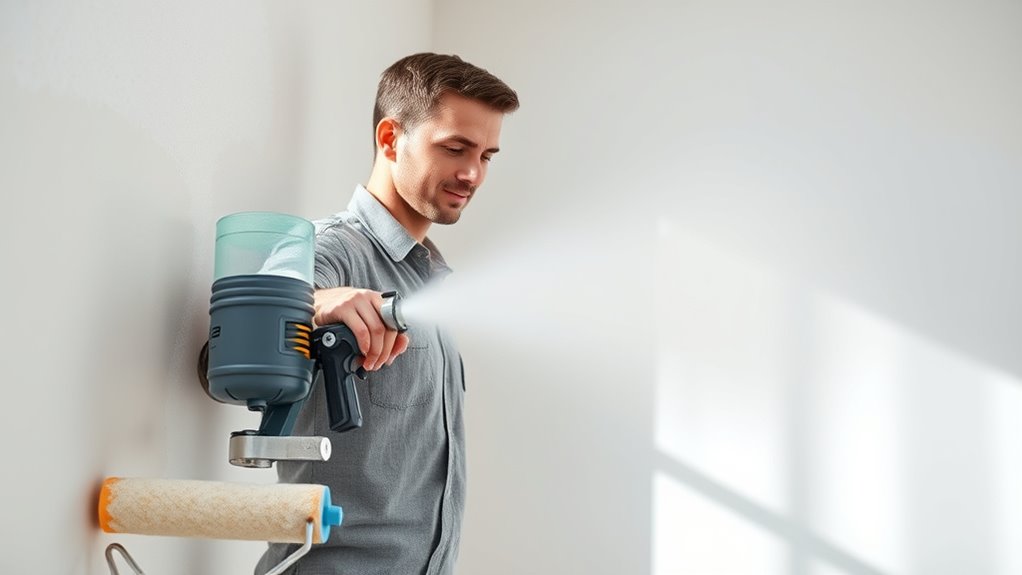
When you use a paint sprayer, you can cover large surfaces up to twice as fast as with a roller, cutting your project time considerably.
Using a paint sprayer means you skip tedious steps like pre-coating edges and corners, speeding up your workflow.
A sprayer delivers a smooth, even coat in just one pass, so you won’t have to go back for multiple coats.
It also reduces physical strain since you can easily reach high walls or ceilings without climbing ladders.
With consistent coverage and less effort, a sprayer makes painting faster and more efficient.
If you want to finish your project quickly without sacrificing quality, using a paint sprayer is the smarter choice over traditional rollers.
Preserve Surface Texture

Because paint sprayers apply paint without direct contact, they help you keep the original texture of surfaces like popcorn ceilings or stucco. Unlike using a brush and roller, paint sprayers deliver a fine mist that maintains the surface’s natural pattern without flattening it.
Here’s why paint sprayers excel at preserving texture:
- They prevent brush strokes or roller marks that can distort textured surfaces.
- Sprayers apply a thin, even layer that clings closely to every contour.
- They minimize disturbance to delicate surface details, keeping textures intact.
- Precise nozzle control ensures consistent coverage without damaging the original finish.
When you want to preserve surface texture, paint sprayers outperform brush and roller methods every time. It’s just a smarter way to keep those details looking great!
Achieve Perfect Coverage
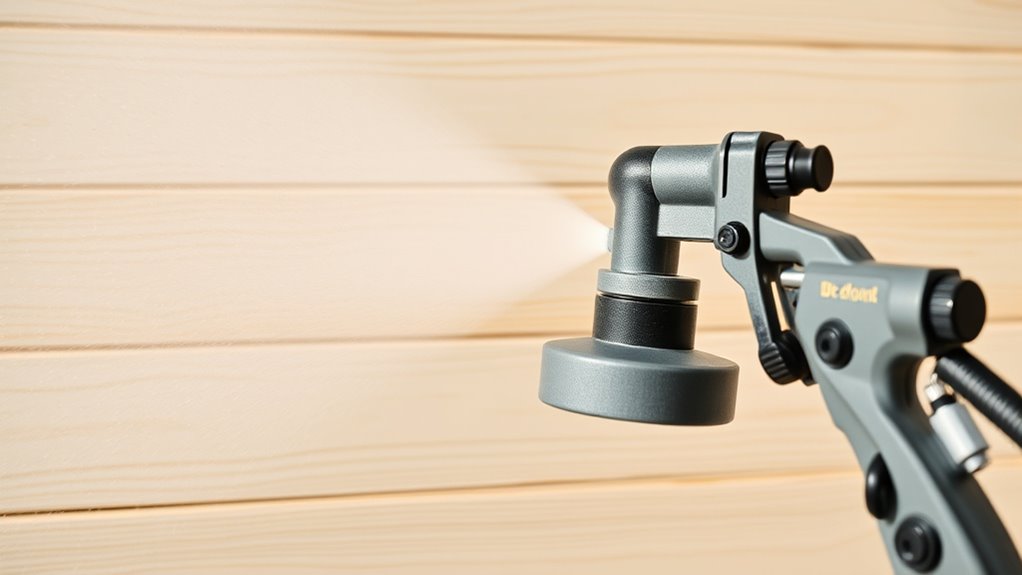
Although rollers have their place, paint sprayers give you the advantage of achieving perfect coverage with ease. When you use a spray gun, you get a uniform coat that eliminates the risk of missed spots or uneven layers common with rollers.
The fine mist from the sprayer reaches into crevices and textured surfaces, ensuring every detail is covered thoroughly. Unlike rollers, sprayers reduce the need for multiple coats, saving you time and effort.
Plus, they deliver a smooth, professional finish without the unsightly brush marks or roller lines that can ruin your work. With a paint sprayer, you can confidently cover large areas quickly while achieving flawless, consistent results every time.
Maintain a Clean Application
Getting flawless coverage is just the start—keeping your application clean makes a big difference in the final look. With a paint sprayer, you gain precise control that minimizes overspray and drips, ensuring a tidy job.
Here’s how to maintain a clean application:
- Use proper masking material to protect surfaces and achieve sharp, clean edges.
- Employ spray extensions and nozzles to target hard-to-reach areas, reducing accidental overspray.
- Adjust spray gun settings carefully for a fine mist, which prevents brush or roller marks.
- Work methodically, moving steadily to avoid buildup and keep the finish smooth.
Enable Quick Paint Changes
When you need to switch colors or materials quickly, paint sprayers make the process effortless. Many models come with quick-connect systems like Click&Paint, letting you swap nozzles or color cartridges instantly without disassembling your equipment.
Quick-connect systems like Click&Paint let you switch colors or nozzles instantly without any disassembly.
This quick-connect feature drastically cuts downtime during color change, so you spend less time cleaning and more time painting. Some sprayers even allow direct color loading, which means you don’t have to flush or clean between different paints.
Specialized attachments also help you switch materials seamlessly for various surfaces. These capabilities ensure your multi-color or multi-finish projects move smoothly, boosting efficiency and keeping your workflow uninterrupted.
With a paint sprayer, quick paint changes are hassle-free and designed to keep your project on track. It really makes a difference when you’re juggling multiple colors or finishes!
Deliver Superior Surface Quality
When you use a paint sprayer, you get a smooth, even finish without the roller lines or brush strokes that can ruin your surface. It covers efficiently, giving you consistent color with fewer coats.
Plus, it preserves the texture of your walls or furniture, keeping every detail sharp and flawless. It really makes a difference in the overall look.
Smooth, Even Finish
Although rollers can leave behind texture and marks, paint sprayers deliver a smooth, even finish that elevates your project’s quality. When you choose a paint sprayer over a roller, you benefit from:
- A fine mist that guarantees uniform paint distribution, eliminating streaks and uneven patches.
- Adjustable spray patterns and intensity, giving you precise control for flawless surfaces.
- Fewer coats needed to achieve that professional, factory-like appearance.
- Minimal risk of visible marks or texture, unlike rollers which often leave roller marks behind.
It’s pretty clear that paint sprayers can give your project that perfect finish with less hassle. Plus, they save you time and effort!
Consistent Coverage Efficiency
How can you guarantee your painted surfaces look consistently flawless? Using a paint sprayer ensures even coverage with fewer coats, unlike rollers that often leave streaks or uneven patches.
A paint sprayer delivers a uniform layer, providing superior surface quality every time. It’s especially effective on complex surfaces and detailed areas where rollers struggle to reach.
With proper calibration and technique, your spray gun applies paint precisely, minimizing variations across large or irregular surfaces. This consistent coverage efficiency means you spend less time correcting mistakes and more time enjoying a smooth, professional finish.
Choosing a paint sprayer over rollers not only saves effort but also ensures your project looks flawless from start to finish. You get a consistent, high-quality result that rollers simply can’t match.
Preserves Surface Texture
Because paint sprayers apply an even, noncontact coat, you preserve the original surface texture without flattening or altering it. Spray guns maintain the natural characteristics of surfaces better than rollers or brushes.
Here’s how using spray guns benefits you:
- They prevent loss of detail on textured walls or ceilings by applying paint gently.
- They create a uniform finish that highlights and enhances surface texture.
- They minimize uneven patches and ridges that rollers often leave behind.
- They reduce the need for multiple coats, keeping the surface’s inherent features intact.
Maximize Efficiency
You can cover large areas up to three times faster with a paint sprayer compared to a roller. Plus, the quick setup and minimal prep time mean you spend less time getting ready and more time painting.
This efficiency lets you finish projects faster without sacrificing quality. So, you get great results in a fraction of the time. It’s a smart way to tackle your painting jobs!
Faster Coverage Speed
Spray paint covers surfaces up to three times faster than rollers, letting you finish large projects in a fraction of the time. When comparing paint sprayer vs. using a roller, the difference in speed is clear.
Here’s why a sprayer maximizes your efficiency: it covers more surface area with each pass, reducing your workload. Plus, you can often skip multiple coats thanks to even, thorough coverage.
Complex surfaces and intricate details get painted faster without extra effort. So, overall project timelines shrink, letting you wrap up jobs in days, not weeks.
Reduced Prep Time
While traditional rollers demand extensive taping and masking, using a paint sprayer slashes your prep time markedly—especially on large or intricate surfaces.
When you use a paint sprayer, you eliminate much of the taping and masking required for rollers, cutting down on tedious prep work.
Spray painting lets you cover walls and ceilings quickly in a single pass, reducing the need for multiple coats and minimizing touch-ups.
Plus, sprayers reach tight corners and detailed areas easily, speeding up edging tasks and further trimming prep work.
Overall, using a paint sprayer streamlines primer and base coat application, letting you complete projects in about half the time compared to rollers.
If you want to maximize efficiency, a paint sprayer is your best bet for reduced prep time.
Frequently Asked Questions
Does a Paint Sprayer Work Better Than a Roller?
Yes, a paint sprayer works better when you want faster coverage and a smoother finish.
You’ll save time on big or detailed projects. Though, it needs more setup and cleanup than a roller does.
What Are the Downsides of Paint Sprayers?
You’ll use more paint with a sprayer due to overspray, spend extra time prepping and masking, and face tricky cleanup.
Plus, sprayers can clog on textured surfaces and create airborne paint dust, which isn’t ideal.
Do Professional Painters Spray or Roll?
You’ll find that 85% of professional painters spray rather than roll. They choose spraying because it speeds up the job and delivers a smoother finish, especially on large surfaces.
This makes their work quicker and more efficient. Plus, spraying helps cover tricky spots that rollers might miss. So, if you want a fast and flawless paint job, spraying is often the way to go.
What Are the Benefits of a Paint Sprayer?
You’ll finish projects faster with a paint sprayer, achieving smooth, even coverage using less effort. It reaches tight spaces easily, reducing fatigue.
Plus, it offers precise control with quick adjustments. This makes your painting job more efficient and professional.
Conclusion
Sure, if you enjoy slow, messy painting marathons with uneven coverage and endless clean-up, stick to your roller. But if you’re into actually finishing your project without turning your walls into a Jackson Pollock tribute, grab a paint sprayer.
It works faster, keeps surfaces flawless, and switches colors like a pro. So unless you’re allergic to efficiency and perfection, you’re better off spraying away your roller woes and embracing the future of painting.
Paint sprayers offer a smooth, even finish that rollers just can’t match. They save you time and effort, making your painting experience less stressful and more enjoyable. Plus, cleanup is a breeze compared to the mess rollers leave behind.
In short, if you want faster, cleaner, and more professional results, a paint sprayer beats a roller every time. Embrace this modern tool and transform your painting projects with ease and precision. Say goodbye to roller struggles and hello to flawless walls!