
How to Make Spray Paint Stick to Plastic Surfaces
To make spray paint stick to plastic surfaces, start by cleaning the plastic thoroughly to remove dirt and oils. This step is crucial because any grime can prevent the paint from adhering properly.
Next, lightly sand the surface with fine-grit sandpaper to create some grip, then wipe away the dust and let it dry completely.
After prepping the surface, apply a plastic-specific primer in thin, even coats to boost adhesion. Using the right primer makes a huge difference in how well the paint sticks.
Then, choose spray paint designed specifically for plastic. Apply several light coats rather than one heavy one to avoid drips and ensure a smooth finish.
Follow these simple steps carefully, and you’ll get a smooth, durable finish that lasts longer.
Trust me, taking the time to prep and use the right products really pays off for perfect results every time!
Key Takeaways
- Thoroughly clean plastic surfaces with a degreaser or mild soap to remove dirt, oils, and contaminants before painting. This step is crucial to help the paint stick properly.
- Lightly sand the plastic with fine-grit sandpaper to create a rough texture that helps paint adhere better.
- Apply a specialized plastic primer in thin, even coats to improve paint bonding and flexibility. Make sure you cover the surface evenly for the best results.
- Use spray paints specifically formulated for plastic and apply multiple light coats, allowing each to dry fully. Patience here really pays off!
- Maintain proper spray distance and use overlapping passes to avoid drips and ensure an even finish. This technique helps you get that smooth, professional look.
Understanding the Challenges of Painting Plastic
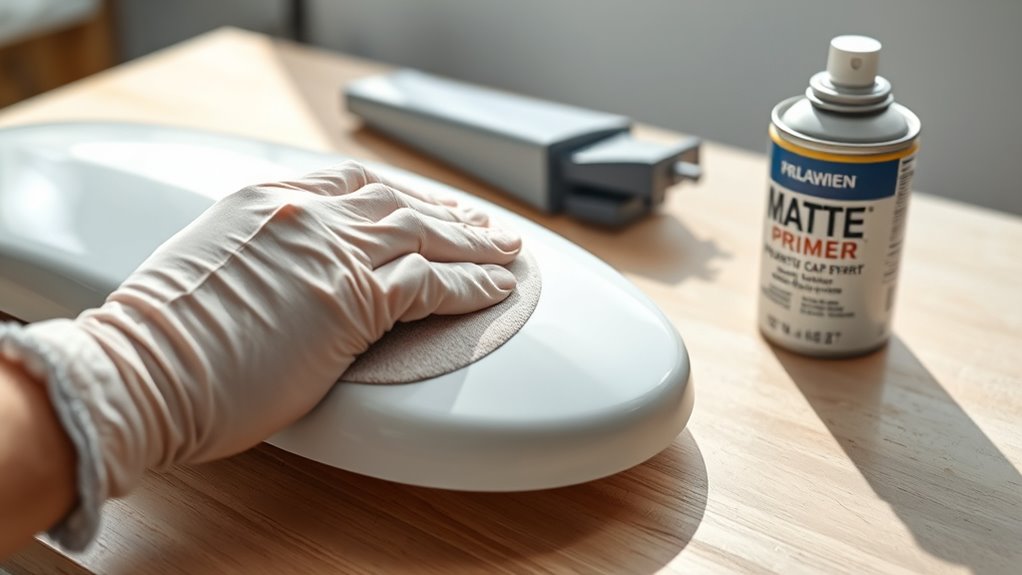
Although painting plastic can seem straightforward, you’ll quickly find it challenging because plastic surfaces are smooth and non-porous, making it hard for paint to stick. Achieving strong adhesion requires thorough surface preparation, including surface cleaning and sanding to create a rougher texture.
Without this, paint lacks proper bonding agents to cling effectively. Additionally, the chemical compatibility between the paint formulation and the plastic surface plays an essential role; some paints simply don’t bond well with certain plastics.
Using a suitable primer designed for plastics can improve adhesion by bridging this gap. You also need to contemplate environmental factors like UV exposure and temperature changes, which can weaken the paint’s bond over time.
Understanding these challenges is key before you start painting plastic surfaces. So, taking the time to prep right and choose the right products makes all the difference.
Step-by-Step Guide to Preparing and Painting Plastic

When you want your spray paint to stick well to plastic, preparing the surface is essential. First, clean the plastic thoroughly with a degreaser or mild soap to remove dirt and oils that reduce adhesion.
Next, sand the surface lightly using fine-grit sandpaper to create a rough texture for better bonding. Wipe away dust with a damp cloth and let it dry completely.
Then, apply a specialized plastic primer in thin, even coats to promote paint adhesion and flexibility. Once the primer dries, spray multiple light coats of paint designed for plastic, holding the can at the recommended distance.
Make sure to overlap each pass to ensure even coverage. Following these steps will help you prepare and paint plastic surfaces effectively for lasting results.
Frequently Asked Questions
What Spray Paint Will Stick to Plastic?
You’ll want to use spray paints like Krylon Fusion or Rust-Oleum Plastic Primer specifically designed for plastic. These paints bond well and resist chipping, ensuring your finish stays smooth and durable on plastic surfaces.
They’re made to stick where regular spray paint might peel or flake off. So, if you’re working with plastic, these are definitely your best bet for a long-lasting, great-looking finish.
How to Keep Spray Paint From Coming off Plastic?
To keep spray paint from coming off plastic, you’ll want to apply a plastic primer first. This helps the paint stick better to the surface.
Make sure to let each coat dry fully before adding another one. Avoid touching the surface too soon, or it might mess up the paint.
Finally, seal everything with a clear protective finish. This step gives you lasting durability and helps the paint stay put for good.
What Paint Sticks to Plastic Permanently?
When it comes to paint that sticks to plastic permanently, you can’t beat epoxy-based paints or Krylon Fusion All-In-One.
They grab onto plastic like glue, and with proper prep, your paint job will stand the test of time.
Trust me, a little effort upfront makes all the difference in how long your paint lasts.
Will Spray Paint Stick to Plastic Without Primer?
Yes, spray paint can stick to plastic without primer if you clean and sand the surface well.
You’ll get better results using plastic-specific paint and applying multiple thin coats for improved adhesion and durability.
Conclusion
Painting plastic is like giving a smooth stone a fresh coat of color—it takes the right prep and care to make the paint stick. By cleaning, sanding, and priming your plastic surface, you create the perfect canvas for spray paint to adhere.
Follow these steps, and you’ll transform your plastic items with vibrant, lasting color. With patience and the right technique, your project will shine just like new every time.
To make spray paint stick to plastic surfaces, always start by thoroughly cleaning the item to remove any dirt or oils. Lightly sanding the surface helps the paint grip better, and applying a primer designed for plastic ensures durability. These simple steps boost adhesion and prevent chipping or peeling.
Remember, using the right spray paint meant for plastic, along with proper preparation, is key to a smooth, long-lasting finish. So, take your time prepping your plastic surfaces, and enjoy the fresh, colorful results that really stick!





3 Comments