How You Can Spray Paint Plastic Step by Step
To spray paint plastic, start by cleaning the surface thoroughly with soap and water. This step removes dirt and oils that can prevent paint from sticking properly. Once cleaned, let the plastic dry completely before moving on.
Next, lightly sand the plastic with fine-grit sandpaper. This roughens the surface just enough to help the paint adhere better. Don’t forget to wipe away any dust created by sanding.
Now, apply a plastic-specific bonding primer. This is key because it helps the paint stick and prevents peeling. Make sure to let the primer dry fully before you begin painting.
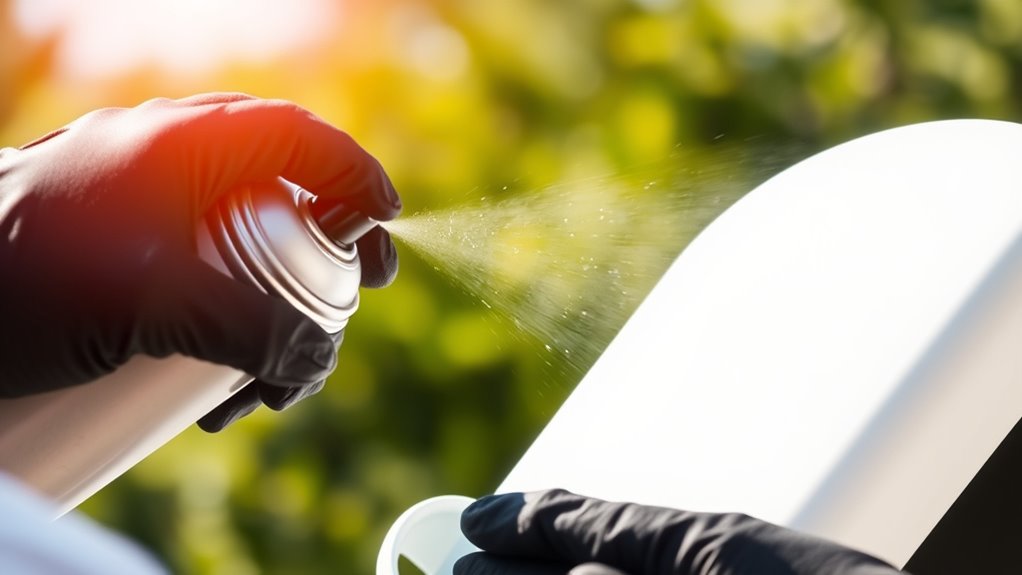
When you’re ready to spray, hold the can about 8-12 inches away from the surface. Spray light, even coats rather than one heavy one.
Allow each layer to dry before applying the next to avoid drips.
Patience and proper preparation are your best friends here. Follow these steps, and you’ll get a smooth, long-lasting finish on your plastic projects. Keep reading for more tips to perfect your spray painting technique!
Key Takeaways
- Clean the plastic surface thoroughly with mild soap and water, then dry completely to remove dirt and grease.
- Lightly sand the plastic with 180-220 grit sandpaper to create a textured surface for better paint adhesion.
- Apply a plastic bonding primer evenly and let it dry fully to enhance paint durability and prevent peeling.
- Spray paint from 8-12 inches away using light, even coats, overlapping each pass by one-third and allowing 30-60 seconds between coats.
- Let each coat dry fully before the next and allow the final coat to cure completely for a smooth, long-lasting finish.
Preparing Plastic Surfaces for Painting

Before you start spray painting plastic, make sure you clean the surface thoroughly with mild soap and water to remove any dirt, grease, or debris. Once the plastic is clean and dry, lightly sand smooth or glossy areas using fine-grit sandpaper (180-220 grit).
This step helps create a textured surface that improves paint adhesion. After sanding, wipe down the surface with a damp cloth or isopropyl alcohol to remove all dust and residue.
Let the plastic dry completely before moving on. Proper prep is key to a lasting finish, so consider applying a bonding primer especially if the item will face outdoor conditions or heavy wear.
Taking these steps ensures your spray paint sticks well and looks professional. It’s worth the extra effort!
Applying Spray Paint for a Durable Finish

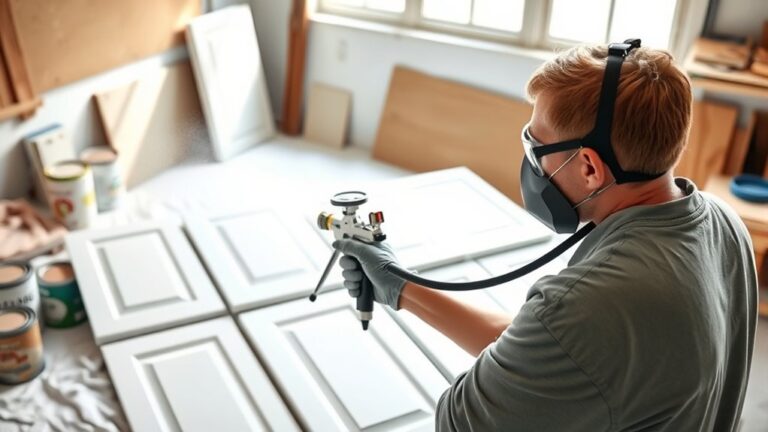
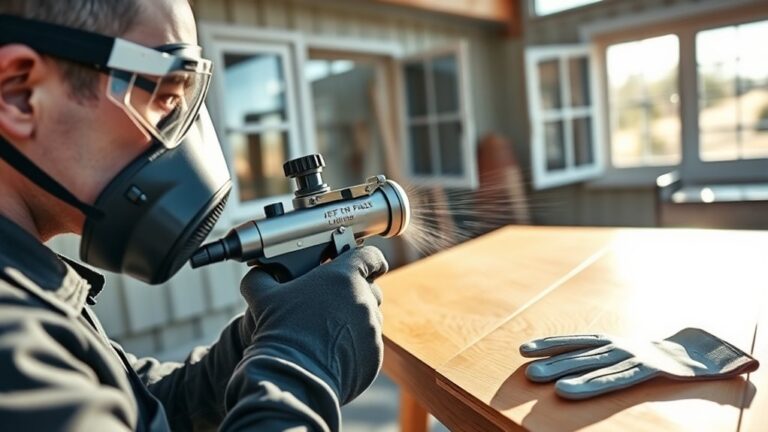
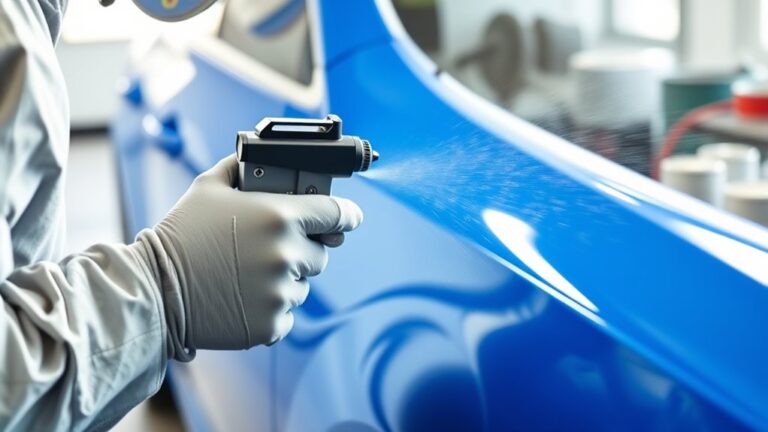
Once your plastic surface is clean, dry, and primed, you can start applying spray paint to achieve a durable finish. Hold the spray can 8-12 inches from the surface at a 45-degree angle, using a light spray to maintain proper distance and prevent drips.
Apply multiple thin coats rather than one heavy layer, waiting 30-60 seconds between each for even coverage. Begin each pass off the plastic surface and finish off it to avoid uneven edges and spray marks.
Overlap each pass by about one-third for a smooth, streak-free finish. After each coat, let the paint dry completely—typically 20-30 minutes—before applying the next. Proper surface preparation combined with these techniques guarantees a strong, durable finish that lasts.
Frequently Asked Questions
What Is the Easiest Way to Spray Paint Plastic?
The easiest way to spray paint plastic is to use a plastic-specific spray paint that sticks well without primer.
First, make sure to clean and sand the surface. This helps the paint adhere better and gives you a smoother finish.
When spraying, hold the can about 8-12 inches away from the plastic. Spray evenly and don’t rush it.
It’s best to apply multiple thin coats instead of one thick one. This way, you avoid drips and get a nice, smooth finish.
How Many Coats of Spray Paint Should You Put on Plastic?
You should apply 2 to 3 light coats of spray paint on plastic. This helps prevent drips and ensures good coverage.
Wait about 30 to 60 seconds between coats. This gives the paint a little time to dry, which helps it stick better.
What Spray Paint Works Best on Plastic?
You’ll want to use spray paints like Krylon Fusion All-In-One or Rust-Oleum Plastic Primer and Paint. These are specially formulated for plastic, providing excellent adhesion and durability without needing a separate primer.
They make the process way easier and give your project a smooth, long-lasting finish. Plus, no extra steps mean less hassle, which is always a win!
How to Apply Spray Paint on Plastic?
You should shake the can well, hold it 8-12 inches away at a 45-degree angle, and spray light, even coats in smooth motions.
Let each coat dry 30-60 seconds before applying the next for a smooth finish. This helps avoid drips and gives you a nice, even layer.
Conclusion
Now that you know how to spray paint plastic step by step, you’re ready to transform any item with ease. Did you know proper surface prep can increase paint adhesion by up to 50%? Taking the time to clean, sand, and prime your plastic guarantees a smooth, durable finish that lasts.
So, grab your spray paint, follow these steps, and watch your plastic projects come to life with vibrant, long-lasting color! Remember, the key to a successful spray paint job on plastic is patience and preparation. With the right technique, your painted plastic will look professional and stand the test of time.