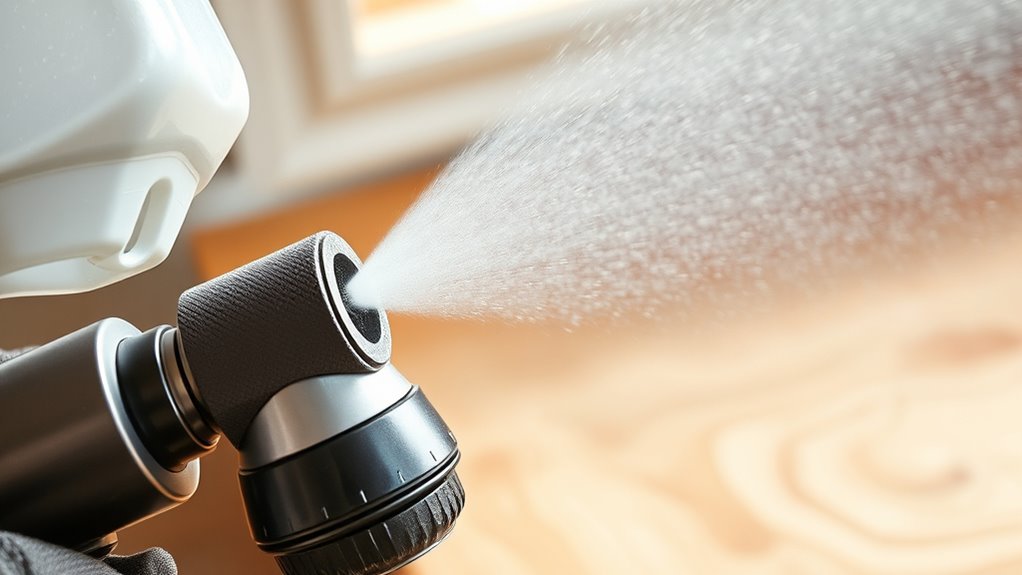
What Does Airless Paint Sprayer Mean and How Does It Work?
An airless paint sprayer lets you apply paint using high mechanical pressure instead of compressed air. It pumps paint through a small nozzle at pressures between 1500 and 3000 PSI. This high pressure atomizes the paint into a fine spray, giving you a smooth, even finish every time.
You can adjust the pressure and swap out spray tips to match the needs of your project. Plus, it handles thick paints without thinning them, which is a huge time saver.
This method speeds up painting and cuts down on waste, making your job more efficient and less messy.
Keep exploring to learn about its core parts and the advantages it offers. Understanding how it works can really help you get the best results with your painting projects.
Key Takeaways
- An airless paint sprayer uses high mechanical pressure, not compressed air, to atomize paint through a small nozzle for smooth application. It includes a piston pump that pressurizes paint, a spray gun, pressure control dial, manifold filter, and a fluid hose delivering paint to the tip.
- Paint is forced at 1500-3000 PSI through a tiny orifice, creating fine droplets and a uniform spray pattern without thinning the paint. Pretty cool, right? This means you get a nice, even coat every time.
- Adjustable pressure and interchangeable spray tips let you control the spray pattern and paint flow exactly how you want it. So whether you’re working on a small piece or a big surface, you’re covered.
- This technology offers fast, even coverage with less overspray. Plus, it handles thick paints like a pro, giving you professional-quality results without the hassle.
Definition and Core Components of an Airless Paint Sprayer
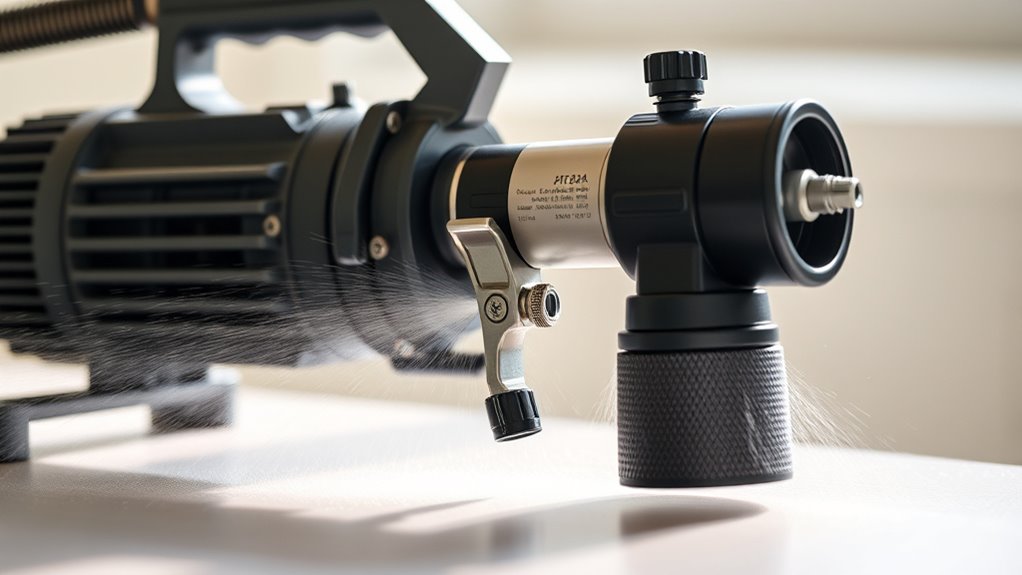
Although airless paint sprayers don’t use compressed air, they apply paint by forcing it through a small nozzle at very high pressure. When you use an airless paint sprayer, its core components work seamlessly to deliver a smooth paint finish.
Airless paint sprayers deliver a smooth finish by forcing paint through a tiny nozzle at high pressure.
The piston pump draws paint from the container and pressurizes it, creating the fluid pressure needed for atomization. You control this pressure with the pressure control dial, adjusting the spray pattern and coating thickness to suit your project.
The spray gun, equipped with interchangeable nozzles, directs the high-pressure paint precisely where you want it. Plus, a manifold filter keeps debris from clogging the system, ensuring consistent operation.
Getting to know these components really helps you achieve professional results with an airless paint sprayer every time.
The Mechanism Behind High-Pressure Paint Delivery
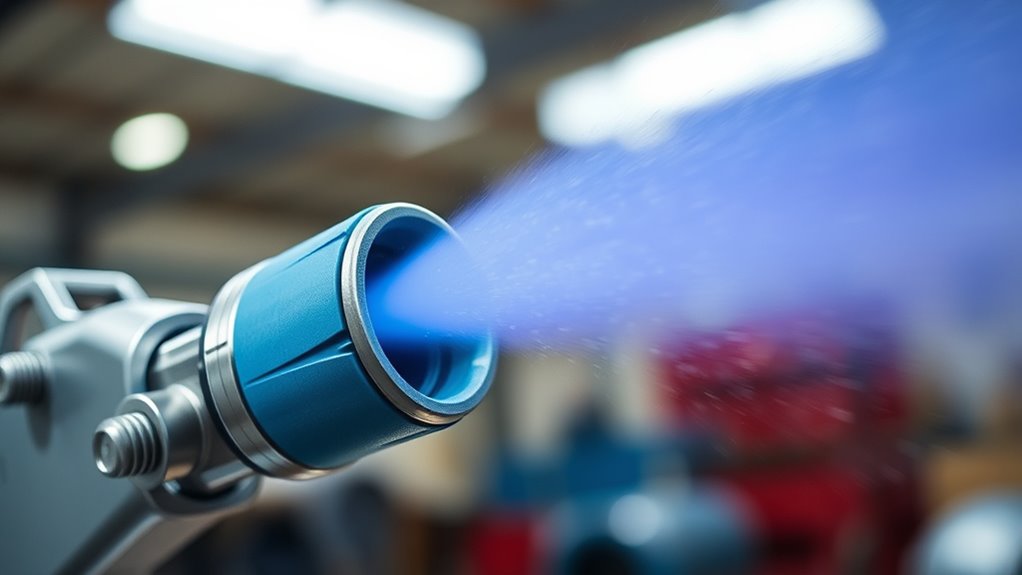
When you operate an airless paint sprayer, a high-pressure pump forces paint through a tiny orifice at pressures ranging from 1500 to 3000 PSI. This mechanical pressure pushes the coating through a fluid hose and out of the spray tip, where atomization occurs—breaking the paint into fine droplets.
The spray tip’s design controls the spray fan, shaping the spray pattern to suit your project. Pressure control allows you to adjust the force, ensuring consistent paint delivery.
Unlike traditional sprayers, this system doesn’t use compressed air. It relies solely on mechanical pressure for an even coating application.
This mechanism delivers rapid, uniform coverage with minimal overspray, making your painting efficient and precise every time you use it.
Benefits of Using Airless Technology for Efficient Painting
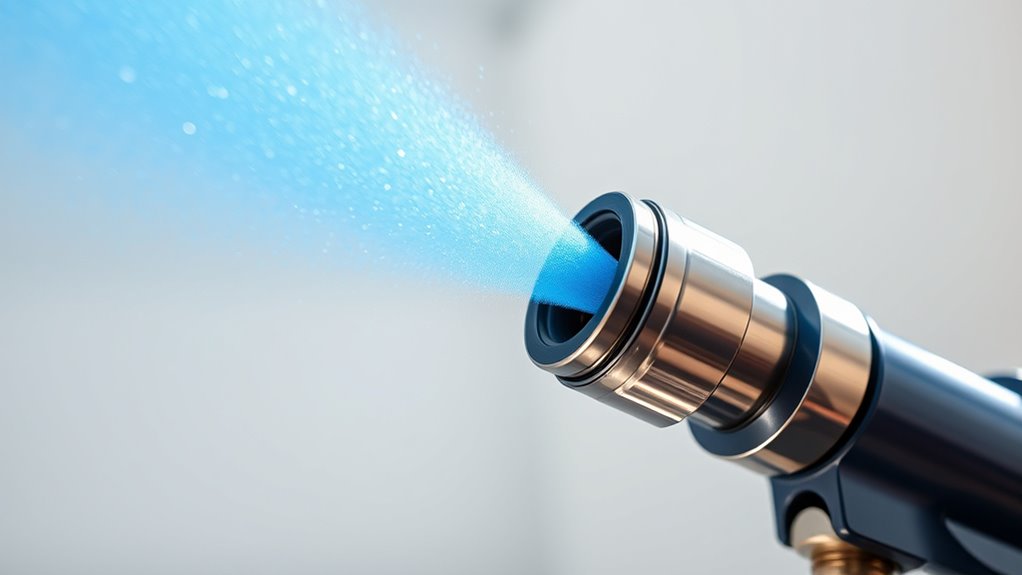
The high-pressure mechanism behind airless paint sprayers sets the stage for numerous advantages that streamline your painting projects. With airless technology, you get fast application and a uniform spray pattern, boosting painting efficiency while cutting down on paint waste.
This paint sprayer handles thick paint effortlessly, letting you tackle various surfaces without thinning. Adjustable pressure and spray tips give you precise control over coverage and finish, ensuring professional results every time.
| Benefit | Feature | Result |
|---|---|---|
| Fast application | High pressure | Saves time |
| Paint waste reduction | Uniform spray pattern | Less overspray |
| Versatility | Adjustable pressure & spray tips | Handles thick paint well |
Using airless technology transforms your painting experience—efficient, clean, and customizable. It really makes painting less of a chore and more of a breeze!
Frequently Asked Questions
What Are the Disadvantages of Airless Paint Sprayers?
You’ll face overspray, bounce-back, and material waste with airless sprayers. They’re noisy, heavy, and tricky to handle for long.
Plus, cleanup’s tough, and if not calibrated well, you get uneven spray and inconsistent finishes. It can definitely be a bit of a hassle to manage all that.
What Is the Number One Rule When Using Airless Spray Guns?
The number one rule when using airless spray guns is to maintain a consistent distance, typically 10-12 inches, from the surface.
This guarantees even coverage and prevents streaks, giving your project a professional, smooth finish.
Keeping that distance steady really makes a difference in the final look. It helps avoid those annoying patches that can ruin your hard work.
Do You Add Water to Paint When You Use an Airless Paint Sprayer?
If you’re spraying latex paint on your fence, you’ll often add about 10-20% water to thin it. This helps your airless sprayer work smoothly.
But don’t overdo it, or the finish might weaken. It’s all about finding the right balance to get a great coat.
Is an Airless Paint Sprayer Worth It?
Yes, an airless paint sprayer is worth it if you want to finish big projects faster, save on paint waste, and get smooth, professional results.
You’ll appreciate the time and money it saves over brushing or rolling. It’s especially handy when you have a lot of surface area to cover quickly.
Plus, the finish looks great without the brush marks or roller texture. So, if you’re tackling a big job, it’s definitely a smart investment.
Conclusion
Now that you know how an airless paint sprayer works, you might worry it’s too complex or messy to use. But don’t let that stop you—these sprayers are designed for ease and efficiency. They deliver smooth, even coats faster than brushes or rollers.
Once you get the hang of it, you’ll save time and achieve professional results with less effort. Give it a try, and you’ll see why airless paint sprayers are a game-changer for your painting projects. Using an airless paint sprayer means less overspray and a more consistent finish, making your job easier and your surfaces looking great.