Can Spray Painting a Car Work?
Yes, spray painting a car can work if you prepare it well and apply the paint carefully. Proper preparation is key—you’ll want to wash and sand the surfaces thoroughly. Priming any bare metal and masking off areas you don’t want painted are also important steps.
Applying multiple thin coats with proper drying time helps prevent runs and drips. Finishing with a clear coat ensures a smooth, durable finish that lasts. Using quality materials and controlled techniques really makes a difference in the final look.
Keep going to discover the key steps that help you achieve professional results with spray painting your car. It’s all about patience and attention to detail—once you get those down, your car can look amazing with a fresh spray paint job!
Key Takeaways
– Spray painting a car can work well with thorough surface preparation including washing, sanding, and priming.
Proper masking and removal of parts prevent overspray and ensure clean, professional-looking edges.
– Applying multiple thin coats with drying time between layers avoids drips and achieves smooth, even coverage.
Using quality spray paint and clear coats with UV protection enhances durability and prevents fading.
– Controlled spraying techniques and patience during application result in a long-lasting, glossy finish.
It’s all about taking your time and doing it right for the best results.
Preparing Your Vehicle for Spray Painting
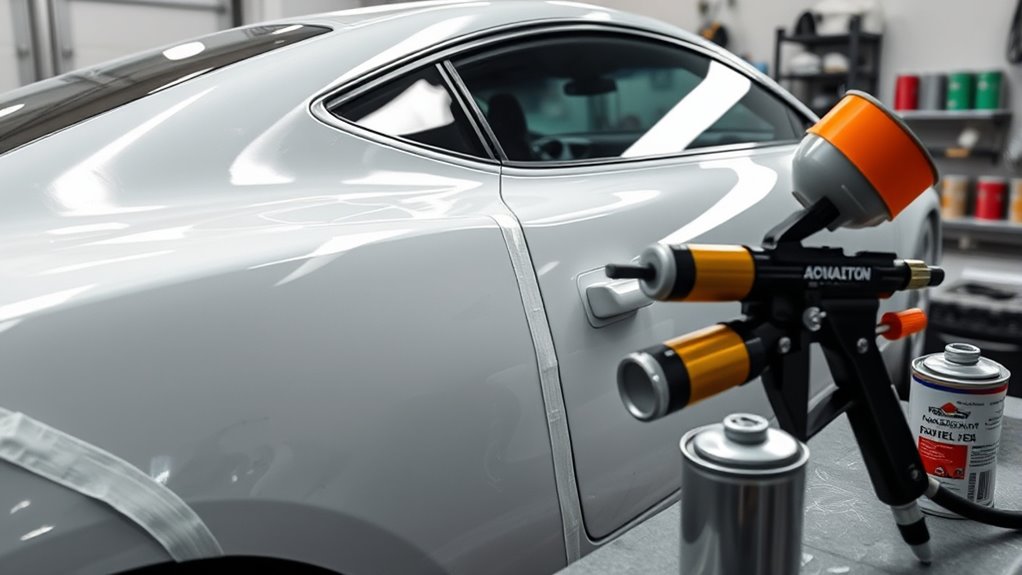
Before you start spray painting, you need to prepare your vehicle carefully to guarantee the paint adheres properly and looks smooth. Begin by thoroughly washing your car at home to remove dirt, grease, and debris.
Next, remove all removable parts like headlights and mirrors to prevent overspray and make the paint job even. Use 600 grit sandpaper on all painted surfaces; this texture helps automotive paint and spray paint products stick better.
Spot prime any exposed metal or chipped areas with a suitable primer to prevent rust and ensure uniform color. Mask off unpainted sections with painter’s tape to protect edges and achieve clean lines.
Using quality paint and clear coat from spray cans will help to ensure a professional finish with auto paint that lasts. Just take your time, and you’ll get great results!
Achieving Quality Results With Spray Paint

Once your vehicle is prepped and masked correctly, achieving a smooth, professional finish with spray paint becomes much easier.
Proper prep and masking make getting a flawless spray paint finish simple and stress-free.
To get that high gloss, durable coating, focus on these key steps:
- Use paint and primer in one for proper surface preparation, ensuring the base is clean and smooth.
- Apply multiple thin coats with controlled spraying, allowing each layer to dry to avoid drips and uneven coverage.
- Finish with clear coats featuring a UV-protective finish to enhance shine and protect against fading.
Masking protects areas you don’t want painted, while using professional paint with an engineered nozzle helps produce an even application.
Following these guidelines guarantees your spray-painted car looks polished and lasts longer. Easy, right? Just take it step by step!
Frequently Asked Questions
Is Spray Painting Your Car a Good Idea?
Spray painting your car can be a good idea if you’re aiming for a quick, affordable fix or DIY project.
Just remember to prep properly, use quality paint, and apply multiple coats for better results and durability.
It’s a bit of work, but it can really pay off if you do it right!
How Long Will Spray Paint Last on a Vehicle?
Spray paint on your car lasts like a candle flickering in the wind—usually 6 months to 2 years.
You’ll want to prep, apply clear coats, and maintain regularly to keep its glow from fading too fast.
It’s kind of like giving your car a temporary makeover that needs a little extra love.
Keep an eye on it, and touch up when you can to make it last longer.
How Much Does It Cost to Fully Spray Paint a Car?
You’ll spend between $300 and $1,500 for a full spray paint job yourself, but professionals charge $1,000 to $5,000 depending on prep, paint quality, vehicle size, and any body repairs needed before painting.
If you’re thinking about doing it yourself, the cost mainly comes down to materials and equipment. But if you want a flawless finish, hiring a pro might be worth the extra cash.
Keep in mind that prepping the car and fixing any dents or rust can significantly affect the final price. So, it’s not just about the paint!
How Many Cans of Spray Paint to Paint a Car?
You’ll need about 3-5 spray cans for a small car, covering 10-15 square feet per can.
Larger vehicles require 6-8 cans to apply 2-3 coats evenly. This helps ensure a smooth, consistent finish.
Conclusion
So, spray painting your car can definitely work—if you don’t mind turning your sleek ride into a colorful canvas of drips and uneven patches. With careful prep and steady hands, you might just avoid looking like a walking paint factory explosion.
Remember, while spray paint promises quick fixes, it demands patience and skill. Otherwise, you’ll have a “custom” look that screams, “I did this myself… kind of.”
In conclusion, spray painting a car can be a practical option for DIY enthusiasts, but it’s not without challenges. The key to success lies in proper surface preparation, using the right materials, and applying the paint evenly. Spray painting a car requires patience and attention to detail, so if you’re willing to put in the effort, it can definitely work. However, for a flawless, professional finish, sometimes it’s best to leave spray painting a car to the experts.