How You Spray Paint Chrome Step by Step
To spray paint chrome and achieve that shiny, mirror-like finish, you need to start with a clean surface. Make sure you thoroughly clean the chrome area to remove any dirt or grease.
After that, apply a primer to help the paint stick better.
Next, put on a smooth black base coat once the primer is dry. This base is key to getting that reflective chrome effect.
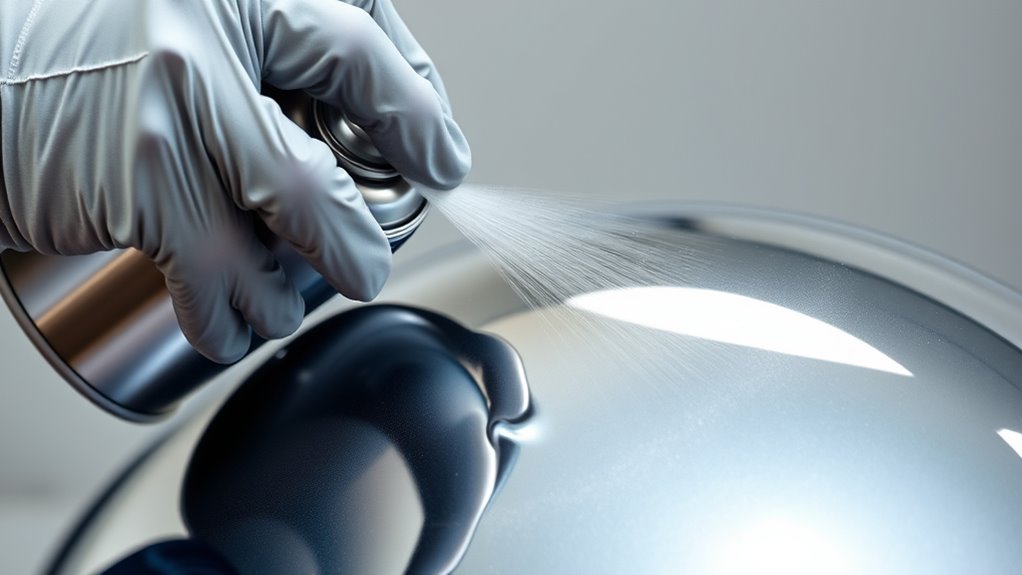
Hold your chrome spray paint can about 10 inches away from the surface. Spray several thin, even layers, allowing each coat to dry before applying the next.
This layering builds up the shiny look you’re aiming for.
For extra durability and to protect your chrome finish, consider adding a clear topcoat once everything is dry.
Follow these steps carefully, and you’ll get a professional, mirror-like chrome finish that lasts.
Ready for some tips to perfect your spray painting? Keep reading!
Key Takeaways
- Thoroughly clean and sand the surface, then apply a smooth, even primer coat and let it dry completely.
- Spray a black base coat in thin layers, allowing at least 24 hours for it to cure fully.
- Hold the chrome spray about 10 inches away and apply thin, even coats with consistent strokes. Let each coat flash for 10-15 minutes before the next.
- Allow each coat to dry fully. Make sure to keep proper ventilation and check for any imperfections before adding more coats.
- You can optionally apply a clear topcoat for extra durability and shine. Let it dry thoroughly before doing a final inspection.
Preparing the Surface and Base Coating
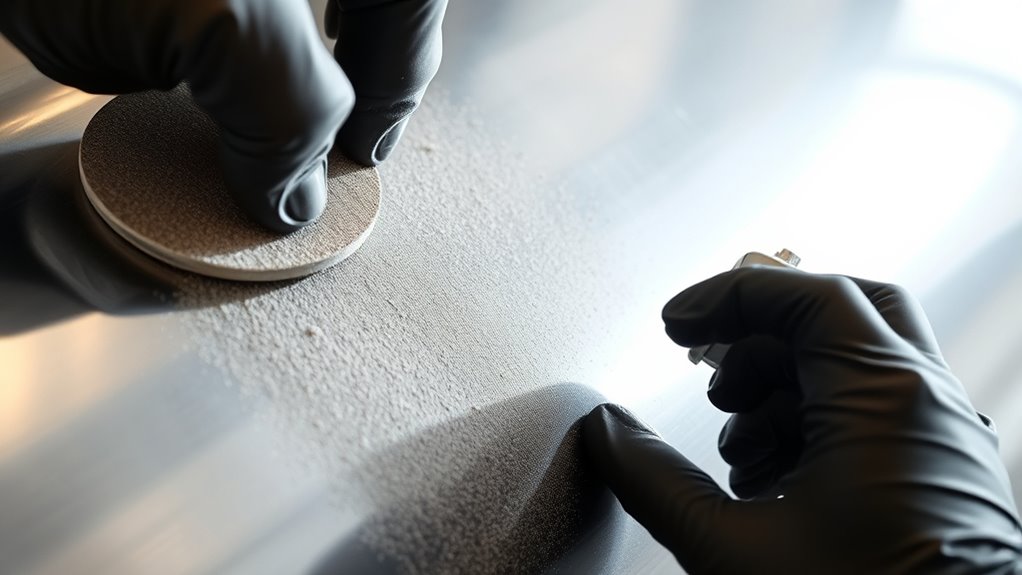
Before you apply any paint, make sure you thoroughly clean the surface with wax and grease remover using a microfiber cloth to remove dust, oils, and debris. Proper surface preparation is vital for a flawless spray paint application.
Thoroughly clean surfaces with wax and grease remover using a microfiber cloth for flawless paint application.
After thoroughly cleaning, lightly sand the area with a Scotch-Brite pad to create a smooth surface that enhances primer adhesion. Apply a high-quality primer in thin, even coats to avoid runs and ensure strong bonding.
Once the primer dries, apply a black base coat—preferably jet black—to deepen the chrome’s reflective quality. Allow sufficient curing time; waiting at least 24 hours after the base coat ensures it’s fully set.
Mastering these spray painting techniques during surface preparation sets the foundation for a durable, mirror-like chrome finish. It really makes all the difference!
Applying Chrome Spray Paint and Finishing Techniques
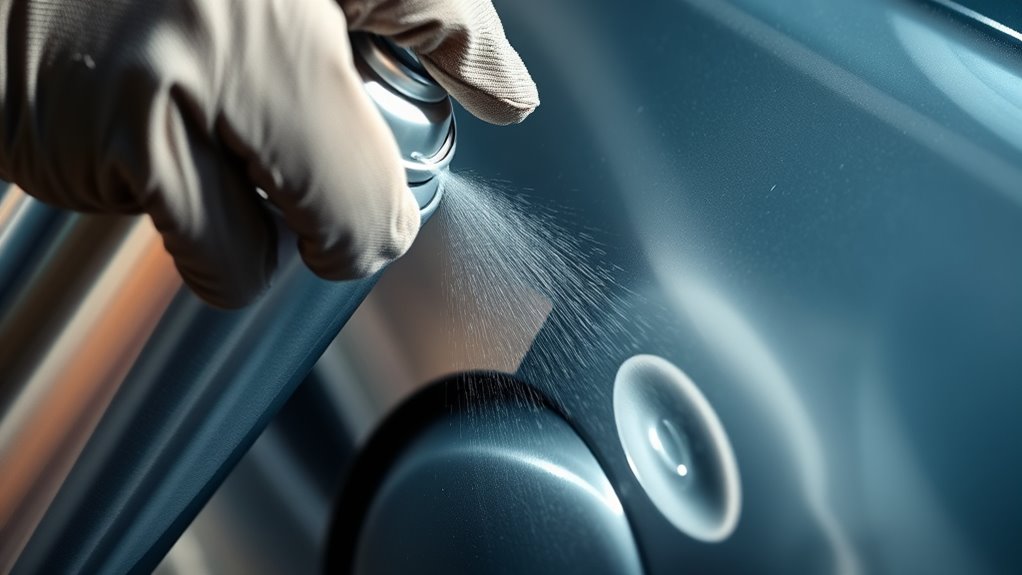
With your surface prepped and base coat fully cured, you’re ready to start applying the chrome spray paint. Make sure the surface is clean and wiped well to remove dust before you begin.
Apply in thin coats, holding the spray about 10 inches away, using smooth, consistent strokes to avoid runs. After each coat, let it flash and allow it to dry completely—usually 10 to 15 minutes—before adding a second coat.
Repeat the application process until you achieve an even, reflective, high gloss finish. Spray in a well-ventilated area with controlled temperature and humidity for best results.
Once the final coat is dry, inspect for imperfections and consider applying a clear topcoat to enhance durability and shine. This will complete the flawless chrome look.
Frequently Asked Questions
Can I Just Spray Paint Over Chrome?
You can’t just spray paint over chrome and expect good results.
You’ll need to clean, sand, and prime the surface first to make the paint stick properly. This helps avoid peeling or chipping later on.
How to Make Spray Paint Look Chrome?
Want that shiny, reflective look? Start with a dark base. Spray multiple thin chrome coats evenly from 10-12 inches away.
Let each coat dry before adding the next one. Then, finish with a clear gloss topcoat.
Ready to shine like metal? This method really makes your spray paint pop!
What Is the Best Spray Paint to Paint Over Chrome?
You’ll want to use oil-based or metallic spray paints like Rust-Oleum Universal Metallic or Krylon Premium Metallic.
These types stick well to chrome and provide a durable, shiny finish. Plus, they hold up nicely over time.
What Kind of Paint Will Stick to Chrome?
You’ll want to use automotive acrylic, epoxy, or high-quality spray paints made for metal.
Make sure you prime the surface first with an adhesion-promoting primer to help the paint stick firmly to chrome.
This step is super important because chrome is pretty smooth and shiny, which can make paint slip right off if you skip priming.
Once primed, your paint will have a much better chance of sticking around and looking great!
Conclusion
So, there you have it—your once shiny chrome now looks like it went through a paintball war with a touch of magic. Just remember, spraying chrome isn’t rocket science, but it sure feels like you’re trying to dress a slippery fish in glitter.
Keep your surface prepped, spray smooth, and don’t rush—unless you want your masterpiece to resemble a disco ball after a hurricane. When you spray paint chrome, patience and preparation are your best friends.
Now go, make that chrome shine like it’s auditioning for a sci-fi movie! With the right technique, your spray paint on chrome will look flawless and durable, giving your project a fresh, eye-catching finish every time.