

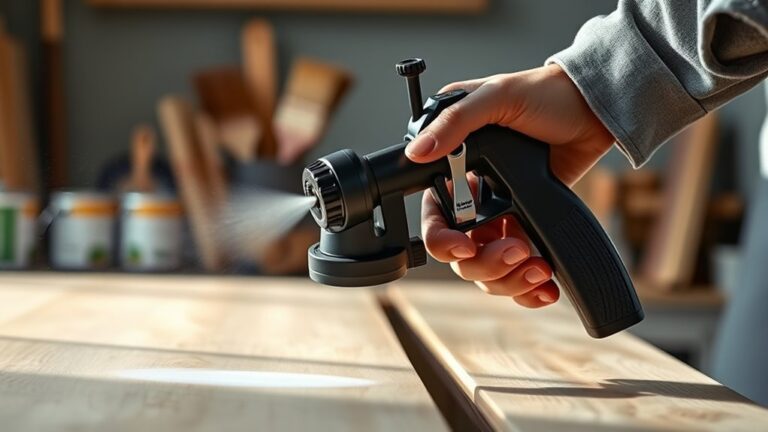
To use your Wagner Paint Sprayer 350 effectively, start by gathering safety gear and assembling the sprayer components securely. Prepare and thin your paint to the right consistency, then test it with the viscosity cup.
Fill the container, practice your spray technique on scrap material, and apply even coats with steady, overlapping strokes. After painting, clean and disassemble the sprayer...
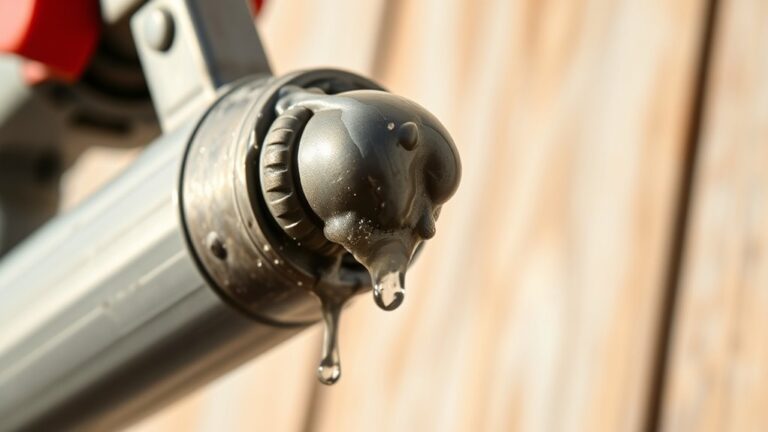
Your paint sprayer is spitting because worn tips, clogged filters, or misaligned internal parts are disrupting paint flow. Dirt or dried paint buildup can block the nozzle, while seals or pins that aren’t seated properly cause leaks and inconsistent spraying.
You’ll want to check and clean filters, inspect for damaged components, and adjust the seat and tip for a smoother finish. Keep reading...
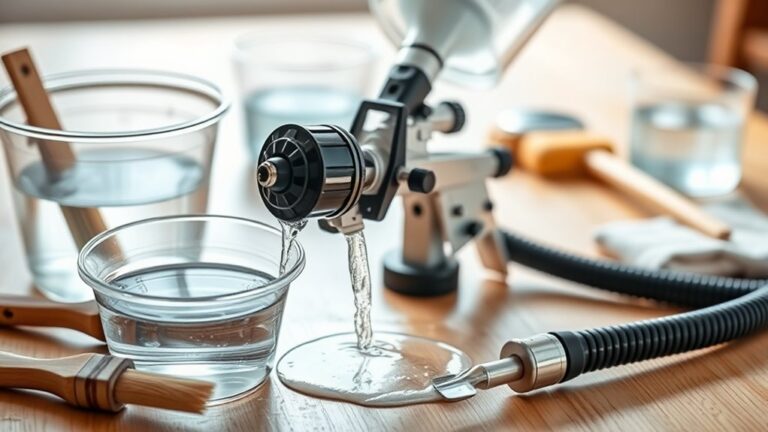
To clean out your paint sprayer in seven easy steps, first unplug it and clear your workspace. Then, empty any leftover paint from the container.
Next, prepare buckets with water or cleaning solution suited to your paint type and flush the system thoroughly.
Remove and clean filters, nozzles, and spray tips to prevent clogs. Scrub the gun components and rinse everything well.
Finally, dry...

You should thin your paint by about 10%—that’s roughly one part thinner to ten parts paint—to get a smooth spray finish. Start by adding thinner gradually and mix thoroughly.
Then test the flow on a stick and strain the mixture to avoid clogs. If you’re using an HVLP sprayer, you might need to thin up to 20%.
Proper thinning guarantees even coverage and a professional result. Keep following...
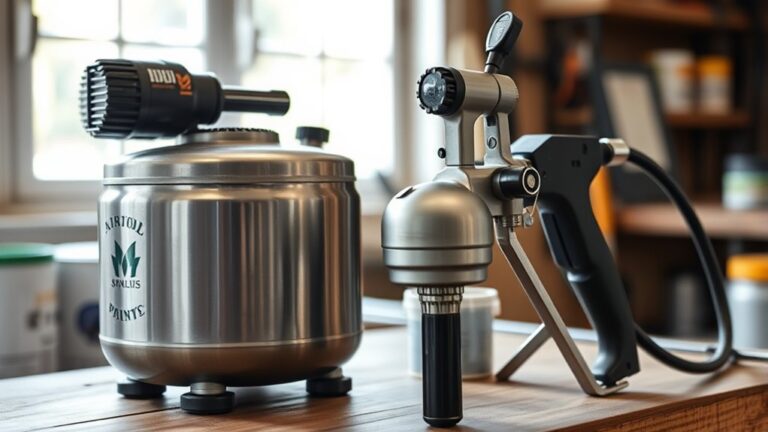
You don’t always need an air compressor for a paint sprayer. Electric paint sprayers come with built-in motors that generate pressure and allow you to skip the external compressor. This makes them perfect for small jobs or quick touch-ups.
However, compressor-based sprayers rely on external air compressors to handle thicker paints and larger surfaces with better atomization. If you want to know...

To clean your paint sprayer, first identify your paint type—use warm, soapy water for latex paints or mineral spirits for oil-based ones.
Safely flush the system by running the appropriate cleaning solution through the pump and hoses until it runs clear.
Next, deep clean the spray gun, filters, and tips, inspecting parts for damage.
Finally, dry and store everything properly to prevent...
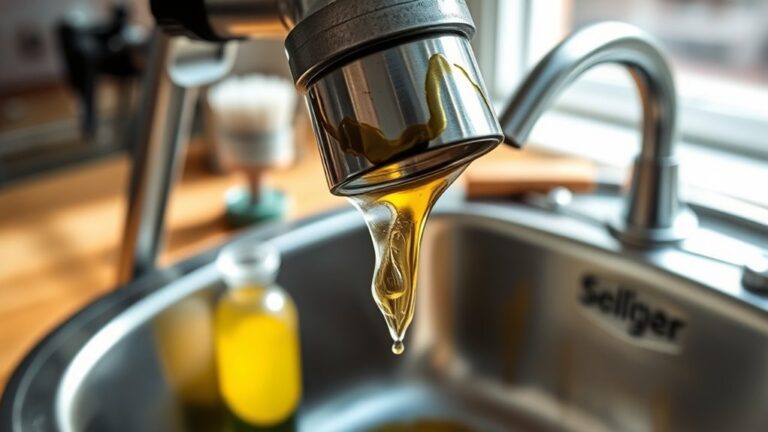
First, depressurize your sprayer by turning it off, releasing pressure, and removing the intake tube.
Next, flush out the oil-based paint by pumping mineral spirits or a compatible solvent through the system until clear fluid flows.
Finally, disassemble key parts, soak them in solvent to dissolve paint, scrub gently, rinse, and dry thoroughly before storing.
Follow these steps to prevent...

To use a paint sprayer for primer, start by mixing and thinning your primer as instructed. Then, pour it into the spray gun’s container.
Next, adjust the spray pressure between 40-60 PSI. Test the spray pattern on scrap material to make sure it’s just right.
Hold the gun 6-12 inches from the surface. Use smooth, overlapping strokes for even coverage.
After spraying, clean the sprayer...

You’ll work faster and easier with a paint sprayer, covering large surfaces in one pass and cutting your project time dramatically. It preserves surface textures without brush marks and guarantees smooth, even coverage—even in tight spots.
Sprayers provide precise control, keeping your work clean and professional-looking. Plus, quick paint changes and reduced prep make your job simpler and more...