


To clean out a paint sprayer, first release any leftover paint at low pressure by gently squeezing the trigger while pointing the wand down.
Next, wipe down all exterior parts with a damp cloth to remove splatters and dust. It's pretty straightforward.
Then flush the hoses and spray tip with clean water or cleaning fluid until it runs clear. This part helps get rid of any paint stuck...

When using a paint sprayer indoors, make sure you ventilate the area well to avoid fumes and wear protective gear like gloves and goggles.
Prepare surfaces by cleaning and masking thoroughly to protect floors and fixtures. Choose a low-pressure sprayer designed for indoor use and keep your spraying technique steady for even coverage.
Also, manage electrical safety by unplugging devices and...

Yes, you do have to thin paint for a Wagner sprayer to guarantee smooth application and avoid clogging the nozzle. Thinning helps maintain the right paint viscosity, allowing for consistent flow and even coverage.
For water-based paints, about 10% water is common, while oil-based types need thinner or mineral spirits added gradually. Proper thinning also reduces splatter and sputtering, making...
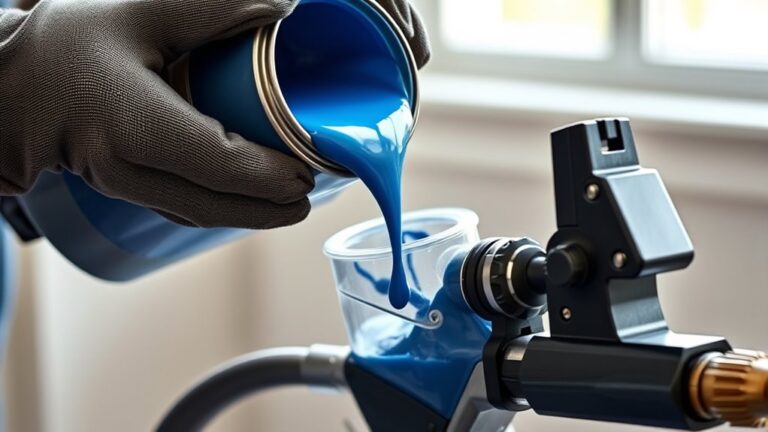
To use any paint in a paint sprayer, you first need to strain and thin it as recommended, ensuring it flows smoothly without clogging.
Set up your sprayer by attaching the turbine and filling the cup. Then, adjust the nozzle and spray pattern to suit your project.
Keep the sprayer at least six inches from the surface for even coverage.
After use, clean and maintain the sprayer for peak...
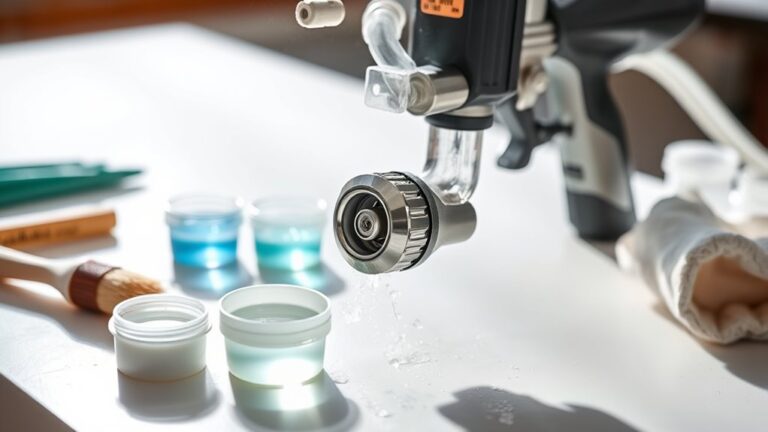
If your paint sprayer shows uneven spray or reduced flow, you've likely got a clog. First, lock the trigger and rotate the spray tip to test different spray patterns.
Next, remove the tip and filters, soaking them in the correct solvent—mineral spirits for oil-based, warm water for water-based paint. Use a soft brush to clear buildup, rinse thoroughly, and dry.
Ultimately, clean your filters...
You can expect to pay between $60 and $125 per day to rent a paint sprayer, with electric models usually around $75 daily.
Weekly rentals offer better value, typically ranging from $240 to $500.
Keep in mind extra costs like cleaning, delivery, and damage waivers can add up.
Renting makes sense for short jobs, but buying might save you money if you paint often.
There’s more to ponder...
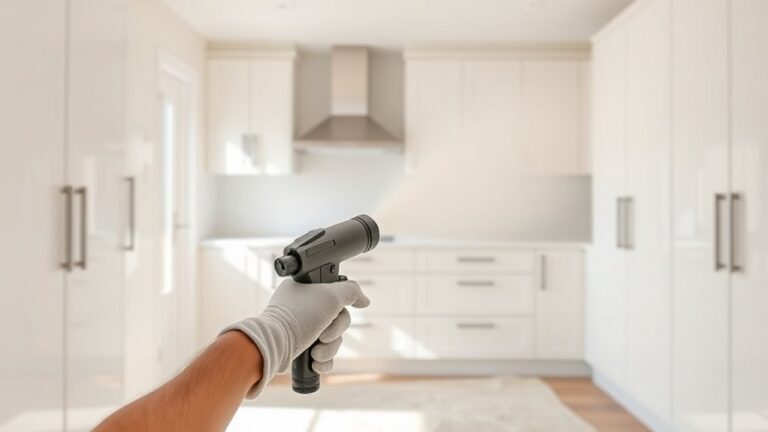
To paint your kitchen cabinets with a sprayer, first remove and label all doors, drawers, and hardware. Next, clean and sand every surface to guarantee paint sticks well.
Prepare your workspace by protecting nearby areas, then apply a primer to seal the wood. Load and adjust your sprayer for even coverage, applying multiple thin coats with light sanding in between.
Finally, reattach all...
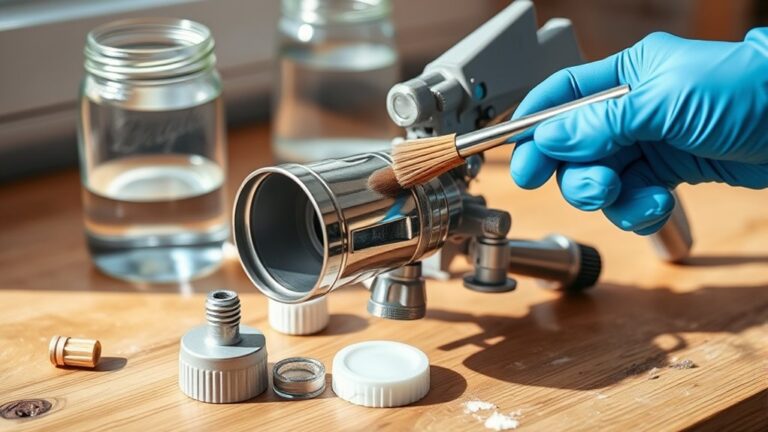
To clean your paint sprayer in five easy steps, start by releasing excess paint at low pressure to avoid splattering. Then, wipe down the exterior to remove drips and buildup.
Next, flush the system thoroughly with clean water or a suitable cleaner until clear fluid flows. Remove and soak the spray tip to clear clogs, scrubbing gently if needed.
Finally, flush with storage fluid and store it...
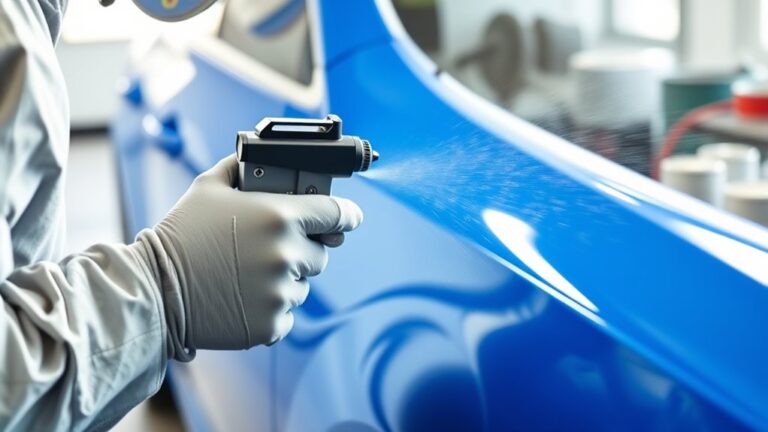
To paint a car with an airless sprayer, start by thoroughly cleaning, sanding, and priming the surface for good adhesion.
Adjust your sprayer to a fine-finish tip like 310 or 410, and test spray on scrap to get consistent pressure and pattern.
Apply epoxy primer and basecoat in several thin coats, letting each dry properly.
Then finish with multiple clearcoat layers while maintaining...