How You Can Use Acrylic Paint in a Paint Sprayer
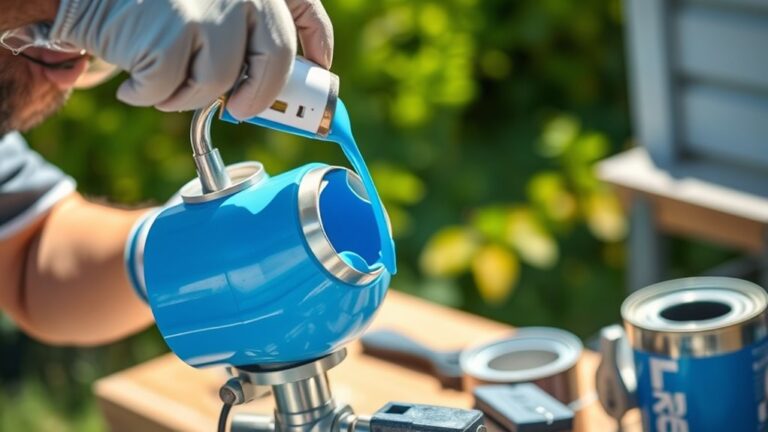
You can use acrylic paint in a paint sprayer by thinning it with water at about a 10:1 ratio for smooth flow and sprayability. This helps the paint move easily through the sprayer without clogging. Make sure to blend it well and test on a scrap surface first to see how it sprays.
Set your sprayer with a 2.0 mm aircap and keep the spray fan narrow, around 8 inches wide. Hold the gun about 6-8 inches from your surface for the best coverage.
Use steady, even strokes to apply an even coat without drips or runs.
Keep practicing, and you’ll discover more tips for a flawless finish with your acrylic paint sprayer. It’s all about patience and finding the right settings that work for your specific project.
Key Takeaways
- Thin acrylic paint with water at a 10:1 ratio for optimal spray consistency. Always test on scrap before you start applying it to your project.
- Use a 2.0 mm aircap and set the spray fan width to about 8 inches. This helps achieve smooth atomization, making your finish look great.
- Keep a steady spray distance of 6-8 inches from the surface. Move your hand with even, consistent strokes while spraying to avoid drips and uneven spots.
- When working with bare wood, prime it first with a thinned water-based primer. Let it dry for 24 hours, then sand it down before you start spraying the acrylic paint.
- Try to avoid additives like Floetrol. They can cause micro-bubbles, which mess up the finish. Keeping it simple ensures a flawless, professional look every time.
Preparing Acrylic Paint for Spraying
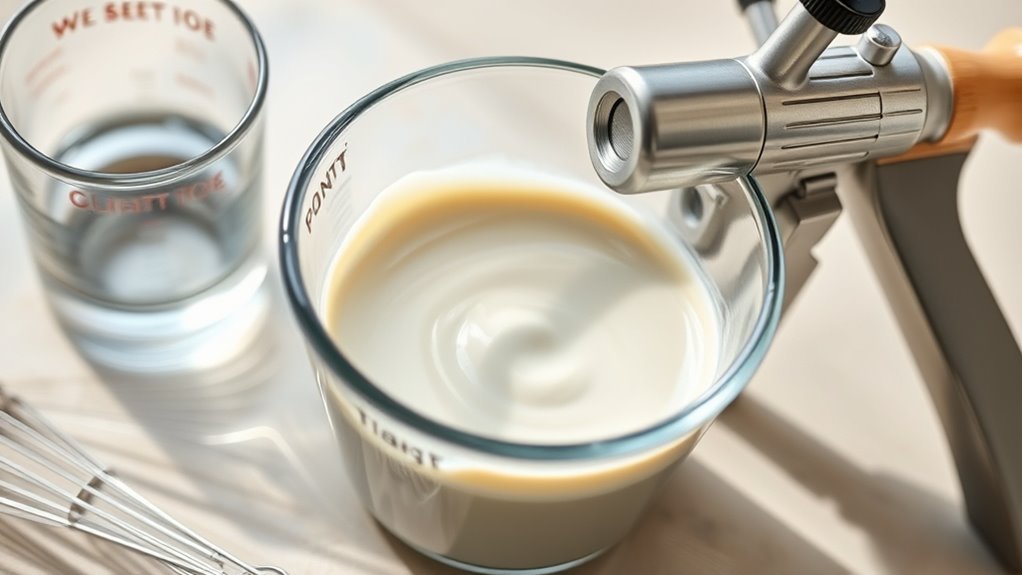
When preparing acrylic paint for spraying, you’ll want to thin it to the right consistency—typically a 10:1 ratio of paint to water works well. Diluted with water, the acrylic becomes easier to spray and flows smoothly through your spray gun.
Use a clean container to mix the paint and water thoroughly, ensuring a uniform blend. Before starting your project, always test the mixture on a scrap surface to check flow and sprayability.
Avoid adding additives like Floetrol to your acrylic paint, as they can create micro-bubbles and ruin the finish. Adjust the water ratio slightly only if needed, aiming for a viscosity of about 35-40 seconds in a Ford 4-cup, depending on your spray equipment.
Techniques for Effective Acrylic Spray Application

Achieving a smooth, professional finish with acrylic paint requires mastering your spray technique alongside proper paint preparation. When spraying acrylic, keep a consistent distance of 6-8 inches and use steady, even strokes to apply each coat of paint.
Narrow your spray fan to about 8 inches with a 2.0 mm aircap set for ideal atomization. Always test spray on scrap material to fine-tune your paint-water ratio and spray settings before tackling your main surface.
| Technique | Recommendation |
|---|---|
| Paint Viscosity | Thin 10:1 with water |
| Aircap Size | Use 2.0 mm |
| Spray Fan Width | Narrow to 8 inches |
| Distance & Motion | 6-8 inches, steady motion |
Avoid additives like Floetrol to prevent micro-bubbles that degrade your finish when you spray acrylic. Trust me, keeping it simple here really helps your final look.
Tips for Achieving a Professional Finish
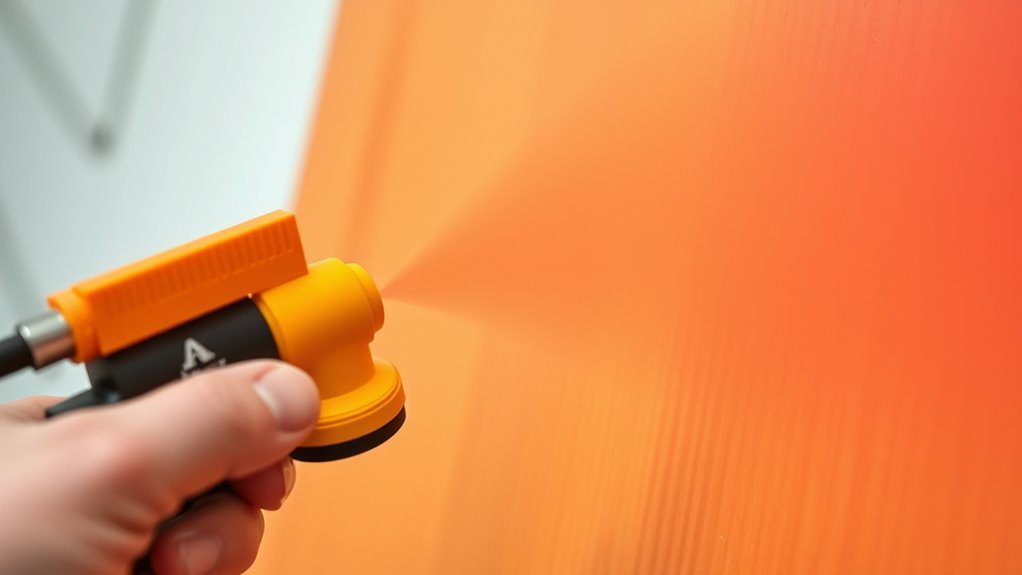
Since proper preparation sets the foundation, you’ll want to thin your acrylic paint with paint and water at a 10:1 ratio to guarantee smooth spraying and ideal flow. Make sure you use a 2.0 mm aircap and narrow the spray fan to about 8 inches for the best atomization and finish.
Thin acrylic paint 10:1 with water, use a 2.0 mm aircap, and keep spray fan to 8 inches for perfect flow.
Adjust your spray gun’s fluid level to balance product laydown without oversaturating the surface. Avoid adding Floetrol or other additives, as they can cause micro-bubbles and spoil the professional look.
If you’re working on bare wood, prime it with a water-based primer thinned the same way. Then, allow 24 hours to dry before sanding and applying acrylic paint.
Following these tips ensures a flawless, professional finish every time. It really makes all the difference!
Frequently Asked Questions
Can I Put Acrylic Paint in a Paint Sprayer?
Yes, you can put acrylic paint in a paint sprayer, but you’ll need to dilute it properly with water to avoid clogging.
Always test the mixture first to ensure smooth spraying and a flawless finish.
This way, you get the best results without any hassle. Give it a try!
Does Acrylic Paint Need to Be Thinned for a Sprayer?
Yes, you’ll usually need to thin acrylic paint before spraying to guarantee smooth flow and avoid clogs.
Stick to about a 10:1 ratio of paint to water, but always test first for best results. It’s a good idea to experiment a bit to find what works perfectly for your specific sprayer and project.
How to Mix Acrylic Paint for Spraying?
You mix acrylic paint by thinning it with water at about a 10:1 ratio. Shake well, test spray on scrap, and adjust water if needed.
Keep stirring during spraying to maintain consistency and avoid clogs. It really helps to keep things smooth while you work.
What Size Spray Tip for Acrylic Paint?
You’ll want a 2.0 mm spray tip for acrylic paint to prevent clogging and make certain smooth coverage.
Adjust the paint’s viscosity as needed, and keep the spray fan around 8 inches for the best finish.
This way, you get a nice even coat without any drips or patches. It’s all about finding that balance between tip size and paint thickness!
Conclusion
So, you’ve mastered thinning your acrylic paint just right and practiced those perfect spray techniques—only to realize your walls might end up looking better than your art skills suggest. Funny how a paint sprayer can make even the most hesitant painter feel like a pro, right?
Remember, the secret isn’t just in the paint or the sprayer, but in your patience. Taking your time to apply thin, even coats will make all the difference. Now go ahead, spray away like you’ve got it all figured out!
Using acrylic paint in a paint sprayer can transform your painting projects, giving you smooth, professional-looking results. Just keep practicing those techniques, and soon you’ll be amazed at how effortlessly your walls and art come together. With the right thinning and a steady hand, acrylic paint and a sprayer make a winning combo for any DIY enthusiast.