How You Can Spray Paint Furniture Step by Step
Start by removing all hardware from your furniture and giving it a good clean. This step ensures that the spray paint will adhere properly and the finish will look smooth.
Next, lightly sand the surface with 320-grit sandpaper to create a slightly rough texture. Then, wipe away any dust to prepare for painting.
Apply a suitable primer in thin, even coats. This helps the paint stick better and improves the overall finish. Make sure each coat dries before applying the next.
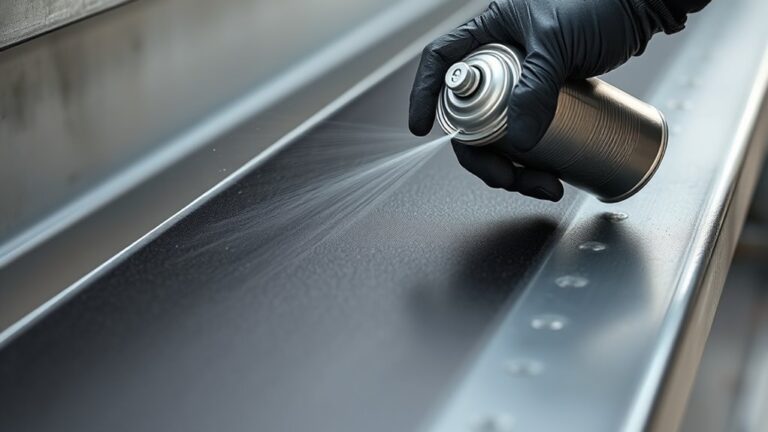
Shake your spray paint can vigorously for a minute or two. Then, spray multiple light layers from about 10-12 inches away, holding the can steady. Let each coat dry completely before adding more.
To finish, apply a clear topcoat to protect your furniture and enhance durability. Keep following these steps for tips that guarantee a flawless, long-lasting spray paint finish.
Key Takeaways
- Remove hardware and clean furniture thoroughly before sanding with 320-grit sandpaper. This helps ensure a smooth surface.
- Apply a suitable primer in thin coats. If you’re working with metal or rusty areas, use a rust-inhibiting primer.
- Shake the spray paint can well and hold it about 10-12 inches from the surface. Apply multiple thin, even coats using overlapping strokes.
- Let each coat dry for 30 minutes to an hour before adding the next one. This will give you a smooth finish.
- Finish up with a clear top coat. Then, let it dry overnight to protect the paint and make it last longer.
Preparing and Priming Your Furniture
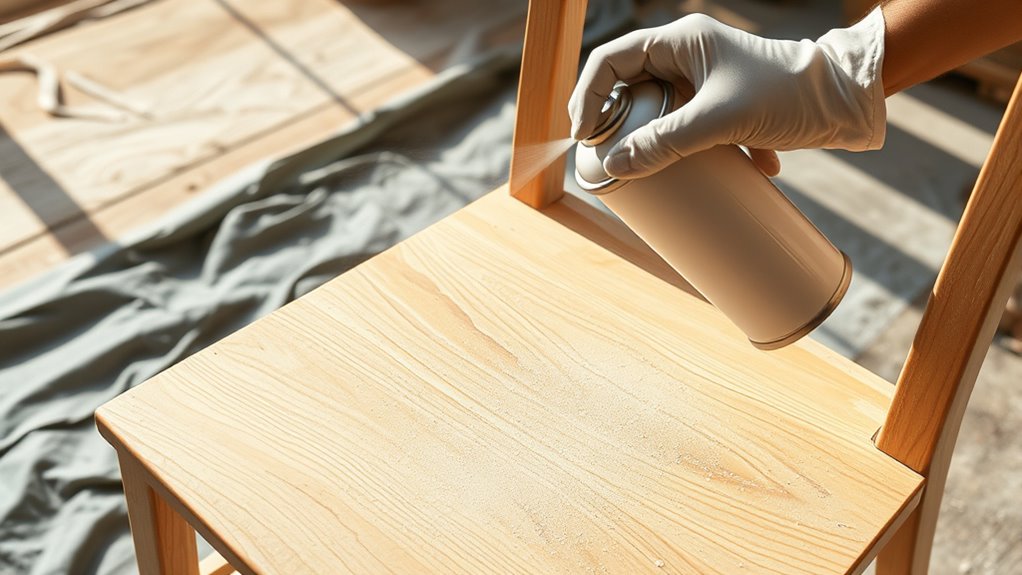
Before you start painting, remove all hardware and clean your furniture thoroughly with mild soap and water or a degreaser to eliminate dust and grime. This essential prep work guarantees a clean surface for better paint adhesion.
Start by removing hardware and cleaning furniture with mild soap to ensure paint sticks well.
Next, lightly sand the furniture using 320-grit sandpaper, moving with the grain to smooth the surface and remove dust. Wipe down with a brush or cloth—preferably a tack cloth or damp cloth—to prepare the surface for priming.
If your piece is unfinished or stained wood, apply primer in light coats to prevent blotchiness and improve paint adhesion. For metal or rusty spots, use a rust-inhibiting primer like Krylon Rust Tough.
Proper sanding and priming create a flawless base, helping your paint job last longer and look professional. It really makes a difference in the final result!
Applying Spray Paint and Finishing Touches
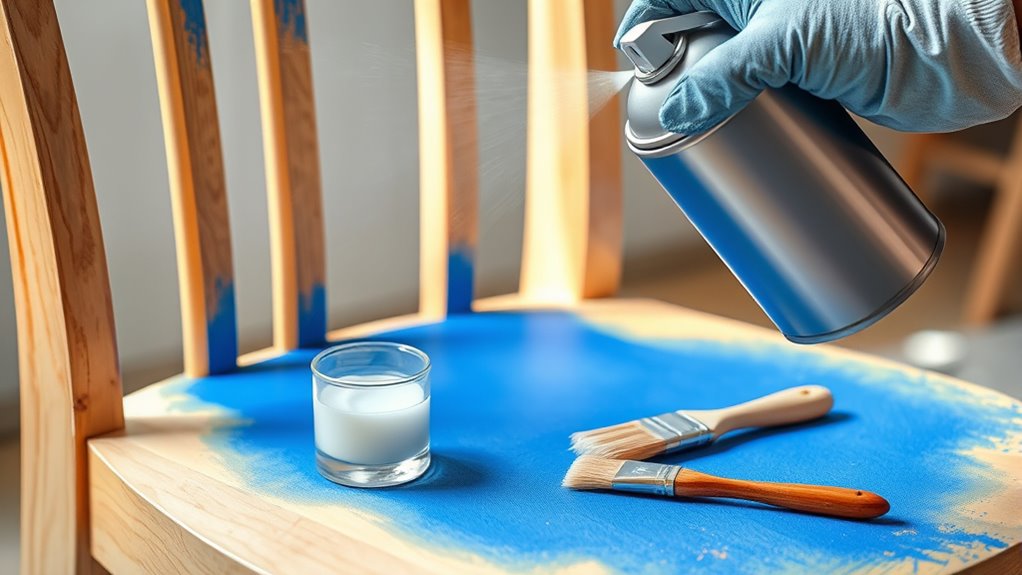
Once your furniture is properly sanded and primed, you’re ready to apply the spray paint. Start by shaking the spray paint can vigorously for at least one minute to guarantee even consistency.
Hold the can 10-12 inches from the surface and use light, sweeping motions for the application. Apply multiple thin coats rather than one heavy layer, spraying in overlapping passes to achieve smooth coverage and prevent drips.
Allow each coat to dry completely—usually 30 minutes to an hour—before applying the next. After the final coat dries, finish with a clear top coat to protect your finish and enhance durability.
Let the top coat dry overnight for the best results. Following these steps ensures your spray painting furniture project looks professional and lasts.
Frequently Asked Questions
How Do You Seal Spray Painted Furniture?
You seal spray-painted furniture by applying a clear topcoat like water-based polyurethane in thin, even layers. Let each coat dry completely before moving on.
It’s a good idea to lightly sand between coats to keep the surface smooth. Apply 2-3 coats for the best durability.
After you’ve finished, let it cure fully before using the furniture. This helps protect your paint job and keeps it looking great!
Can You Just Spray Paint Over Furniture?
Yes, you can spray paint over furniture, but you’ve got to prep the surface first. Clean, sand, and prime if needed to make sure the paint sticks well and looks smooth.
Multiple light coats work best. This way, you avoid drips and get a nice even finish. Just take your time and let each coat dry before adding the next one.
What Kind of Spray Paint Do You Use for Furniture?
Like a tailor picks fabric, you choose spray paint labeled for furniture—Rust-Oleum Universal or Krylon Fusion.
These are all-in-one, quick-drying, and rust-inhibiting for metals.
Match the finish to your style, making sure you get even coverage and durability every time.
Can I Spray Paint Directly on Wood?
Yes, you can spray paint directly on wood, but you should lightly sand and clean it first.
Applying a primer helps, especially on raw wood, and using multiple thin coats will give you a smooth, durable finish.
It’s a good idea to take your time with each coat so the paint sticks well and looks great.
Conclusion
Spray painting your furniture is like giving an old story a fresh page. Each stroke breathes new life, turning worn surfaces into vibrant expressions of you.
As you finish, remember: the paint isn’t just color—it’s your creativity sealed in every coat. Just like a seed needs soil to grow, your patience and care transform simple furniture into something beautiful and lasting.
So, embrace the process and watch your space bloom with personality. Spray painting furniture step by step is a fun, creative way to refresh your home. With the right preparation and a bit of patience, you’ll see how easy it is to give your furniture a stunning makeover that reflects your style perfectly.