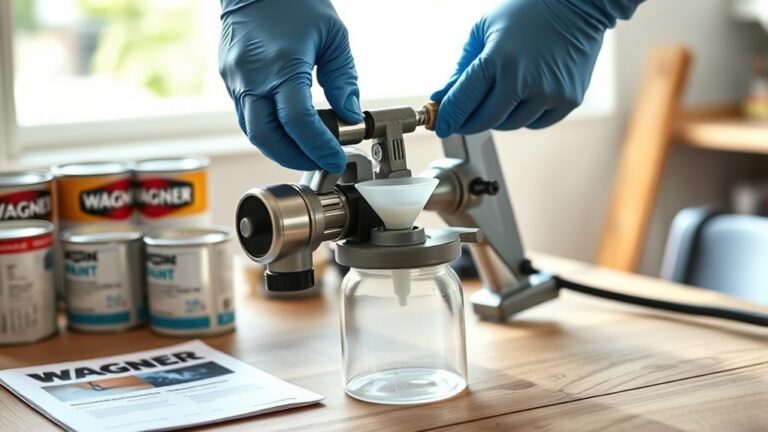
How You Spray Paint Cement Step by Step
To spray paint cement, start by cleaning the surface thoroughly. Use a power washer or a scrub brush along with a concrete cleaner to get rid of dirt and grease. This step is crucial because a clean surface helps the paint stick better and last longer.
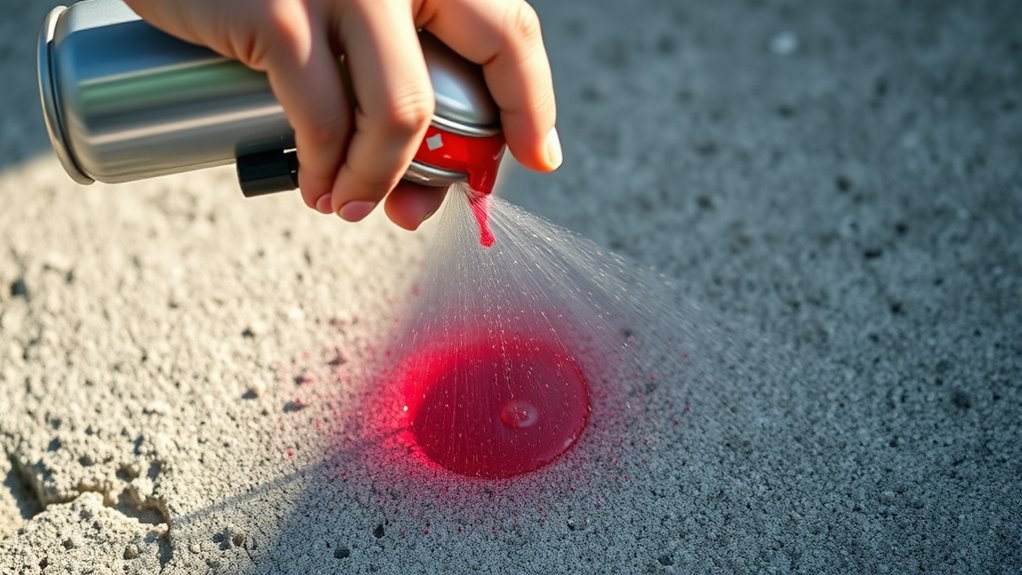
Once the cement is completely dry, shake your spray paint can well. Hold the can about 6-12 inches away from the surface. Apply several light, even coats using overlapping strokes. This technique helps avoid drips and ensures an even finish.
Wait 15-30 minutes between each layer to let the paint dry properly. After you’ve finished spraying, check for any spots that might need a touch-up.
Keep following these steps, and you’ll discover tips for achieving a flawless, long-lasting finish on your cement surface.
Key Takeaways
- Clean the cement surface thoroughly using a power washer or a scrub brush with concrete cleaner. Make sure to remove any loose debris.
- Let the surface dry completely for 24-48 hours before you start painting. Don’t forget to apply masking tape around the edges to protect areas you don’t want painted.
- Shake the spray paint can for 1-2 minutes. Hold it about 6-12 inches from the surface for an even application.
- Apply multiple thin, controlled coats using short bursts. Allow 15-30 minutes of drying time between each layer.
- Once it’s dry, inspect the surface for any imperfections. If needed, do some touch-ups.
- Finally, clean the nozzle by spraying on a scrap surface to keep it clear for next time.
Surface Preparation and Cleaning
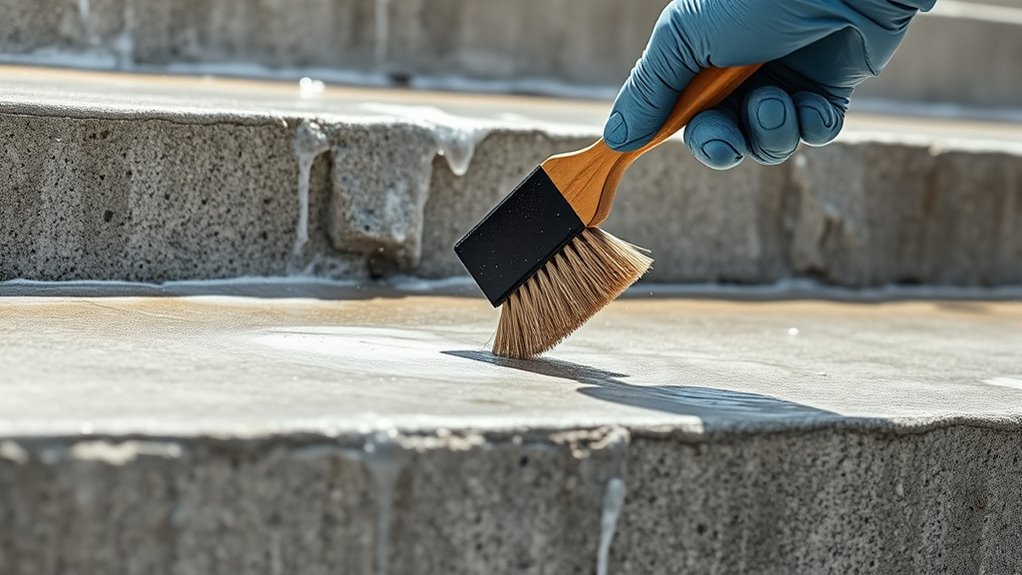
Before you start spraying cement, make sure to thoroughly clean the surface. Use a power washer or a scrub brush combined with a concrete cleaner to remove dirt, grease, and old paint residues effectively.
Focus on dirt removal and eliminate any oil stains or algae that could affect adhesion. Scrape off loose particles, chips, or flaking paint with a wire brush or scraper to create a smooth base.
After cleaning, allow the surface to dry completely—usually for 24 to 48 hours—before proceeding. Don’t forget to apply masking tape around the area to protect nearby surfaces from overspray.
Proper surface preparation guarantees your paint adheres well and lasts longer, so take your time with cleaning and drying before moving on to the next steps.
Applying Spray Paint and Finishing Touches
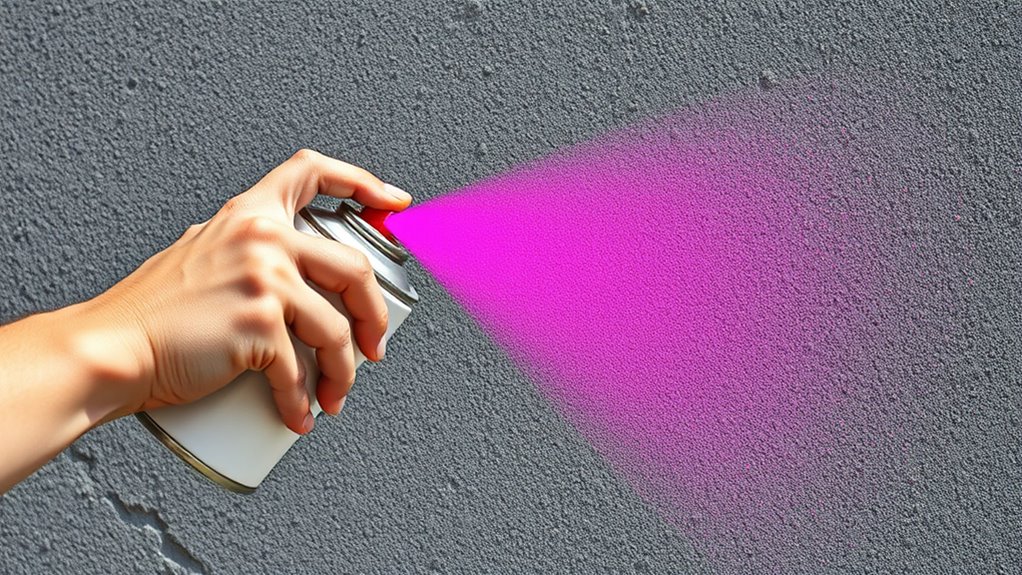
How do you achieve a smooth, even finish when spraying cement? Start by shaking the spray paint can thoroughly for 1-2 minutes to mix the pigment evenly. Hold the can 6-12 inches from the surface and spray in short, controlled bursts.
Use a consistent, overlapping pattern to apply a light coat, avoiding drips and streaks. Instead of one heavy layer, apply multiple thin coats, allowing each to dry for 15-30 minutes before adding the next. This builds up an even finish and reduces imperfections.
After the final layer dries, check for any spots needing touch-up and spray lightly as needed. Finally, clean the nozzle by spraying on a scrap surface and store the can upside down to keep the nozzle clear for future use.
Frequently Asked Questions
What Is the Best Spray Paint to Use on Cement?
You should use Rustoleum’s stone surface spray paint because it’s durable, adheres well to porous cement, and resists chipping.
Choose a matte finish labeled for masonry or outdoor use to get the best, long-lasting results. It really makes a difference in how well the paint holds up over time.
What Do You Put on Cement Before Painting?
You should put a concrete bonding primer on cement before painting. It improves adhesion and durability.
Also, make sure the surface is clean, dry, and etched if needed to help the primer stick better. That way, your paint job will last longer and look great.
Will Spray Paint Stay on Cement?
Just like a knight’s armor needs polish to shine, your spray paint will stay on cement if you prep it well, use a primer, apply light coats, and seal it properly.
Then, it’ll last through battles of weather.
Can I Paint Directly on Cement?
Yes, you can paint directly on cement, but you’ve got to clean, dry, and prep the surface well.
For new cement, wait 30-60 days to cure, then apply a concrete primer before painting for best results.
Conclusion
Now that you’ve prepped and painted your cement surface carefully, you’re set to enjoy a fresh, vibrant look. Remember, “measure twice, cut once” applies just as well here—taking your time with each step guarantees a flawless finish.
With patience and attention, your spray-painted cement will not only look great but also stand the test of time. Proper preparation and the right spray paint technique are key to achieving that perfect coat.
Keep practicing, and you’ll master this skill in no time! Spray painting cement can be easy and fun once you get the hang of it, giving your space an instant upgrade. So go ahead, give your cement surface a fresh new look with confidence!