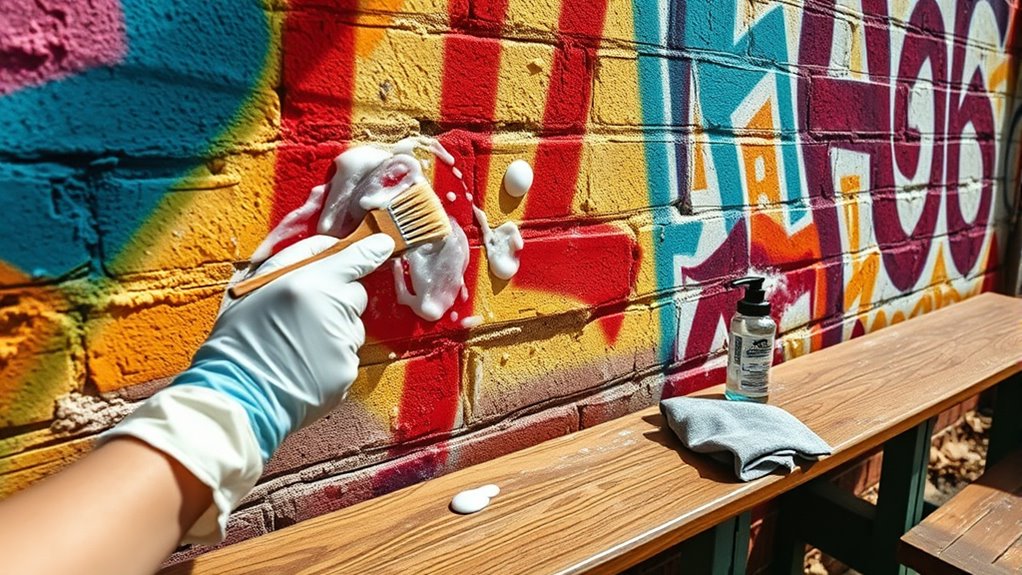
How Can You Remove Spray Paint Step by Step?
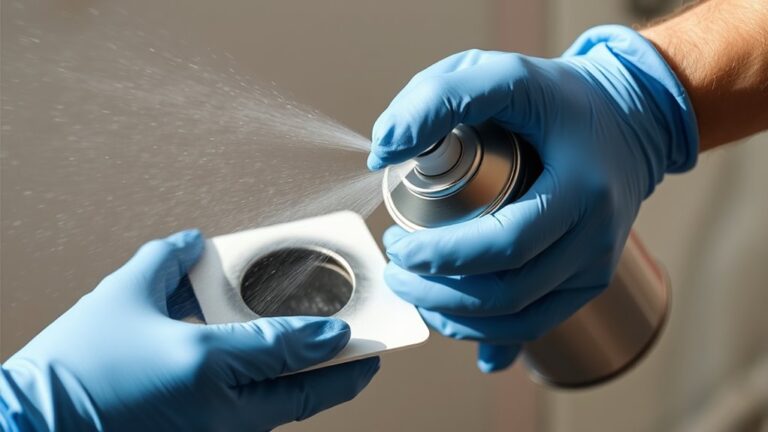
To remove spray paint effectively, start by protecting yourself with gloves and making sure your workspace is well-ventilated. This is important because some paint removers can have strong fumes.
Next, identify the surface you’re dealing with—whether it’s concrete, metal, wood, plastic, or glass. Each surface needs a slightly different approach to avoid damage and get the best results.
Begin by carefully scrubbing or scraping off any loose paint. Then, use a chemical remover that’s suitable for your specific material. For example, paint stripper works well on metal, while rubbing alcohol can be good for plastic.
If you’re working with delicate surfaces, try gentle sanding or non-abrasive pads instead. Don’t forget to cover nearby areas to protect them from spills or splashes.
Keep reading for detailed, surface-specific steps to guide you through the spray paint removal process.
Key Takeaways
- Identify the surface type to select the appropriate removal method and protect surrounding areas with coverings.
- Wear protective gear and ensure proper ventilation when working with chemical removers or solvents.
- For concrete, start with power washing. Then apply chemical remover and scrub thoroughly.
- Use paint strippers or acetone on metal. Rubbing alcohol or baking soda paste works well on plastic. For glass, use a household cleaner.
- On wood, apply chemical removers designed for wood. You might need to do some light sanding afterward.
Prepare for Spray Paint Removal

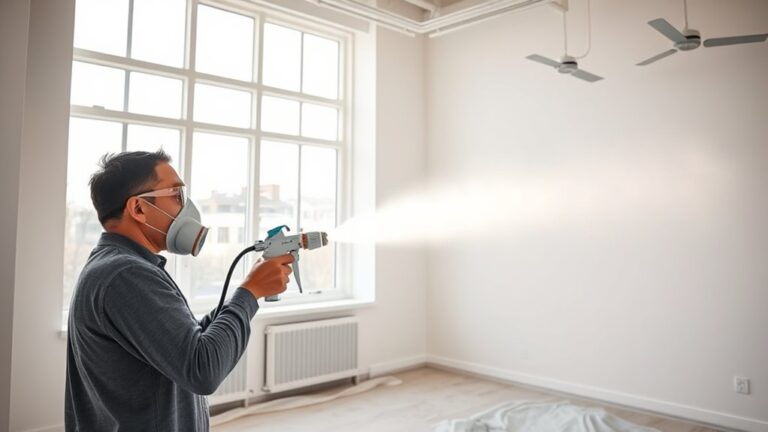
Before you begin removing spray paint, make sure you’re wearing gloves, masks, and goggles to protect yourself from harmful fumes and splashes. Your personal safety depends on proper protective gear when handling chemical cleaners.
Next, focus on surface identification. Knowing if you’re dealing with metal, wood, concrete, or glass helps determine suitable removal methods.
Prepare the area by covering nearby surfaces with drop cloths or plastic sheeting. This provides overspray protection and helps avoid damage.
Gather all necessary tools and supplies—like paint strippers, microfiber cloths, and rubbing alcohol—before starting.
Finally, guarantee good ventilation by working outdoors or opening windows to disperse chemical fumes safely. Proper preparation sets the stage for effective, safe spray paint removal.
Methods for Removing Spray Paint From Different Surfaces
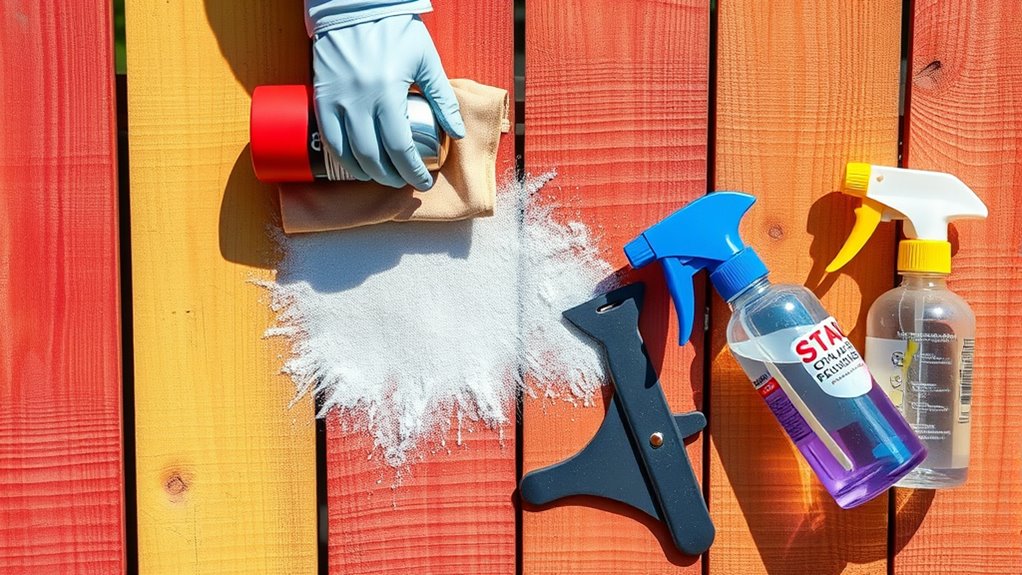
When tackling spray paint removal, your approach should vary depending on the surface you’re working with. For concrete, start by power washing excess paint, then apply a chemical remover and scrub thoroughly.
On metal surfaces, scrape loose paint with a putty knife, apply paint stripper or acetone, and scrub with a brush. It’s pretty straightforward but effective.
For metal, scrape loose paint, apply stripper or acetone, then scrub—simple and effective.
For plastic, gently scrub with rubbing alcohol or non-acetone nail polish remover. If you run into stubborn spots, try using a baking soda paste to help lift the paint.
Glass and windows respond well to a household cleaner or vinegar-water spray. Follow that up by scrubbing with a non-abrasive pad and then polishing for a clear finish.
When removing spray paint from wood, avoid sharp tools. Instead, use a chemical remover made for wood and sand lightly if needed.
Each method ensures effective paint removal without damaging the material. Just pick the right technique for the surface, and you’ll get great results.
Frequently Asked Questions
What Is the Hardest to Remove Spray Paint?
The hardest spray paint to remove is oil-based, especially those with high pigment and industrial-grade compounds.
If it’s cured on textured or porous surfaces, or solvent-resistant like epoxy, you’ll need strong chemicals and extra effort.
Does WD-40 Remove Spray Paint?
Yes, WD-40 can remove spray paint, especially light stains. You’ll want to spray it on, wait a few minutes, then wipe.
For tougher paint, you might need harsher methods beyond just WD-40. It works well for some jobs, but it’s not a miracle fix for every spray paint mess.
Will Rubbing Alcohol Dissolve Spray Paint?
Yes, rubbing alcohol can dissolve spray paint, especially if it’s water-based and fresh. You’ll want to apply it, let it sit briefly, then scrub gently.
Always test first to protect your surface. It’s a good idea to make sure the alcohol won’t damage whatever you’re working on.
Can Dawn Remove Spray Paint?
Yes, Dawn can remove fresh spray paint from fabrics, plastic, or painted surfaces. Apply it generously, scrub gently, then rinse.
It works best on new stains but might struggle with dried or stubborn paint spots. So, try to treat the paint as soon as possible for the best results.
Conclusion
Removing spray paint is like wiping fog from a window—you restore clarity and reveal the true surface beneath. By preparing properly and choosing the right method for each material, you peel away layers of unwanted color, letting the original beauty shine through.
Remember, patience and care are your brushes, and with each step, you’re not just cleaning—you’re renewing, reclaiming space, and turning back time to what once was.
When you remove spray paint, you’re essentially giving your surfaces a fresh start. Whether it’s wood, metal, or glass, using the right technique makes all the difference. So take your time, follow the steps carefully, and soon enough, you’ll see that spray paint disappear, revealing the clean, original surface underneath. It’s all about being gentle yet thorough to avoid damage while achieving the best results.