
Can You Use a Paint Sprayer Indoors Safely?
You can use a paint sprayer indoors safely if you keep a few key things in mind. Using a paint sprayer inside your home is convenient and efficient, but it requires some precautions.
Make sure you ventilate well by opening windows and using fans to move fresh air.
Wear protective gear like masks, goggles, and gloves to guard against fumes and overspray. Preparing your space is also important—cover furniture and mask edges to avoid mess.
Pick low-VOC paints and the right sprayer for better control.
Keep these tips in mind, and you’ll handle indoor spraying with confidence.
And don’t worry, there’s more practical advice coming up to help you get the best results!
Key Takeaways
- Ensure proper ventilation by opening windows and using fans to circulate fresh air during indoor spraying. It really helps keep the air breathable and reduces the buildup of fumes.
- Wear personal protective equipment like goggles, masks, and gloves to guard against fumes and overspray. Safety first, right?
- Cover and mask furniture, floors, outlets, and fixtures to protect surfaces from paint overspray. You don’t want to spend extra time cleaning up later.
- Use adjustable, professional-grade sprayers with proper filtration for controlled spray patterns and reduced fumes. These tools make the job easier and safer.
- Clean and maintain the sprayer thoroughly after use to ensure safe and efficient future indoor projects. Taking care of your equipment pays off in the long run.
Essential Safety Measures for Indoor Paint Spraying

When you’re spraying paint indoors, you must guarantee proper ventilation by opening windows and using fans to circulate fresh air and reduce airborne paint particles. Using a paint sprayer for ceiling paint can release fine mist that lingers, so fresh airflow is essential.
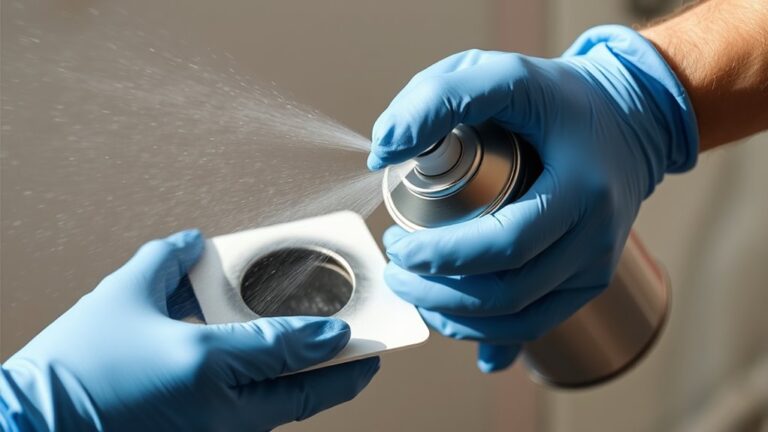
Always wear goggles, a mask or respirator, and gloves to protect your eyes, lungs, and skin from fumes and overspray. Choose low-VOC or zero-VOC ceiling paint to minimize harmful emissions, keeping indoor air safer.
Cover furniture, floors, and fixtures with plastic sheeting or painter’s tape to contain overspray and avoid damage. Finally, follow your paint sprayer’s manufacturer guidelines carefully, including recommended usage areas and cleanup.
These steps ensure your indoor painting project stays safe and efficient.
Preparing Your Space for Efficient and Clean Spraying

Properly preparing your space sets the stage for a smooth and tidy paint spraying job. Start by covering floors, furniture, and fixtures with plastic sheeting or Ram Board to protect them from overspray.
Mask windows, outlets, baseboards, and door casings using painter’s tape and plastic to prevent paint from seeping into unwanted areas. Remove or sand down wall fixtures like outlet covers and door hardware for a clean finish.
Since paint spray patterns can spread fine mist, controlling your environment is key. Make sure to open windows and use fans to ventilate and dissipate fumes during spraying.
After your project, clean and maintain your sprayer thoroughly to avoid paint buildup and keep future indoor jobs safe and efficient. It really helps to keep everything working smoothly next time you paint.
Choosing the Right Paint and Equipment for Indoor Use

Since indoor air quality matters a lot, you should choose low-VOC or zero-VOC paints designed specifically for indoor use to keep your space safe.
If you’re looking for the right equipment, make sure to pick a sprayer with adjustable flow and spray patterns to control overspray and mess.
Opt for professional-grade sprayers with proper filtration to reduce fumes and airborne particles indoors.
Always follow manufacturer instructions for cleaning and maintenance to keep your sprayer safe in enclosed spaces.
Here’s a quick comparison to help you decide:
| Feature | Recommendation |
|---|---|
| Paint Type | Low-VOC or Zero-VOC |
| Sprayer Flow Control | Adjustable flow & patterns |
| Filtration | High-quality filtration |
| Sprayer Grade | Professional-grade |
| Maintenance | Follow manufacturer guide |
Frequently Asked Questions
How Long Do Spray Paint Fumes Stay in the Air?
Spray paint fumes usually stay in the air for 24 to 48 hours. You can speed this up by ventilating the area well with fans and open windows.
Using low-VOC spray paints also helps reduce lingering fumes. So, if you want to clear the air faster, these tips really make a difference!
Do I Need to Wear a Mask When Using a Paint Sprayer?
Yes, you definitely need to wear a mask when using a paint sprayer. It protects your lungs from harmful fumes and particles, reducing health risks.
Always use a properly fitted respirator with a HEPA filter for safety. Trust me, it’s worth the extra effort to keep yourself safe.
What Type of Paint Sprayer Is Best Indoors?
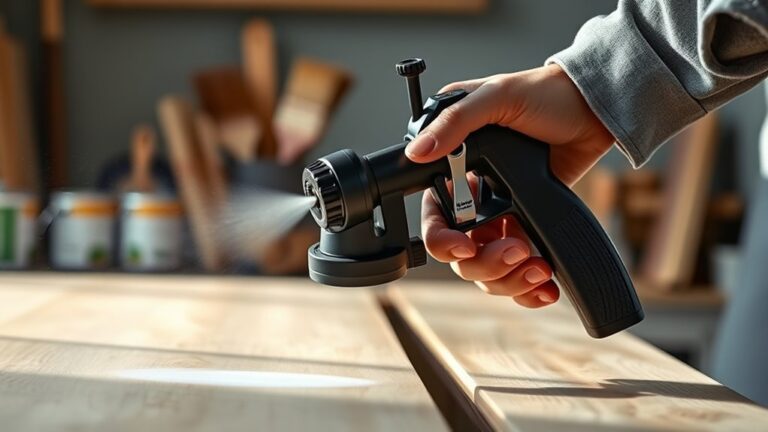
Think of HVLP sprayers as your indoor paint whisperers—they deliver smooth, precise coats with less mess.
You’ll want one with adjustable flow and a fine finish to keep your walls looking flawless without the chaos.
Is It Better to Use a Paint Sprayer or Roller for Interior Walls?
You’ll find rollers better for small or detailed interior walls since they offer control and less mess.
But for large, flat surfaces, a paint sprayer gives faster, even coverage—just prep and ventilate properly.
Conclusion
You might think using a paint sprayer indoors is risky, but with the right precautions, it’s actually safer than you expect. When you prepare your space well, choose the proper equipment, and pick the right paint, you’ll find the process not only efficient but surprisingly clean.
So, before you hesitate, remember: the very steps that protect your home also make your job easier—turning a formidable task into a smooth, satisfying project.
Using a paint sprayer indoors safely is all about preparation and care. Proper ventilation, using drop cloths, and wearing protective gear can significantly reduce risks. Plus, selecting low-VOC or water-based paints helps keep the air quality better.
By following these simple tips, indoor paint spraying becomes a manageable and even enjoyable task, combining speed and a professional finish without the mess or health hazards you might worry about.


3 Comments