How You Can Get Spray Paint Off Your Car Quickly
To get spray paint off your car quickly, start by thoroughly washing and drying the affected area. This helps remove dirt and grit that could scratch your car’s surface during the cleaning process. You want to make sure the spot is as clean as possible before moving on to the next step.
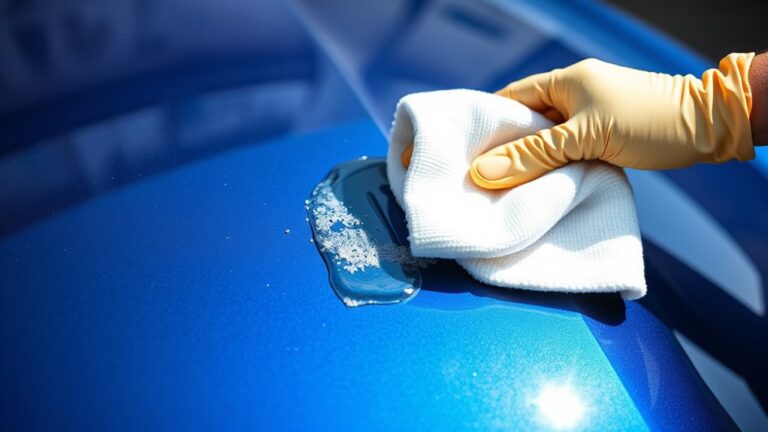
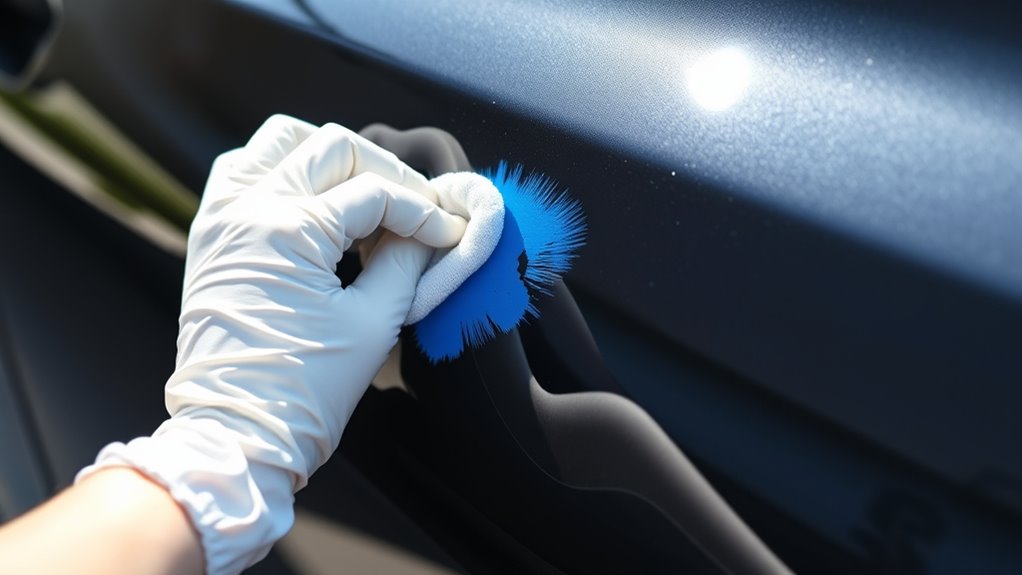
Next, grab a microfiber applicator and apply a safe solvent like lacquer thinner carefully. But here’s a tip—always test the solvent first on a hidden spot to make sure it won’t damage your car’s clear coat.
Avoid scrubbing hard because that can harm the paint underneath. Instead, use gentle polishing if needed.
Keep repeating these steps until the spray paint is gone. Once clean, finish up by polishing and waxing the area to give your car a smooth, protected finish.
Stick around for more helpful tips on safe and effective spray paint removal!
Key Takeaways
- Wash and dry the affected area thoroughly to remove dirt and loosen spray paint before treatment. This makes the whole process easier and more effective.
- Test a small hidden area with a chemical solvent like lacquer thinner first. You want to make sure it won’t damage your car’s paint before going all in.
- Apply solvents gently using microfiber applicators. Avoid aggressive scrubbing because you don’t want to mess up the clear coat on your car.
- Use a clay bar or a dual action polisher to help remove stubborn spray paint residues. These tools work mechanically to lift off what’s left behind.
- Once the spray paint is gone, polish and wax the area. This restores the shine and protects your car from future damage, keeping it looking great.
Prepare Your Gear and Surface
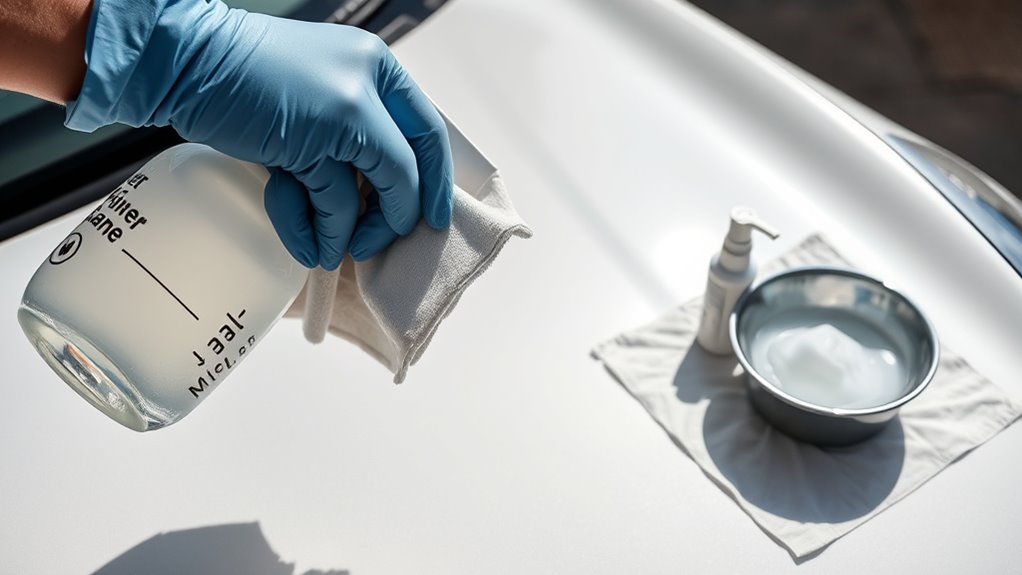
Before you start removing spray paint from your car, make sure you’ve gathered all necessary gear like microfiber applicators, Butter Wet Wax, and a dual action polisher.
To prepare the surface properly, wash the affected area thoroughly with warm, soapy water. This removes dirt and loose spray paint particles that could interfere with the removal process.
Wash the area with warm, soapy water to remove dirt and loose spray paint before removal.
Dry the surface completely to avoid diluting any cleaning agents you’ll apply later. Inspect the area carefully for debris or grit that might scratch your car’s paint during removal.
Remove any contaminants you find to protect your vehicle. Preparing both your gear and the surface in advance guarantees a smooth, efficient process without interruptions or damage, setting you up for successful spray paint removal.
Effective Methods to Remove Spray Paint
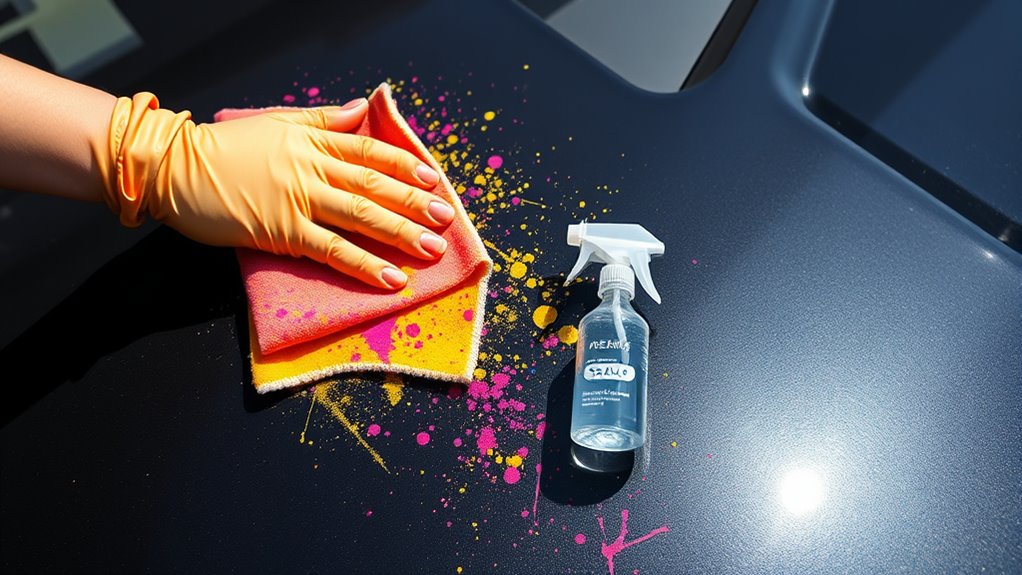
With your gear ready and the surface clean, you can start tackling the spray paint using a combination of chemical and mechanical methods.
To remove spray paint, begin by applying chemical solvents like lacquer thinner or paint thinner carefully to avoid harming your car’s clear coat. Before that, wipe the area with alcohol to remove wax or grease, enhancing solvent effectiveness.
Use a clay bar or paint correction techniques to lift stubborn residues gently without damaging the underlying paint. Remember to test any solvent on a small, hidden spot first to prevent accidental damage.
You might need multiple gentle applications of solvents and polishing to fully remove spray paint stains. This balanced approach guarantees thorough removal while protecting your car’s finish.
Frequently Asked Questions
What Is the Best Spray Paint Remover for Cars?
The best spray paint remover for your car is lacquer thinner or paint thinner. You’ll want to use them carefully to avoid damage.
If you’re unsure, consider professional paint correction. It’s a great way to protect your vehicle’s original finish.
Will Vinegar Dissolve Spray Paint?
Vinegar won’t fully dissolve spray paint, but it can soften it a bit. You can use it gently to scrub the paint off without harming your car’s clear coat.
Though, stronger removers work better for tough spots. So, if the spray paint is stubborn, you might want to try something a bit more powerful.
Will WD40 Take Spray Paint off a Car?
Yes, WD-40 can help take spray paint off your car, especially if it’s fresh. Spray it on, wait a few minutes, then wipe with a cloth.
Always wash the area afterward to protect the paint. It’s a simple trick that can save you a lot of hassle!
Does Spray Paint Come off Cars Easily?
Spray paint doesn’t come off cars easily once it dries. If you catch it fresh, you can wipe it off quickly.
But older paint usually needs solvents or professional help to remove it without damaging your car’s finish. So, it’s best to act fast!
Conclusion
You don’t have to live in panic or frustration when spray paint ruins your car’s look—removing it can be shockingly quick and easy! With the right tools and a bit of effort, you’ll have your car shining like new in no time.
Spray paint on your car doesn’t have to be a nightmare. Just a few simple steps can turn things around fast, getting rid of those unwanted marks and restoring your car’s original beauty. It’s all about acting quickly and using the right spray paint removal techniques.
Don’t let a little spray paint feel like the end of the world. Take action now and watch the magic happen instantly! With effective spray paint removal methods, your car will be back to looking its best, turning heads wherever you go. Remember, quick spray paint removal saves time and keeps your vehicle’s finish intact.