How Do You Dispose of Empty Spray Paint Cans Safely
To dispose of empty spray paint cans safely, start by spraying until no paint or hissing sound remains. This ensures all the pressure inside the can is released.
Avoid puncturing or crushing the can because that can cause hazards. Once you’re sure the can is completely empty and pressure-free, check your local guidelines.
Usually, you can either recycle or throw them in the trash.
If you’re not sure whether the can is empty, or if it still feels pressurized, it’s best to take it to a hazardous waste facility.
Following these steps helps protect both you and the environment.
It’s always a good idea to handle spray paint cans carefully and learn about safe disposal methods. That way, you stay safe and keep the planet clean at the same time.
Key Takeaways
- Spray the can completely until no paint or hissing sounds remain, making sure it’s fully empty and pressure-free.
- Never puncture, crush, or expose cans to heat or flames during emptying or disposal. That could cause an explosion.
- Follow local regulations for disposal. If the can is completely empty, you might be able to recycle it or put it in the regular trash.
- If the can still has pressure or chemicals inside, treat it as hazardous waste. Take those cans to hazardous waste collection sites.
- Properly emptying and disposing of spray paint cans helps prevent environmental harm. It also ensures everyone handles them safely.
Proper Steps to Empty Spray Paint Cans
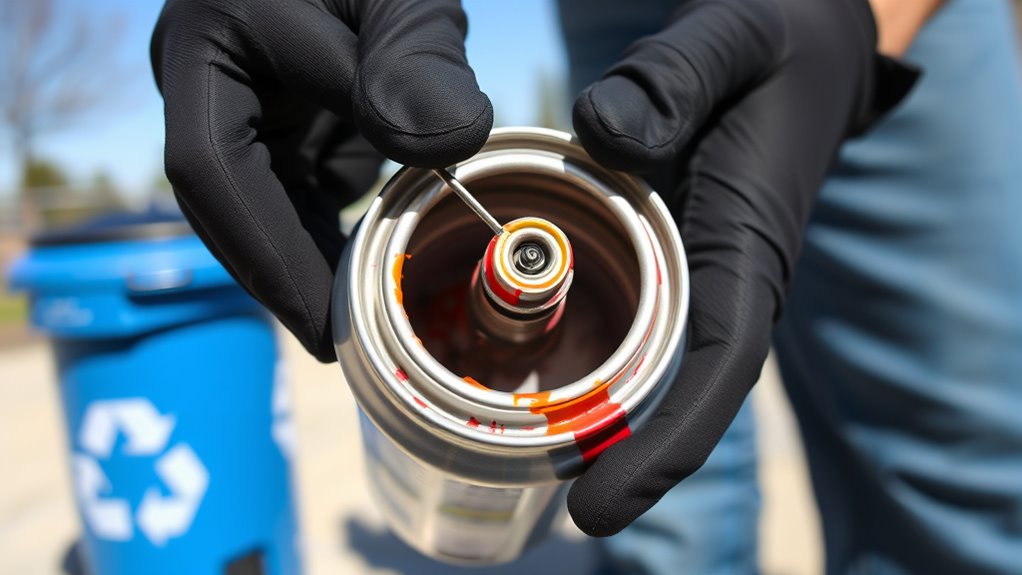
Before disposing of spray paint cans, you need to make sure they’re completely empty. To do this, spray the can in a well-ventilated area until no more spray or hissing sounds come out.
Keep spraying even when the can feels empty to expel all residual spray paint and propellant. This ensures waste aerosol cans aren’t partially full, which can pose hazards.
Continue spraying after empty to release all propellant, preventing hazardous partially full aerosol cans.
Never puncture, crush, or expose the can to heat or flames during this process. If you’re unsure whether your empty aerosol cans are truly empty, check the manufacturer’s instructions or local hazardous waste guidelines.
Properly emptied cans, with pressure near atmospheric, can be safely disposed of, either through universal waste programs or regular trash. Doing this supports environmental protection and prevents risks associated with hazardous waste.
Safe Disposal Methods for Empty Aerosol Cans

When you confirm that your spray paint can is completely empty and free of pressure, you can dispose of it safely by following local regulations. Empty cans that are completely empty and free of residual chemicals can often be placed in curbside recycling or regular trash, depending on your area’s rules.
Never puncture, crush, or heat the aerosol can, as pressure inside may cause it to explode, posing a hazard. If your can still contains pressure or residual chemicals, treat it as hazardous waste and take it to a household hazardous waste collection facility.
Knowing how to dispose of aerosol cans correctly helps prevent environmental harm and keeps you safe. Always check local guidelines before disposing of empty cans to ensure compliance and safety.
Frequently Asked Questions
Can I Put Empty Spray Paint Cans in the Bin?
Yes, you can usually put empty spray paint cans in the bin once they’re completely empty and not pressurized. Just double-check your local rules to be sure.
If you’re unsure, it’s best to take them to a hazardous waste site. That way, you can stay safe and avoid any issues.
Does Home Depot Recycle Spray Paint?
Home Depot absolutely recycles spray paint cans, but you’ve got to make sure they’re completely empty—like, not a single puff left!
Check with your local store first; policies can vary, so don’t just assume.
How to Get Rid of Can Spray Paint?
You get rid of spray paint cans by fully emptying them, then taking empty cans to your local recycling center.
If paint remains, drop them off at a hazardous waste facility. Always follow local disposal rules.
Which Is the Best Way of Getting Rid of Aerosol Cans?
The best way is to completely empty your aerosol can, then safely send it to scrap metal recycling.
Skip smashing or shooting it since sudden sparks or spills could seriously startle you or others nearby. It’s just not worth the risk!
Conclusion
Disposing of empty spray paint cans safely is as important as locking your door at night. You’ll want to make sure the can is completely empty before tossing it in the trash or recycling bin.
Never puncture or burn it, since pressurized cans can explode. Follow your local guidelines for hazardous waste disposal to keep your home and environment safe.
Taking these simple steps protects you and your community, making cleanup quick and worry-free. Always check with your local waste management services to find the best way to dispose of spray paint cans safely. Remember, safe disposal prevents accidents and helps keep the environment clean and healthy for everyone.