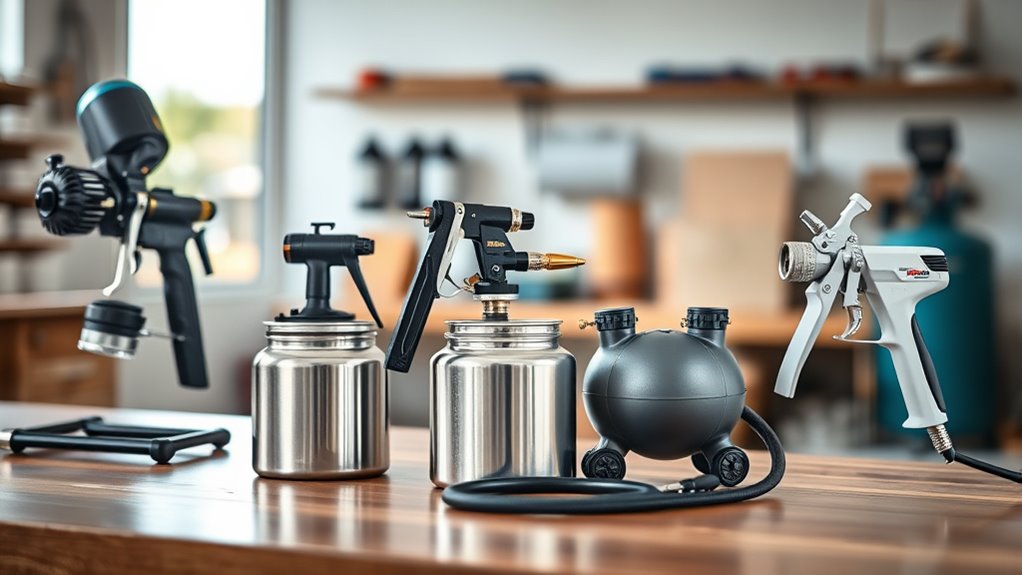
Do You Need a Compressor for Different Types of Paint Sprayers?
You only need a compressor if your paint sprayer relies on compressed air, like traditional or pneumatic models. These sprayers require that extra boost of air pressure to work properly.
HVLP sprayers often have built-in turbines, so they usually don’t require a separate compressor. This makes them more convenient for smaller projects or indoor use.
Airless and electric sprayers generate their own pressure, meaning a compressor isn’t necessary at all. They’re great for bigger jobs and thicker paints.
Choosing the right setup depends on your sprayer type and project size. Keep exploring to find out how to match the best equipment to your painting needs for a smooth finish.
Key Takeaways
- Traditional spray guns require an external compressor to provide the necessary air pressure for paint atomization.
- HVLP sprayers usually have built-in turbines, so they rarely need an external compressor.
- Airless paint sprayers operate with high-pressure pumps and do not require a compressor.
- Electric paint sprayers have built-in motors and do not need an external air compressor.
- Always match the compressor’s CFM rating to the spray gun’s air volume requirements if a compressor is needed.
Understanding the Role of Compressors in Paint Spraying

How do compressors fit into the world of paint spraying? When you use traditional spray guns or HVLP sprayers, a compressor is essential because it provides the air needed to atomize the paint effectively. The compressor pushes compressed air through the spray gun, ensuring a smooth, even coating.
However, if you’re working with airless paint sprayers, you won’t need a compressor since these rely on high-pressure pumps to generate their own pressure internally. Electric paint sprayers also don’t require external compressors because they have built-in motors. So, whether you need a compressor depends on your sprayer type.
Just remember, if your sprayer depends on compressed air, the compressor’s CFM rating must meet or exceed your gun’s air volume requirements for best results. It’s all about matching the right equipment so your paint job turns out perfect.
Comparing Compressor Requirements for HVLP and Airless Sprayers

Knowing whether your paint sprayer requires an external compressor depends largely on the type of sprayer you use. HVLP sprayers usually have built-in turbines that generate the needed air pressure, so they rarely need an external compressor.
Airless sprayers work differently—they use a high-pressure pump and don’t rely on compressed air at all.
| Sprayer Type | Compressor Needed? |
|---|---|
| HVLP | Usually built-in turbine |
| Airless | No |
| Traditional | Yes, for compressed air |
| Air Supply | Low-pressure (HVLP) vs. None (Airless) |
Choosing the Right Equipment Based on Your Painting Project

When selecting paint sprayers, you’ll want to match the equipment to the scale and detail of your project. Airless paint sprayers are ideal for large surfaces because they deliver high pressure and a broad spray pattern. This lets you cover walls or fences quickly.
If your project demands finer detail, consider HVLP or pneumatic spray guns. But keep in mind that paint sprayers need a compressor for pneumatic models to function properly. Electric sprayers don’t require external compressors, making them convenient for small to medium tasks.
Always assess the spray pattern and pressure requirements before choosing. Selecting the right sprayer ensures efficient work and a quality finish. So, factor in your project size, detail level, and whether a compressor is necessary to optimize results.
Frequently Asked Questions
Do All Paint Sprayers Need an Air Compressor?
No, you don’t need an air compressor for all paint sprayers. Many electric and airless sprayers have built-in systems.
But traditional models, like gravity or siphon feed sprayers, often require an external compressor to work properly. So, it really depends on the type of sprayer you’re using.
Is HVLP or Lvlp Better for Beginners?
HVLP sprayers are better for beginners since they operate at lower pressure, offer smoother finishes, and reduce overspray.
You’ll find them easier to control and safer, making your painting projects less stressful and more enjoyable.
What Is the Number One Rule When Using an Airless Spray Gun?
You’ll want to always wear proper personal protective equipment when using an airless spray gun—goggles, a mask, and gloves.
Studies show over 70% of accidents happen without PPE, so safety comes first every time you spray.
It’s really the number one rule you shouldn’t skip. Stay safe out there!
What Size Air Compressor Do I Need to Use a Paint Sprayer?
You’ll need a compressor delivering at least 15-20 CFM at 90 PSI for most paint sprayers.
A 20-gallon tank or larger helps maintain steady airflow and prevents pressure drops during your project.
This way, your sprayer works smoothly without interruptions. It’s a good idea to have a bit more capacity than you think you’ll need, just to be safe.
Conclusion
So, do you *really* need a compressor for every paint sprayer? Unless you’re aiming to turn your garage into a jet engine test site, HVLP sprayers will happily sip air from a simple compressor.
On the other hand, airless sprayers laugh in its face, demanding high pressure instead. Picking the right gear isn’t rocket science—just don’t show up with a tiny compressor expecting to tame an airless beast.
Choosing the right compressor for your paint sprayer is key. HVLP sprayers work well with lower PSI compressors, making them perfect for small to medium projects. Meanwhile, airless paint sprayers require powerful compressors that deliver high pressure to get the job done efficiently.
In short, you don’t need a heavy-duty compressor for every paint sprayer, but matching your compressor to your sprayer type is essential. This ensures smooth operation and a flawless paint job without turning your workspace into a noisy mess. So, know your sprayer, pick the right compressor, and your painting project will be a breeze!



One Comment