Does Fabric Spray Paint Work?
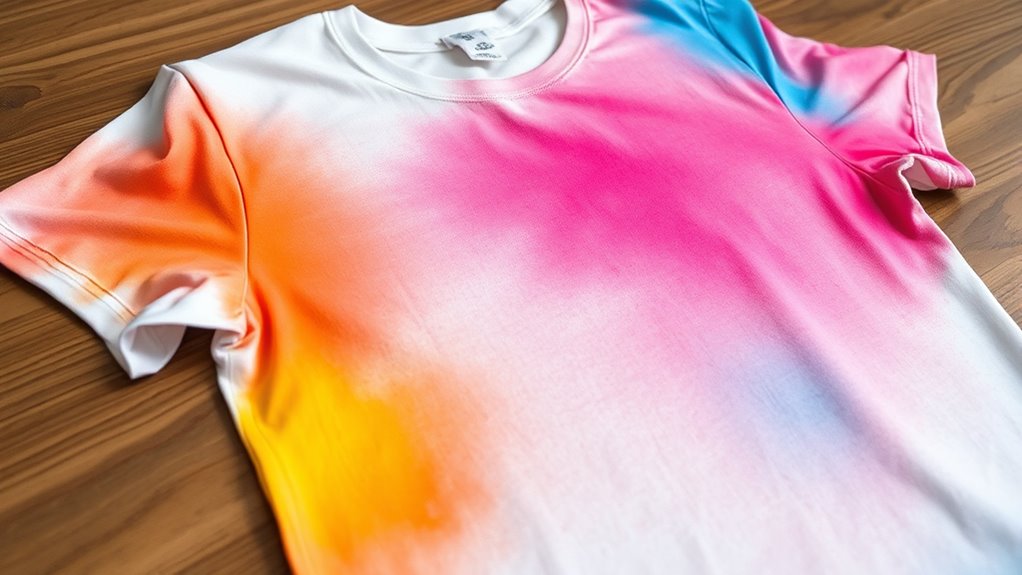
Yes, fabric spray paint works well to dye your fabric while keeping it soft and flexible. It soaks into the fibers rather than sitting on top, which prevents cracking or peeling. This makes it a great choice if you want vibrant colors without sacrificing the fabric’s feel.
When you apply it properly—holding the can 6-8 inches away and using multiple thin coats—it adheres better and lasts longer.
With proper curing and care, your fabric retains its vibrant color and natural texture.
Keep exploring to discover tips for lasting durability and the best application methods. You’ll find that fabric spray paint is an easy and effective way to refresh or customize your textiles.
Key Takeaways
- Fabric spray paint absorbs into fibers, creating a soft, flexible, and natural-feeling dyed finish rather than a stiff surface layer.
- When you apply it properly with multiple thin coats and give it enough time to cure, the paint sticks well and the colors stay vibrant for a long time.
- The paint remains flexible and durable, so it resists cracking, peeling, and fading over time.
- You can use fabric spray paint for both indoor and outdoor projects. It keeps its color and texture even under different weather conditions.
- Plus, with the right care and protection, your painted fabric will stay soft and look great for a long time.
Effectiveness and Texture of Fabric Spray Paint

Although fabric spray paint looks like a surface coating, it actually soaks into the fabric, giving you a dyed finish rather than a stiff layer. When properly absorbed into fabric, the paint creates a soft fabric texture that keeps the material flexible.
Fabric spray paint seeps into fibers, resulting in a soft, flexible, dyed finish—not a stiff coating.
You won’t have to worry about the paint cracking or peeling, as it moves naturally with the fibers. This flexibility ensures the fabric maintains its original feel, avoiding any stiff or crunchy sensation after application.
Additionally, fabric spray paint is weather-resistant, so it holds up well indoors and outdoors. Over time, it maintains color vibrancy, giving your projects a lasting dyed appearance.
With the right application, you can expect fabric spray paint to deliver both durability and a smooth, natural texture. It’s a great choice if you want your fabric to look fresh and feel comfy at the same time.
Application Techniques and Long-Term Durability
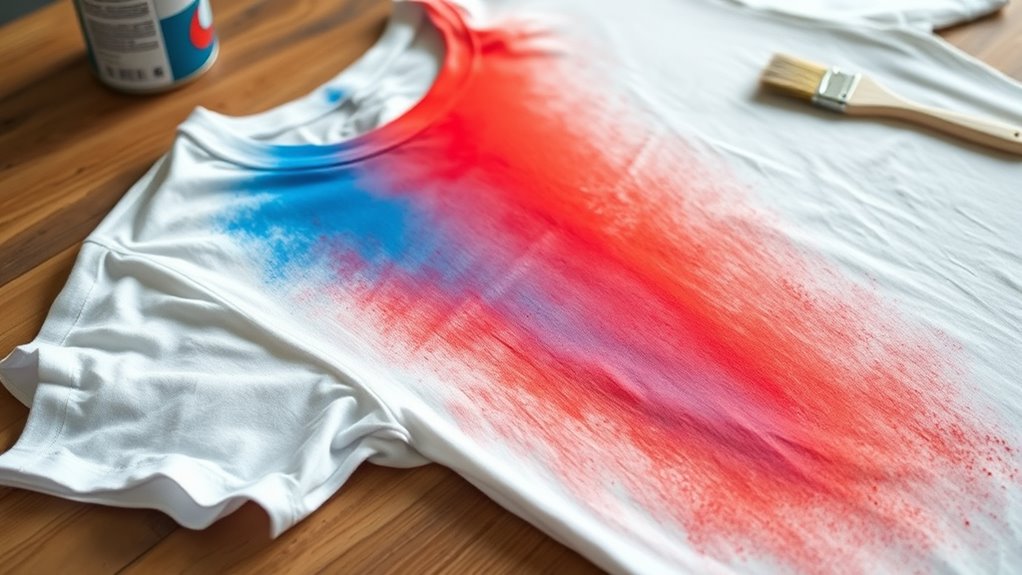
To get the best results from fabric spray paint, you’ll want to focus on how you apply it and care for it afterward. Proper application is key to long-term durability and preventing issues like fading or bleeding, especially on items like outdoor cushions.
Follow these steps for success:
- Hold the spray can 6-8 inches from the fabric and apply multiple thin coats for even coverage. This helps the paint stick better and look smoother.
- Allow a curing time of 2-3 hours outdoors before using the item. This gives the paint time to set properly.
- Guarantee the paint remains flexible to avoid cracking or peeling over time. Flexible paint keeps your fabric looking good longer.
- Gently clean and cover painted items when not in use to preserve the finish. Taking care like this helps maintain the color and prevents damage.
Frequently Asked Questions
Will Spray Paint Last on Fabric?
Yes, spray paint can last on fabric if you prepare and apply it correctly.
You’ll want to test first, cure it well, and choose the right type to make sure it resists washing, fading, and weather damage effectively.
Will Fabric Spray Paint Wash Off?
You won’t see fabric spray paint wash off easily—it bonds permanently with fibers, resisting most washes.
Over 90% of color stays after gentle laundering, but avoid harsh scrubbing or hot water to keep it vibrant. Trust me, treating it gently really helps the paint last longer!
Does Fabric Spray Paint Rub Off?
Fabric spray paint usually doesn’t rub off once it’s fully dried and cured. If you apply it properly and use multiple coats, it stays bonded to fabric.
That means it resists transfer even with normal rubbing or contact. So, you can wear or use the fabric without worrying about paint smudges. Just make sure to follow the instructions for best results.
What Kind of Spray Paint Works on Fabric?
Imagine you’re customizing a t-shirt with Tulip fabric spray paint—it works perfectly.
You should use fabric-specific sprays like Tulip or Rust-Oleum. They’re flexible, washable, and won’t crack or peel on fabric surfaces.
That’s why they’re the best choice when you want your design to last and look great!
Conclusion
When you use fabric spray paint, you’re not just adding color—you’re crafting your own wearable masterpiece, much like an artist brushing life onto a blank canvas. The texture of the paint can vary depending on the brand and how you apply it. Durability also depends a lot on your technique and the care you take during the process.
With careful application, your designs can stand the test of time. So, don’t be afraid to experiment and have fun with it! Embrace the process, channel your inner Da Vinci, and watch your fabric transform into something uniquely vibrant and enduring. Fabric spray paint really works when you take the time to apply it properly, making your creations not only beautiful but also long-lasting.