How You Can Use an Airless Paint Sprayer Indoors Safely
To use an airless paint sprayer indoors safely, start by ventilating the area well. Open windows and run exhaust fans to keep the air flowing and reduce fumes.
Wearing protective gear like a respirator mask, goggles, and gloves is a must to protect yourself from paint particles and chemicals.
Next, prepare surfaces carefully. Mask floors, trims, and switches to avoid any overspray that could cause a mess.
Before you begin, check your equipment for leaks and set the pressure between 1500-3000 PSI. This range helps you get a smooth, even application without wasting paint.
Keep your sprayer clean throughout the job, and always turn off the power when the sprayer isn’t in use.
These simple steps will help you start confidently. Plus, following them ensures a safe, professional finish every time.
Key Takeaways
- Ensure proper ventilation by opening windows, doors, and running exhaust fans before spraying indoors. This helps keep the air fresh and reduces inhalation risks.
- Wear appropriate PPE including a respirator or N95 mask, goggles, gloves, and coveralls for personal protection. It might feel like overkill, but trust me, it’s worth it.
- Mask floors, trim, outlets, and fixtures with plastic sheeting and painter’s tape to protect surfaces from overspray. A little prep now saves a lot of cleanup later.
- Inspect equipment for leaks, maintain pressure between 1500-3000 PSI, and keep spray tips and filters clean. Proper maintenance means smoother spraying and fewer hiccups.
- Turn off gas appliances and electrical circuits, and eliminate static to prevent fire hazards during indoor use. Safety first—always better to be safe than sorry!
Essential Safety Measures for Indoor Airless Spraying

Before you start spraying indoors, make sure you’ve set up proper ventilation by opening windows and doors and running exhaust fans. This helps keep fumes and VOCs from building up.
When using an airless paint sprayer, always follow essential safety measures to protect yourself and your space. Wear personal protective equipment (PPE) like a respirator or N95 mask, goggles, gloves, and coveralls. These protect you against fumes, overspray, and skin contact.
Conduct a thorough equipment inspection before you begin. Check for leaks and ensure the pressure settings are correct to prevent malfunctions.
Also, be mindful of fire hazards. Turn off gas appliances and electrical circuits, and eliminate static to keep things safe.
Finally, use masking techniques to cover surfaces and minimize overspray. This will keep your indoor spraying both safe and efficient.
Proper Preparation and Masking Techniques

When you prepare for indoor airless spraying, thorough masking is key to protecting surfaces from overspray. Start your surface preparation by covering floors, windows, and fixtures with plastic sheeting and secure edges with painter’s tape.
Use 1.5-inch wide white masking tape around ceilings, baseboards, and trim to achieve clean lines. Don’t forget to cover electrical outlets and light switches carefully, preventing paint from contaminating these components.
Mask doors, jambs, and entryways with overlapping paper or plastic to stop overspray from reaching other areas. It’s a good idea to apply your masking supplies a day before painting so the tape can adhere firmly.
This way, you’ll avoid gaps during spraying. Proper masking techniques not only protect your surfaces but also simplify cleanup and deliver a professional finish every time.
Operating and Maintaining Your Airless Paint Sprayer Indoors

Although airless paint sprayers offer efficient indoor coverage, you need to regularly inspect hoses, fittings, and the spray gun for leaks or wear to keep the process safe and effective.
Regularly inspect hoses, fittings, and the spray gun to ensure safe, effective indoor airless paint spraying.
Proper pressure settings between 1500-3000 PSI help prevent over-spraying and ensure an even finish during indoor use. It’s a good idea to stick within that range to get the best results.
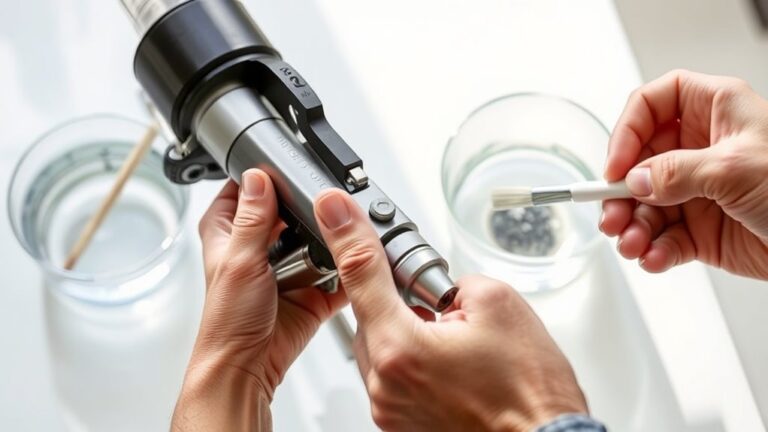
After each job, clean the spray tip and filters thoroughly to avoid clogs. This keeps everything running smoothly next time you paint.
Always follow safety protocols by wearing protective equipment and disconnecting power when not in use. Safety first, right?
For long-term maintenance, store your paint sprayer in a dry, secure place. That way, it stays in great shape for your future projects.
Key operating and maintenance tips:
- Check hoses and fittings for damage before use
- Maintain correct pressure settings
- Clean spray tip and filters after every project
- Wear protective equipment and follow safety protocols
These steps keep your sprayer efficient and safe indoors. You’ll thank yourself later!
Frequently Asked Questions
Can I Use an Airless Paint Sprayer Indoors?
Yes, you can use an airless paint sprayer indoors, but you’ll need proper ventilation. Make sure to open windows and use fans to keep the air moving.
You should also wear protective gear like masks and goggles. It’s important to mask surrounding areas to avoid unwanted paint splatter.
Choosing low-VOC paint is a smart move. This helps keep the air quality better while you’re spraying and makes cleanup easier.
What Are Some Hazards When Using an Airless Spray Gun?
You face hazards like inhaling overspray and fumes, risk of high-pressure injection injuries, static electricity sparks, and sudden hose leaks. Always wear PPE, guarantee ventilation, and check equipment to prevent accidents when spraying indoors.
It’s really important to take these precautions seriously. Wearing the right protective gear and making sure the area is well-ventilated can make a big difference. Plus, regularly inspecting your equipment helps catch problems before they turn into accidents.
What Is the Number One Rule When Using Airless Spray Guns?
The number one rule when using airless spray guns is to always wear proper personal protective equipment. You’ve got to protect your eyes, lungs, and skin from harmful paint fumes and the high-pressure spray.
Staying safe should always be your top priority. So, make sure you gear up properly before you start spraying.
Do I Need to Wear a Mask When Using a Paint Sprayer?
Better safe than sorry—you absolutely need to wear a mask when using a paint sprayer indoors. It protects you from harmful fumes and tiny particles,
ensuring you breathe easier and stay healthy throughout your project.
Trust me, it’s a small step that makes a big difference. So, grab that mask before you start spraying!
Conclusion
Now that you know how to prepare, mask, and operate your airless paint sprayer safely indoors, aren’t you ready to transform your space without worry? Just remember to keep your area well-ventilated, wear proper protective gear, and maintain your equipment regularly.
By following these simple steps, you’ll enjoy a smooth, efficient paint job while protecting yourself and your home. Safety and great results go hand in hand—why settle for less? Using an airless paint sprayer indoors can be easy and safe when you take the right precautions. So, get ready to refresh your walls with confidence and achieve professional-looking finishes every time!