
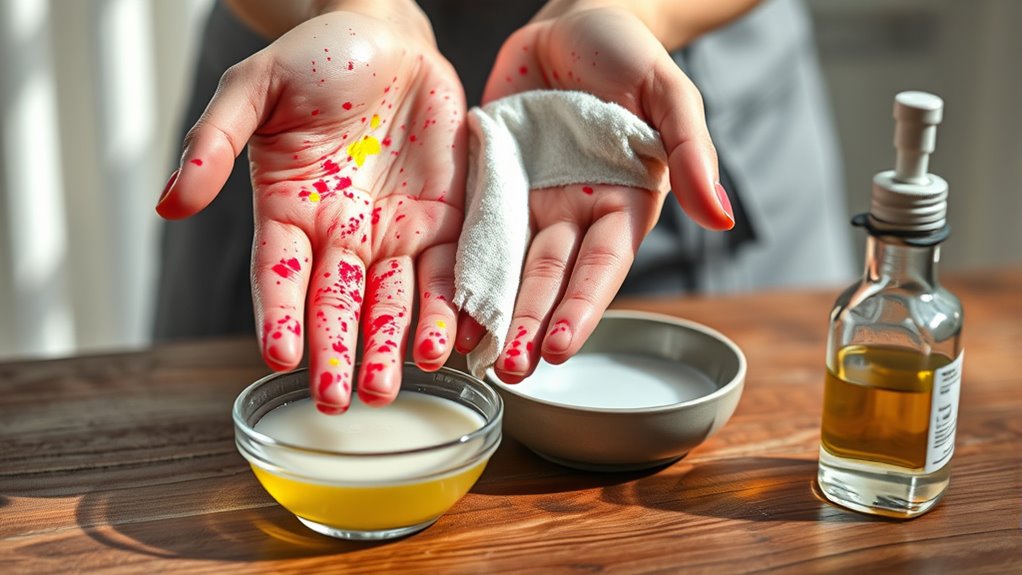
How to Do Remove Spray Paint From Skin in 3 Easy Steps
To remove spray paint from your skin in three easy steps, start by gathering natural oils like coconut or olive oil and lemon oil for cleaning. These oils are great for breaking down the paint without harsh chemicals, making them safe and gentle on your skin. Using natural oils is a simple and effective way to get rid of spray paint without causing irritation.
Next, coat your skin with the oil mix and gently scrub with a soft sponge or toothbrush to lift the paint without irritating your skin. Be sure to rub softly—there’s no need to scrub hard. This helps loosen the paint while keeping your skin happy and unharmed.
Finally, wash off the residue using warm water and moisturizing soap, then apply lotion to soothe and hydrate. This last step ensures your skin stays soft and nourished after cleaning.
Keep these tips in mind, and you’ll find even more ways to care for your skin effectively.
Key Takeaways
- Apply natural oils like fractionated coconut oil mixed with a few drops of lemon oil to the painted skin area.
- Gently scrub the area using fingers, a soft cloth, or an old toothbrush to loosen the spray paint.
- Wash the skin thoroughly with warm water and moisturizing hand soap to remove paint and oil residue.
- Rinse completely and repeat scrubbing if necessary to eliminate stubborn paint spots.
- Moisturize the skin afterward with lotion or coconut oil to soothe and restore hydration.
Gather Your Supplies

Before you begin removing spray paint from your skin, gather all the necessary supplies to make the process smooth and effective. Start by collecting natural oils like fractionated coconut oil or olive oil, which act as gentle, skin-safe solvents for breaking down spray paint.
Gather natural oils like coconut or olive oil first to gently and effectively break down spray paint on your skin.
You’ll also want some lemon oil, preferably Doterra, for its cleaning properties. Have baking soda on hand if you prefer a mild abrasive, along with an old toothbrush or sponge to assist with scrubbing later.
Don’t forget moisturizing hand soap and lotion to cleanse and soothe your skin after removal. Make sure all your supplies are clean and within reach, and prepare your workspace by laying out towels or cloths to catch any drips or residue during cleaning.
Having everything ready will help the process go efficiently. So, take a moment to set up, and you’ll be all set to get that spray paint off without any hassle!
Apply Natural Oils and Scrub Gently

When you’re ready to remove the spray paint, start by coating your skin with a generous amount of fractionated coconut oil to break down the paint’s bonds. Adding 2-3 drops of natural lemon oil, like Doterra, enhances the paint removal process.
Use gentle scrubbing with your fingers or a soft cloth to lift the paint without irritating your skin. For tricky spots around nails or crevices, a soft sponge or an old toothbrush works well without causing damage.
This method combines effective paint removal with skin care, ensuring you don’t harm your skin’s natural barrier. Remember, gentle scrubbing with natural oils is key to safely loosening spray paint without harsh chemicals or abrasion.
Cleanse and Moisturize Your Skin

After loosening the spray paint with natural oils, cleanse your skin gently using warm water and a moisturizing hand soap to break down any remaining paint. Use an old toothbrush or a soft sponge to scrub stubborn spots carefully, ensuring you don’t irritate your skin.
Rinse thoroughly with warm water to wash away all the loosened paint and soap residue. Once your skin is clean, it’s important to moisturize to restore hydration and prevent dryness caused by scrubbing and washing.
Apply a generous layer of moisturizing lotion, coconut oil, or even mayonnaise to soothe and soften your skin. This final step helps your skin recover quickly, leaving it feeling smooth and healthy after removing the spray paint effectively.
Frequently Asked Questions
How to Get Spray Paint off Your Skin Quickly?
You can quickly remove spray paint by applying oily products like lotion or coconut oil. Just rub it in for several minutes.
Then, gently scrub with a cloth or toothbrush before rinsing with warm water and soap. If it’s still there, go ahead and repeat the process.
How Long Will Spray Paint Stay on Skin?
Spray paint can stay on your skin anywhere from a few hours up to 48 hours, depending on the paint type and how much you applied.
Oil-based paints usually last longer than water-based ones on your skin. So, if you’re dealing with oil-based spray paint, expect it to stick around a bit more.
What Removes Spray Paint Quickly?
You might expect harsh chemicals, but gentle oils like coconut or olive oil actually remove spray paint quickly.
Rub them in thoroughly, and watch stubborn paint dissolve, making cleanup surprisingly simple and skin-friendly.
What to Do if You Get Spray Paint on Your Skin?
If you get spray paint on your skin, apply a thick layer of oil or lotion. Let it sit for a few minutes, then gently rub and scrub stubborn spots.
Rinse well and moisturize afterward to protect your skin. This helps keep your skin healthy and prevents irritation.
Conclusion
So, there you have it—removing spray paint from your skin is easier than you thought, even though you probably hoped it’d just peel off on its own overnight.
With a little natural oil, some gentle scrubbing, and a bit of moisturizer, you’ll be back to your usual clean self in no time.
Who knew that something meant to stick around forever could be banished so quickly? Life’s little ironies, right?
In summary, when it comes to how to remove spray paint from skin, the key steps are simple: apply natural oil to break down the paint, gently scrub to lift it off, and finish with moisturizer to soothe your skin. These easy steps make the process quick and effective without harsh chemicals. So next time you get spray paint on your skin, don’t panic—you’ve got an easy, skin-friendly method to handle it.




3 Comments