How You Spray Paint Vinyl Siding Step by Step
To spray paint vinyl siding, start by giving it a thorough cleaning. Use a pressure washer along with a mild detergent to remove dirt and grime. This step is crucial because clean siding helps the paint stick better and last longer. Once cleaned, let the siding dry completely before moving on.
Next, mask off windows, plants, and trim to protect them from overspray. This might seem tedious, but it saves you a lot of cleanup later.
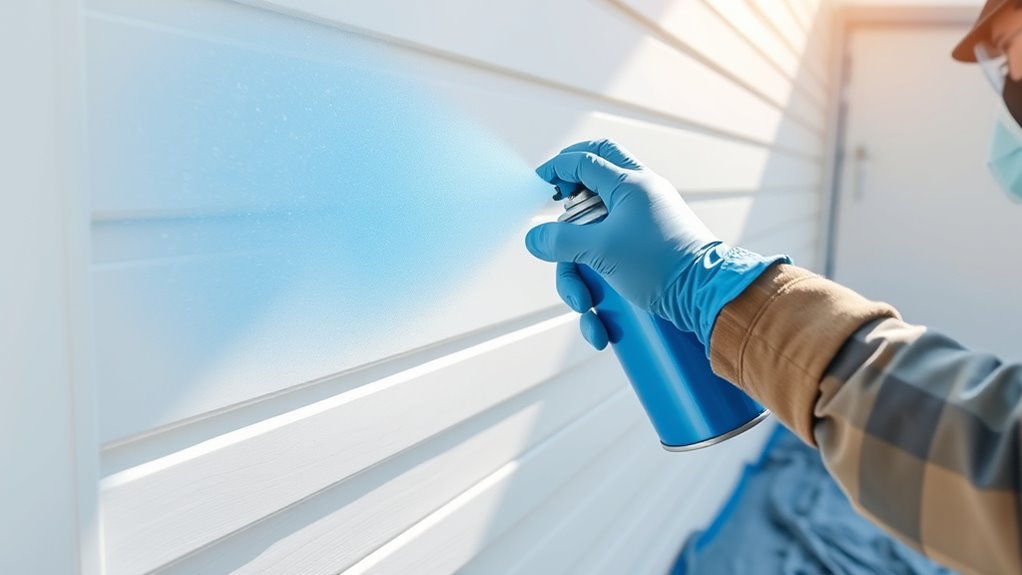
When you’re ready to paint, choose a spray gun with the right nozzle size for vinyl siding. Keep the spray gun about 12 to 18 inches away from the surface. Apply the paint using smooth, overlapping strokes to ensure even coverage.
Remember, multiple thin coats work better than one thick coat. This approach helps avoid drips and gives a more professional finish.
With proper preparation and technique, you’ll achieve a flawless, long-lasting paint job on your vinyl siding. Keep going to master every step for the best results!
Key Takeaways
- Clean vinyl siding thoroughly with detergent and rinse. Make sure to let it dry completely for at least 24 hours before you start painting.
- Repair any cracks or loose panels you find. Then, mask off windows, plants, and trim using painter’s tape and plastic sheeting.
- Set up your spray gun with a wide nozzle. Adjust the paint consistency and do a test spray on some scrap material to check for even flow.
- When spraying, use steady, overlapping strokes about 12-18 inches from the siding. Keep your speed and coverage consistent for the best results.
- Apply multiple thin coats as needed. Just make sure the surface stays dry between coats, and don’t forget to clean your equipment thoroughly once you’re done.
Preparing Vinyl Siding for Spray Painting

Before you start spray painting vinyl siding, you need to prepare the surface thoroughly. Begin by using a pressure washer along with a cleaning solution made from laundry detergent, household cleaner, bleach, and water to clean vinyl siding effectively.
Rinse well and let it dry completely—wait at least 24 hours in mild weather. Next, inspect siding carefully for cracks or loose panels and repair damaged siding to create a smooth prep surface.
To protect plants, outdoor furniture, and windows, use painter’s tape and plastic sheeting. Remove or mask shutters, trim, and other obstructions to guarantee full access.
Proper masking and thorough cleaning make a huge difference in achieving a flawless finish, so don’t rush these essential prep steps before moving on to painting.
Applying Paint With a Spray Gun

Although spray painting vinyl siding can seem straightforward, mastering your technique is key to achieving a smooth, even finish. Hold the spray gun 12 to 18 inches from the surface and use smooth, overlapping strokes with about 50% overlap to guarantee even coverage.
Adjust the nozzle for the right spray pattern—wider for siding, narrower for corners. Keep your movement consistent and maintain a steady flow rate to avoid drips or thin spots.
Always perform a test spray on scrap material to check paint consistency and application technique before starting.
| Step | Tip |
|---|---|
| Distance | 12-18 inches |
| Overlapping Strokes | 50% overlap |
| Nozzle Adjustment | Wide for siding, narrow for trim |
| Movement | Consistent & steady |
| Test Spray | Check pattern & flow rate |
Frequently Asked Questions
Can Vinyl Siding Be Spray Painted?
Yes, you can spray paint vinyl siding, but you’ve got to clean and prime it first.
Make sure to use a low-pressure sprayer and vinyl-safe exterior paint. This helps avoid damage and guarantees a smooth, long-lasting finish.
What Are Common Mistakes When Painting Vinyl?
You’ll often overapply paint, creating drips, and you’ll spray in direct sunlight, causing streaks.
You’ll forget prepping properly, leading to peeling, and you’ll skip protecting nearby areas, ending up with messy splatters and wasted paint.
What Is the Correct Way to Paint Vinyl Siding?
You clean the siding thoroughly, then apply a vinyl-safe primer if needed. Spray high-quality acrylic latex paint evenly, working top-down.
Keep a consistent spray distance, overlap passes, and let each coat dry fully before reapplying for best results. This way, you’ll get a smooth, long-lasting finish.
What Kind of Paint Will Stick to Vinyl Siding?
Wondering what paint sticks best to vinyl siding? You’ll want 100% acrylic latex paint, especially vinyl-safe formulas like Sherwin-Williams VinylSafe®.
They resist warping, fading, and adhere well, unlike oil-based paints you shouldn’t use. So, steer clear of oils and go with acrylics for the best results.
Conclusion
Now that you’ve transformed your vinyl siding with a fresh coat, you’re not just painting—you’re giving your home a little facelift. With the right prep and careful spraying, you’ve turned a dull exterior into something that quietly impresses.
Remember, this isn’t just a chore; it’s a gentle upgrade that brightens your curb appeal and adds charm. Enjoy the subtle glow your effort has gifted your home—it’s a makeover that speaks softly but looks fantastic.
Spray painting vinyl siding is a smart way to refresh your home’s look without the hassle of replacement. By following the proper steps and using the right techniques, you ensure that your siding looks vibrant and lasts longer. So take pride in your work—you’ve given your house a fresh, clean appearance that boosts its value and makes your neighbors take notice.