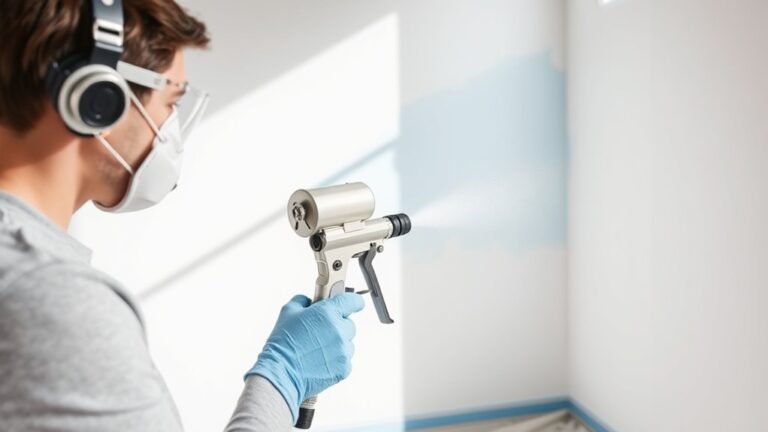
How You Spray Latex Paint With an Air Sprayer
To spray latex paint with an air sprayer, start by thinning the paint about 20-25% with water or Floetrol. This helps ensure a smooth flow and prevents clogging.
Next, strain the paint to remove any lumps or debris for an even finish.
Use a larger nozzle, ideally between 0.015 and 0.021 inch, and set your spray pressure around 45 psi. This combination provides consistent atomization and better coverage.
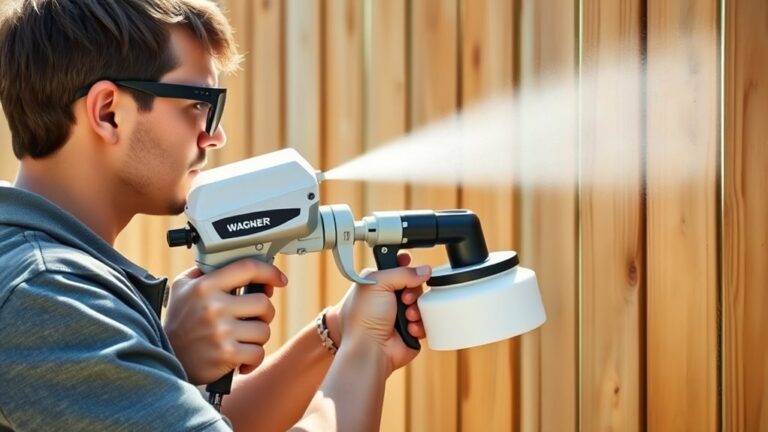
When spraying, apply multiple thin coats instead of one thick layer. Make sure to overlap each pass by about 50% to avoid streaks or uneven spots.
After you’re done spraying, clean your equipment thoroughly. Proper maintenance keeps your sprayer in good shape and ready for the next project.
Want some tips on perfecting your technique and maintaining your sprayer? Keep reading!
Key Takeaways
- Thin latex paint 20-25% with water or Floetrol and strain it to ensure smooth flow. This helps prevent clogs and keeps your spraying consistent.
- Adjust the sprayer pressure to about 45 psi. Use a nozzle size between 0.015 and 0.021 inches for the best atomization.
- Keep the paint’s viscosity between 150-200 seconds on a Zahn cup. This helps maintain a consistent spray quality every time.
- Apply multiple thin coats, making sure to overlap each pass by about 50%. Use smooth, even strokes for a professional-looking finish.
- After you’re done, clean and dry the spray gun thoroughly. This prevents clogs and helps your equipment last longer.
Preparing Latex Paint and Spray Equipment
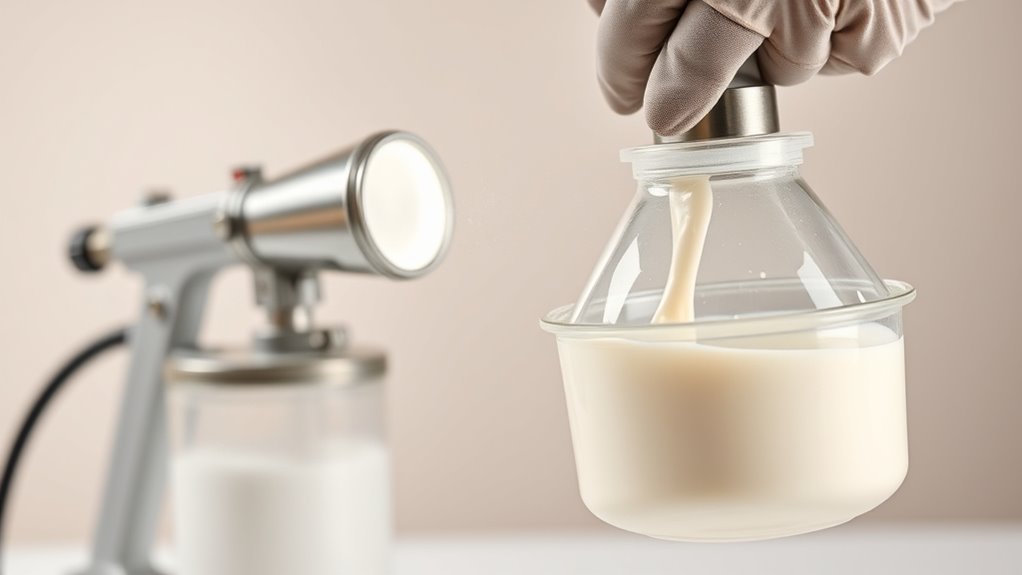
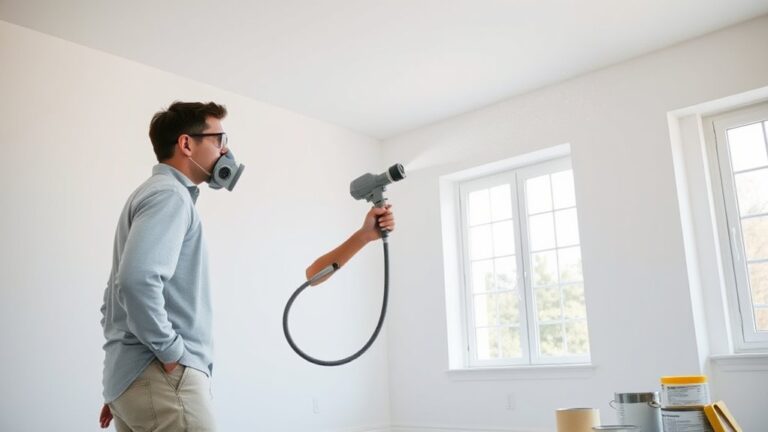
Before you start spraying, you’ll need to properly prepare both your latex paint and spray equipment to guarantee smooth application. Begin by thinning latex paint about 20-25% with water or Floetrol to improve flow and reduce clogging. Mix thoroughly, then strain latex paint to remove lumps or debris, ensuring effective paint filtration.
Use a viscosity cup to check paint viscosity, confirming it matches your air sprayer’s requirements. Choose a larger nozzle size, typically between 0.015 and 0.021 inches, to handle the thicker latex paint.
During spray equipment preparation, adjust pressure to around 45 psi for consistent atomization. Proper thinning, filtration, and pressure adjustment will help you achieve a smooth, even finish when spraying latex paint with your air sprayer.
Techniques for Spraying Latex Paint Effectively

Once your latex paint and spray equipment are properly prepared, focus on applying the paint with techniques that guarantee a smooth, even finish. Make sure to thin your latex paint with water or Floetrol to a viscosity of 150-200 seconds on a Zahn cup; this helps your airless sprayer deliver a consistent spray.
Use a paint sprayer with a 0.015 to 0.021-inch nozzle and maintain about 45 psi pressure for ideal atomization. Apply multiple thin coats rather than thick layers, overlapping each pass by about 50% to ensure full coverage without runs or drips.
Strain your paint before spraying to avoid clogs and maintain a professional finish. With these techniques, your latex spray project will be smooth, even, and durable.
Cleaning and Maintaining Your Air Sprayer

Although spraying latex paint can be quick and efficient, cleaning your air sprayer immediately afterward is crucial to keep it working smoothly. To maintain your spray gun and prevent clogs, follow these essential steps:
First, disassemble the spray gun by removing the nozzle, needle, and siphon tube for thorough cleaning. Then, rinse all parts with warm water right after use to stop latex paint from drying inside.
Use a soft brush to scrub the nozzle, needle, and interior surfaces. This helps remove any residual paint buildup that could cause problems later on.
Also, clean the siphon tube separately with water or a compatible solvent for complete paint removal. Make sure all components are dry before storage to avoid rust and damage.
Regular cleaning and proper storage will extend your sprayer’s life and ensure consistent performance. It’s a simple routine that pays off every time you use your sprayer.
Frequently Asked Questions
How to Dilute Latex Paint for Air Sprayer?
You dilute latex paint by adding 10-20% water, stirring thoroughly, and straining it to remove lumps.
Add a paint conditioner like Floetrol for better flow, then test on scrap to adjust consistency before spraying.
This way, you get a smooth spray without clogging your air sprayer. Just take it slow and tweak as needed!
What Size Nozzle to Spray Latex Paint?
You’ll want a nozzle size between 0.015 and 0.017 inches for spraying latex paint. This size balances smooth coverage and control, preventing clogging and overspray.
It works especially well when you’ve thinned your paint appropriately. That way, the spray goes on evenly without any mess.
What Is the Best Spray Gun for Latex Paint?
You’ll want an airless spray gun from brands like Graco or Wagner with adjustable pressure and a larger tip size (0.017–0.021 inches). This setup prevents clogging and delivers smooth, even latex paint coverage every time.
These guns handle thicker paints like latex really well, so you don’t have to worry about constant stops to clean the nozzle. Plus, adjustable pressure means you can fine-tune the spray to get just the right finish.
How to Spray Small Amounts of Latex Paint?
Imagine a gentle rain shower—thin your latex paint to milk-like consistency. Use a fine nozzle, and spray light, even coats.
You’ll avoid drips and get smooth coverage by practicing and keeping the paint well-mixed. Just take your time, and you’ll see great results!
Conclusion
Now that you’ve mastered spraying latex paint, imagine the smooth, even coat gliding effortlessly across your walls like a gentle morning mist. With the right prep and technique, your air sprayer becomes an extension of your hand, turning every stroke into a flawless finish.
Keep your equipment clean and ready, and you’ll enjoy that satisfying hum and steady spray for projects to come. Painting doesn’t have to be a chore—it can be your next masterpiece.
Using an air sprayer for latex paint means faster coverage and a professional look without the hassle. Remember, proper setup, thinning the paint if needed, and steady, overlapping strokes are key. With practice, spraying latex paint will become second nature, giving your walls that smooth, even finish everyone admires. So grab your gear, prep your space, and let your creativity flow with every spray.