Can Spray Paint Expire and How Can You Extend Its Shelf Life
Spray paint can expire, usually within 2 to 5 years if unopened, but its quality declines over time. You might notice thickening, clumping, or a foul smell when it’s no longer good. This means the paint won’t spray smoothly or cover surfaces as well as it should.
To extend its shelf life, store cans in a cool, dry place away from sunlight. Keeping them upright and shaking well before use also helps maintain spray performance longer. Proper care can make a big difference if you want your spray paint to last.
If you want to get the best results every time, there are more helpful tips to discover ahead. So, keep reading to learn how to make your spray paint go the extra mile!
Key Takeaways
- Spray paint does not have a fixed expiration date but typically lasts 2 to 5 years if unopened.
- Paint quality declines over time due to chemical breakdown and improper storage conditions.
- Signs of expiration include thickening, clumping, foul odors, and inconsistent spray patterns.
- Store spray paint in a cool, dry place, away from sunlight, and keep cans upright to prolong shelf life.
- Shake cans thoroughly before use and clear the nozzle by spraying upside down after application to maintain performance.
It’s pretty simple to keep your spray paint in good shape if you follow these tips!
Understanding Spray Paint Expiration
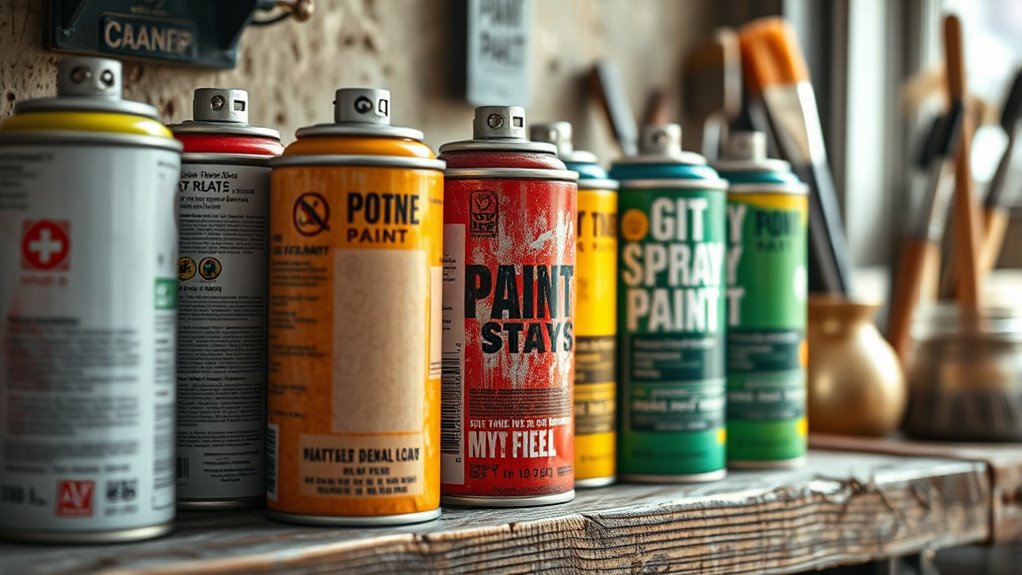
Although spray paint doesn’t come with a fixed expiration date, you’ll notice its quality declines over time, which affects how well it functions. Spray paints typically have a shelf life of 2 to 5 years when unopened and kept under proper storage conditions.
Over time, the chemical components inside can deteriorate due to chemical breakdown, leading to clogs, uneven spray, or poor coverage. You’ll recognize signs of expired paint by thickening, clumping, or foul odors, all indicating reduced usability.
Proper storage in a cool, dry place helps maintain spray paint’s effectiveness and can prolong shelf life. So, being aware of these factors ensures you use spray paints before they expire, avoiding frustration and wasted materials.
Tips to Prolong the Life of Spray Paint
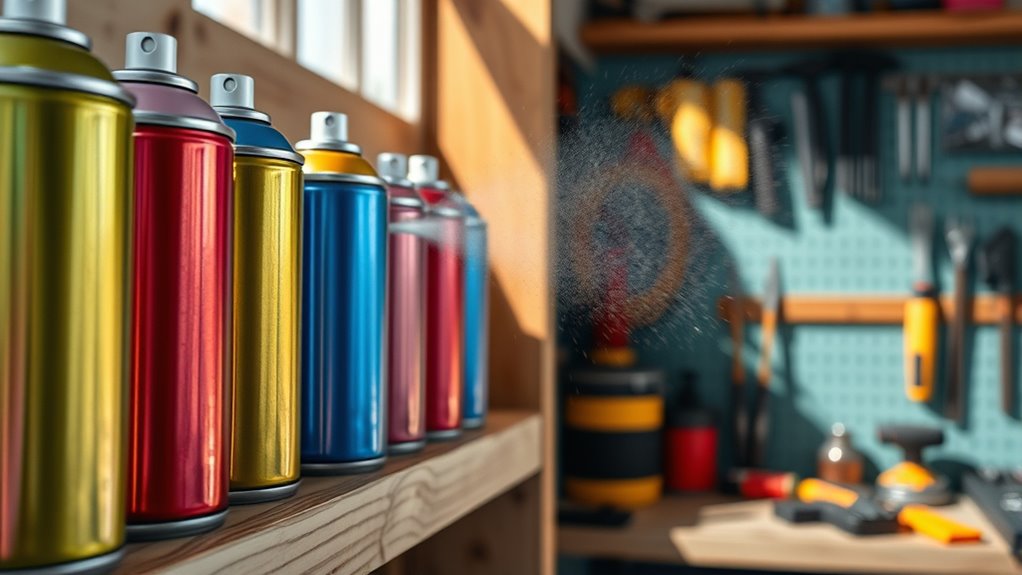
To get the most out of your spray paint, store it in a cool, dry place away from direct sunlight. This helps prevent chemical breakdown and pressure loss. When you store it properly, your paint can last much longer.
That way, you reduce the chances of your spray paint expiring prematurely. Always shake the can thoroughly for 1-2 minutes before use to remix the components and keep the paint consistent. After spraying, turn the can upside down to clear the nozzle and prevent clogging.
This simple step helps your spray paint last longer. Also, wipe the nozzle clean after each use to avoid buildup. Before using older cans, it’s a good idea to test the paint on scrap material to make sure it sprays smoothly.
Frequently Asked Questions
Can You Use 20 Year Old Spray Paint?
Yes, you can use 20-year-old spray paint if it’s stored well. Shake it thoroughly, test spray on scrap, and check for clogging or odors.
If it seems off, it’s better not to use it. Clean the nozzle and store the can upright to help it last longer.
Can Expired Spray Paint Be Used?
Yes, you can use expired spray paint if it sprays smoothly and smells normal. Test it first on scrap material, shake well, and strain if needed.
If it’s clogged, uneven, or has a foul smell, it’s best to discard it. You don’t want poor results messing up your project!
Is It Safe to Use 20 Year Old Paint?
You can use 20-year-old spray paint, but it’s risky. Its performance might be inconsistent, and adhesion could fail.
Test on scrap first, and avoid critical projects to prevent poor results or damage. Better safe than sorry, right?
How Many Years Does a Can of Spray Paint Last?
Think of spray paint as a ticking clock—unopened, it lasts 2 to 5 years, sometimes up to 15 if stored perfectly.
Once opened, expect about half that time before its colors start to fade. So, it’s best to keep it sealed tight and stored in a cool, dry place. That way, you get the most bang for your buck!
Conclusion
Spray paint might not have a strict expiration date, but over time, it can lose its punch like a fading firework. To keep your cans ready for action, store them in a cool, dry place and shake them well before each use.
By treating your spray paint with a little care, you’ll extend its life and keep your projects looking fresh. Remember, a well-kept can is your creative spark waiting to ignite!
So, if you want to make sure your spray paint lasts longer and performs its best, focus on proper storage and regular maintenance. This way, you’ll always have vibrant colors on hand for your next masterpiece. Extending your spray paint’s shelf life isn’t just smart—it’s the key to keeping your creativity flowing smoothly!