How to Do Remove Spray Paint From Brick in 5 Easy Steps
To remove spray paint from brick, start by protecting the area and wearing gloves, goggles, and a mask. This safety step is crucial because the chemicals in paint removers can be harsh.
Next, scrape off any loose paint gently, and use a heat gun to soften those stubborn spots that won’t come off easily.
Then, apply a masonry paint remover and wait 15-30 minutes to let it work its magic. After that, scrub the brick thoroughly with a stiff brush to lift the paint from the surface.
Rinse the area well with water and let it dry completely.
Once dry, inspect the brick for any leftover paint. If you see some, don’t worry—just treat those spots again. Keep going to uncover more helpful tips for a spotless finish and get your brick looking fresh and clean again!
Key Takeaways
– Protect the surrounding area and wear safety gear like gloves, goggles, and masks before starting paint removal.
Safety first, right? It’s important to keep yourself protected while working with chemicals and tools.
– Scrape loose spray paint and soften stubborn spots carefully using a heat gun and scraper.
Take your time here. The heat gun helps loosen the paint, making it easier to scrape off without damaging the brick.
– Apply a masonry paint remover evenly and let it sit for 15-30 minutes to break down the paint.
This step does the heavy lifting. Just be patient and let the remover work its magic.
– Scrub the brick surface thoroughly with a stiff brush to lift remaining paint residues.
Give it a good scrub to make sure all the paint comes off. It might take a bit of elbow grease, but it’s worth it.
– Rinse the brick well with water, let dry completely, and inspect for leftover paint to repeat if needed.
If you still see some paint, don’t worry. You can repeat the process until the brick looks clean again.
Prepare the Area and Gather Safety Gear
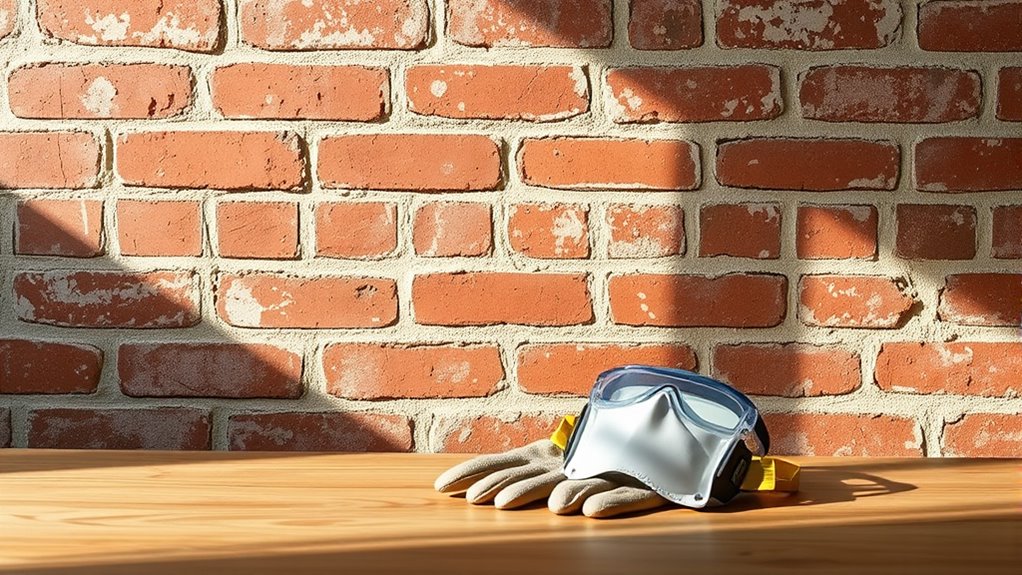
Before you begin removing spray paint from brick, clear the area to protect nearby objects and prevent unwanted overspray. Cover plants, furniture, and the ground with plastic sheeting or tarps to catch any drips or splatters from the paint remover.
You’ll want to wear protective gear like gloves, safety goggles, and a mask to shield yourself from chemical fumes and debris. If you’re working indoors, make sure to open windows or use fans for good ventilation. Outdoors, the fresh air will naturally help disperse any fumes.
Organize all your tools and cleaning supplies ahead of time so you can work efficiently and avoid accidents. Taking these preparation steps will make the spray paint remover process safer and more effective.
Remove Loose Paint and Heat Stubborn Spots

When you notice loose or peeling spray paint on the brick, start by scraping it off with a stiff-bristled brush or trowel to clear the surface. This initial removal helps prepare the area for deeper cleaning.
For stubborn spots, use a heat gun set at a safe temperature to soften the paint. Hold the heat gun about 6-8 inches from the brick and move it steadily to apply even heat without causing damage.
Once heated, gently lift the softened paint with a scraper or wire brush. Repeat the heating and scraping process as needed until the tough spots are fully removed.
Using controlled heat like this makes removal easier while protecting the brick’s integrity. It’s a handy trick that saves you some elbow grease!
Apply Paint Remover and Let It Work
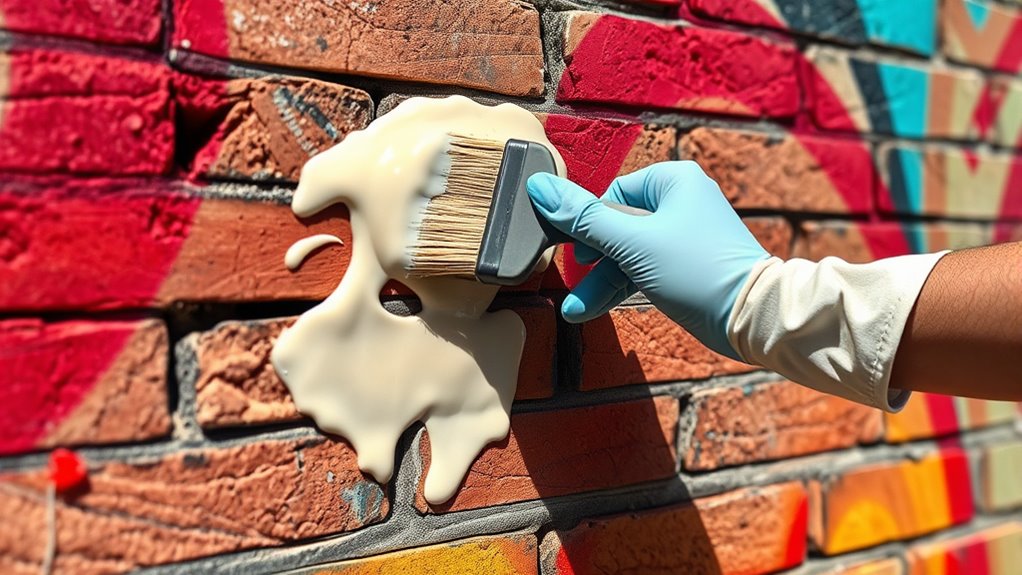
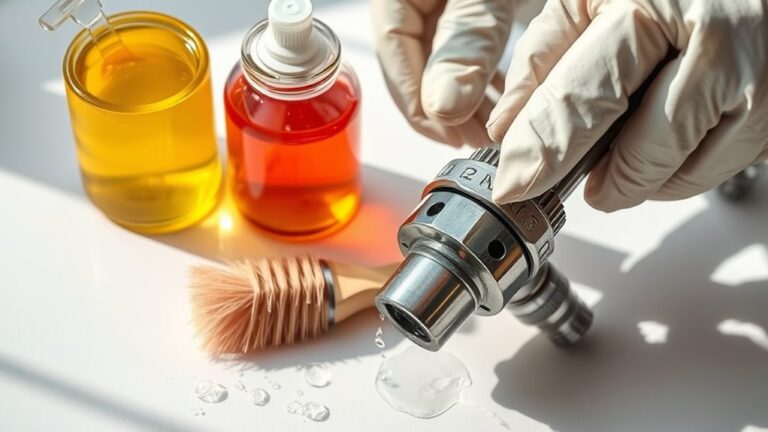
After loosening the paint with scraping and heat, it’s time to apply a paint remover designed for brick surfaces. Choose a graffiti remover or a heavy-duty paint stripper suitable for masonry.
Apply it directly onto the spray-painted brick using a brush or roller, spreading it evenly to cover all painted areas. Let the remover sit and work undisturbed for the time specified by the manufacturer, usually between 15 and 30 minutes.
Use a brush or roller to evenly apply remover, letting it sit 15 to 30 minutes undisturbed.
This allows the chemical to penetrate and break down the paint bonds effectively. Check the progress periodically without disturbing the surface. If needed, go ahead and apply a second coat before moving on.
Proper application and a bit of patience here will make the next steps much easier and more effective.
Scrub the Brick Surface Thoroughly
Since the paint remover has done its job loosening the spray paint, you’ll need to scrub the brick surface thoroughly to lift the remaining paint. Grab a stiff-bristled brush or wire brush and focus on areas with visible paint.
Use firm, consistent pressure while scrubbing in circular or back-and-forth motions. This maximizes contact and helps break up paint embedded in the porous brick. Rinse the brush often to clear away loosened paint and debris, keeping the surface clean as you work.
| Effort | Result |
|---|---|
| Firm scrubbing | Paint lifted |
| Circular brush | Deep cleaning |
| Frequent rinsing | Clear surface |
Scrubbing with the right brush turns stubborn paint into dust, revealing your brick’s true look.
Rinse, Dry, and Inspect for Remaining Paint
Once the scrubbing loosens all the paint, rinse the brick thoroughly with clean water to wash away residues and loosened paint. Use a high-pressure water spray or garden hose to make certain you reach deep into the porous crevices.
After rinsing, let the brick dry completely; this could take several hours or even overnight, depending on the weather. Once dry, inspect the surface carefully for any remaining paint spots or stains.
If you spot any, plan for additional treatment or touch-ups. To track your progress, take photos of the cleaned area. This helps you evaluate how effective the removal was and decide if further cleaning is necessary.
Frequently Asked Questions
What Removes Spray Paint Quickly?
You can remove spray paint quickly by using heavy-duty paint strippers like PROSOCO’s Sure Klean or SafStrip gel. Apply, wait, then scrape gently.
Combining chemical removers with heat guns speeds up the process effectively. It’s a great way to get the job done faster and with less effort.
What Is the Best Paint Remover for Removing Paint From Brick?
You’ll want to use a heavy-duty gel-based paint remover like Sure Klean or PROSOCO’s Graffiti Remover. They cling well to brick and dissolve spray paint effectively.
Plus, they minimize drips, which is a big help when working on vertical surfaces. Just be sure to test first to protect your surface.
Will Vinegar Remove Paint From Bricks?
Vinegar can chip away at paint like a gentle rain on stone, but it won’t clear stubborn spray paint completely.
You’ll need to scrub hard or use stronger removers to get bricks spotless.
How Can I Remove Paint From Brick?
You can remove paint from brick by scraping loose paint first. Then, apply a heavy-duty graffiti remover with a brush and let it sit for a bit.
After that, scrub gently to lift the paint off the surface. Finally, rinse thoroughly to wash away any residue and prevent staining. It’s a pretty straightforward process once you get the hang of it!
Conclusion
Removing spray paint from brick might seem tough, but with these five steps, you’ll tackle it like a pro. Just like peeling off a stubborn sticker, each step helps you get closer to a clean surface.
Remember to stay patient, follow the process carefully, and wear your safety gear. In no time, your brick will look fresh and paint-free, restoring its natural beauty without much hassle.
You’ve got this! By following these simple spray paint removal steps, you can easily bring your brick back to life. Whether it’s a small tag or a large graffiti, the right approach ensures your brick surface is clean and well-maintained. So don’t stress—removing spray paint from brick is totally doable with a bit of effort and care.