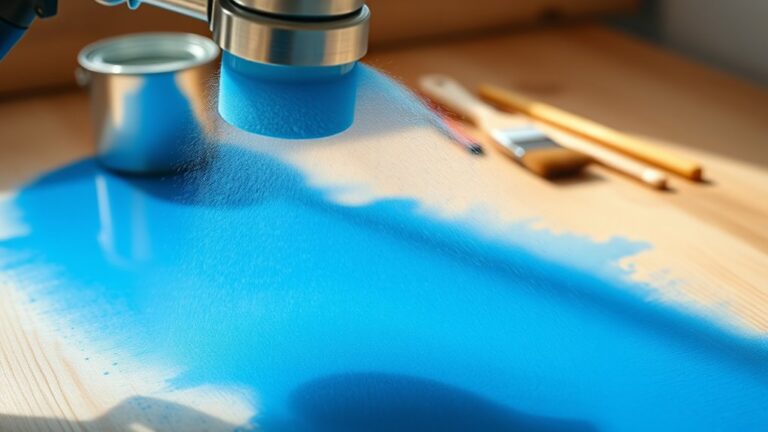
How You Spray Oil-Based Paint With an Airless Sprayer
To spray oil-based paint with an airless sprayer, start by thinning the paint with 10-15% mineral spirits. This step is important to guarantee a smooth flow through the sprayer and prevent clogging.
Next, prime your sprayer by fully submerging the suction hose in the paint and pumping until you see a steady flow of paint coming out. This ensures the sprayer is ready for an even application.
Use a fine finish spray tip, ideally between 0.011 and 0.013 inches, for the best results. Keep your spray distance about 10 to 12 inches from the surface, and make overlapping passes to achieve even coverage.
Adjust the pressure to low or medium to improve atomization, which helps the paint spread smoothly and evenly. These tips will help you perfect your technique and get a professional-looking finish every time.
Give it a try, and you’ll see the difference!
Key Takeaways
- Thin oil-based paint with 10-15% mineral spirits to ensure smooth flow and prevent sputtering in the airless sprayer.
- Fully submerge the suction hose in paint and prime the sprayer until steady, even flow appears from the return hose.
- Use a fine finish spray tip sized 0.011 to 0.013 inches for optimal atomization and smooth coverage.
- Maintain a 10-12 inch spray distance and overlap each pass by 50% for uniform paint application.
- Adjust sprayer pressure to low or medium to reduce overspray and achieve a professional finish.
Preparing Your Airless Sprayer for Oil-Based Paint

Before you begin spraying oil-based paint, you’ll need to prepare your airless sprayer properly to prevent contamination and guarantee smooth operation.
Start by flushing the entire spray system with paint thinner or mineral spirits if you’ve previously used water-based paint. This step avoids any mixing that could clog your spray gun.
Next, check the paint manufacturer’s guidelines for priming instructions specific to your airless sprayer and the oil-based paint you’ll use.
Fill the suction hose, ensuring it’s fully submerged in the paint container before you set the sprayer to prime mode. Operate the pump until you see a steady flow of paint from the return hose.
Finally, test spray on a scrap surface to confirm even flow and proper priming before tackling your main project. It’s a quick step but really helps to avoid surprises later on.
Thinning Oil-Based Paint for Optimal Spraying

When you want your oil-based paint to flow smoothly through your airless sprayer, thinning it properly is essential. Start by adding 10-15% mineral spirits according to the paint thinning ratio recommended by the manufacturer. This guarantees ideal spray consistency and paint flow.
Properly thin oil-based paint with 10-15% mineral spirits for smooth flow and ideal spray consistency.
Follow these steps for effective thinning oil-based paint:
- Mix the paint and mineral spirits thoroughly until uniform.
- Test viscosity by watching the flow off a stir stick or running paint through a cup.
- Adjust thinning if sputtering occurs, but avoid over-thinning to maintain adhesion and finish quality.
Proper thinning reduces the need for sprayer adjustments and promotes a consistent spray pattern with your airless paint sprayer. This helps you achieve professional results with oil-based paints.
Selecting the Right Spray Tip and Application Techniques

Choosing the right spray tip and mastering application techniques guarantee your oil-based paint goes on smoothly and evenly. Start by selecting a fine finish spray tip, like 0.011 to 0.013 inches (311 or 313), ideal for oil-based paint with your airless sprayer.
Match the tip size to paint viscosity and the surface area—larger tips work better for thicker paints or bigger surfaces. Maintain a consistent spray distance of 10-12 inches, overlapping each pass by 50% for even coverage.
Adjust your sprayer’s pressure to low or medium to prevent overspray and ensure fine atomization. Before the main job, practice your spray technique on scrap material to perfect your application method and confirm your tip choice fits your project perfectly.
Frequently Asked Questions
Can You Use Oil-Based Paint in an Airless Sprayer?
Yes, you can use oil-based paint in an airless sprayer, but you’ll need to dilute it properly. Choosing the right tip size is also important to get the best results.
And don’t forget to clean your equipment thoroughly afterward. This helps avoid damage and guarantees smooth spraying performance.
How to Thin Oil-Based Paint for Airless Sprayer?
You thin oil-based paint by gradually adding mineral spirits or paint thinner, about 10-15%, stirring well.
Test its flow to make certain of smooth spraying without sputtering, but don’t over-thin to avoid poor coverage or runs.
It’s all about finding that balance to get the perfect spray consistency. Just take your time with the thinning process!
What Is the Best Paint Sprayer for Oil-Based Paint?
You don’t want a delicate sprayer for oil-based paint; you need a tough, high-pressure piston airless sprayer like Graco or Wagner. They handle thick paint, prevent clogs, and let you spray smoothly without fuss.
These sprayers are built to work hard and keep things moving. So, if you want a hassle-free experience, go for one of these brands. They really make a difference when dealing with heavy oil-based paints.
What Spray Tip to Use for Oil-Based Paint?
You should use a spray tip sized between 0.013 and 0.015 inches for oil-based paint. Fine tips work best for detail, while slightly larger tips suit broad surfaces.
Always check the manufacturer’s recommendations first. That way, you’ll make sure you’re using the right equipment for your specific paint.
Conclusion
Now that you’ve mastered prepping your sprayer, thinning your paint just right, and choosing the perfect tip, you’re almost ready. But before you start spraying, pause—there’s one secret to flawless results that many overlook.
It’s not just about the tools or the technique; it’s about timing and patience. Nail that, and your oil-based paint job won’t just look good—it’ll last, impress, and transform everything you touch.
Ready to release that final step? Remember, spraying oil-based paint with an airless sprayer requires steady, controlled movements and allowing each coat to dry properly. Take your time, and the finish will be smooth, durable, and professional-looking. With these tips, your project will shine and stand the test of time.