
Does Spray Paint Work on Fabric?
Yes, you can use spray paint on fabric to create vibrant, flexible designs that hold up well over time. Using spray paint designed specifically for fabric or mixing regular paint with a fabric medium helps keep the material soft and prevents cracking.
This way, your fabric stays comfy and looks great.
Applying thin, even coats from about 6-8 inches away ensures a smooth finish without stiffness.
With the right technique and preparation, spray painting fabric opens up creative possibilities you might not expect.
Keep exploring to discover tips for the best results.
Key Takeaways
- Spray paint specifically formulated for fabric works well, providing vibrant, flexible, and long-lasting color without cracking.
- Applying multiple thin coats from 6-8 inches away ensures even coverage and maintains fabric softness.
- Using stencils and masking with spray paint allows precise, customizable designs on fabric surfaces.
- Testing spray paint on a small fabric area first confirms adhesion, color accuracy, and fabric compatibility.
- Proper ventilation and protective gear are essential when spray painting fabric to avoid harmful fumes.
Effectiveness and Techniques of Spray Painting on Fabric

Although spray painting on fabric requires specific techniques, you can achieve vibrant, long-lasting colors that brush painting often can’t match. When you use fabric spray paint or spray paint fabric designed with a fabric medium, the paint stays flexible and avoids cracking.
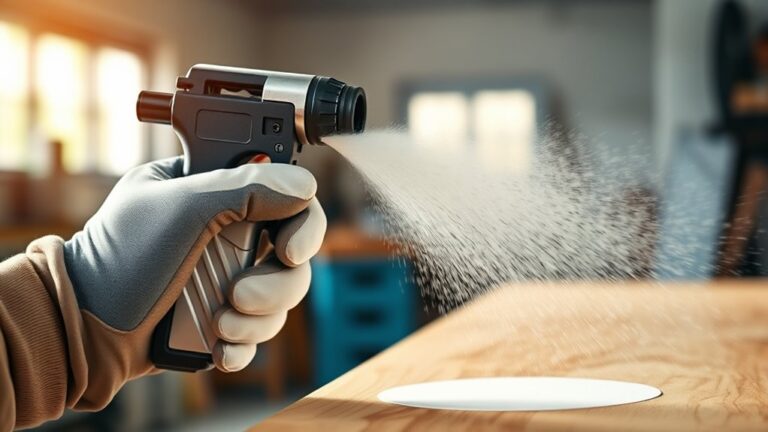
Spray paint on fabric works great for layered, splotchy, or weathered effects that are tough to create with brushes. Holding the can 6-8 inches away and applying multiple thin coats guarantees even coverage.
Whether you choose spray paint for upholstery or outdoor fabric spray, these spray paint techniques let you customize your fabric with precision. Using stencils and masking can enhance your design, making spray painting fabric a versatile and creative option for your projects.
Tips and Best Practices for Using Spray Paint on Fabric

When you start spray painting on fabric, always test the paint on a small, hidden area first to verify it adheres well and delivers the color you want. Use fabric-specific paint to keep the fabric soft and flexible without cracking.
Hold the spray bottle 6-8 inches from the fabric and spray in smooth, even strokes for even coverage. Apply multiple coats, allowing proper drying time between each to avoid stiffening or uneven texture.
Work in a well-ventilated area or outdoors and wear protective gear to minimize inhaling fumes. Also, protect surrounding surfaces from overspray to keep your workspace clean.
Following these tips ensures your fabric spray paint project looks professional and lasts longer. Remember, patience during drying and layering makes all the difference.
Frequently Asked Questions
Does Spray Paint Hold on Fabric?
Yes, spray paint holds on fabric if you prep it properly and use a fabric-specific formula.
You’ll want to let it dry and cure fully to keep the paint flexible, durable, and resistant to cracking or peeling.
Can I Use Regular Spray Paint on Fabric?
You can’t really use regular spray paint on fabric without issues; it’ll stiffen and crack like an old parchment.
Instead, opt for fabric-specific paint to keep your material flexible and vibrant without ruining its texture.
What Kind of Paint Will Stay on Fabric?
You’ll want fabric-specific spray paint or acrylic paint mixed with textile medium to guarantee flexibility and durability. These options bond well, resist cracking, and stay vibrant through washing, keeping your fabric looking great longer.
It’s all about making sure the paint moves with the fabric and doesn’t flake off. So, picking the right kind really makes a difference if you want your design to last.
What Kind of Spray Paint Can I Use on Fabric?
Like choosing the right shoes for a marathon, you should use fabric-specific spray paint to keep your fabric flexible and vibrant. These paints absorb well, preventing cracking or peeling.
This means your design lasts even after washing. It’s all about making sure your fabric looks great and stays comfortable.
Conclusion
Now that you know spray paint can work on fabric, you might be wondering if it’s worth trying yourself. The results can surprise you—vibrant, lasting designs are possible with the right technique. But beware: one wrong move could ruin your project.
So, are you ready to take the risk and transform your fabric with spray paint, or will you stick to safer methods? The choice—and the outcome—is in your hands.
Spray paint on fabric can be a fun and creative way to customize your clothes or decor. Just remember to test on a small area first and follow all safety tips. With a little practice, you’ll see how effective spray paint on fabric can be, giving your items a fresh, bold look that lasts.



4 Comments