How You Can Spray Paint Your Car Step by Step
To spray paint your car, start by washing it thoroughly to remove dirt and grime. Next, sand the old paint using fine-grit sandpaper to ensure the new paint sticks well. This prep work is key for a smooth finish.
After sanding, remove or mask parts you don’t want painted, like trim or windows. Then clean the surface with a degreaser and a tack rag to get rid of any leftover dust or grease.
Now, it’s time to apply primer. Spray it in thin, even coats, letting each layer dry before sanding lightly. This helps create a perfect base for the paint.
Once the primer is ready, spray multiple light coats of paint. Make sure to let each coat dry before applying the next one.
Finally, finish with a clear coat to give your car a glossy, durable finish. Let it cure properly for the best results.
Keep following these steps, and you’ll soon master the art of spray painting your car!
Key Takeaways
– Thoroughly wash and sand the car surface, then remove detachable parts and mask areas not to be painted.
This helps ensure a smooth and clean base for painting, so don’t skip these steps.
– Use degreaser and tack rag to clean the surface before applying primer.
You want to get rid of all grease and dust to help the primer stick better.
– Spray thin, even coats of primer from 10 inches away, then sand lightly after drying.
Applying it in thin layers prevents drips and gives a nice smooth finish once sanded.
– Apply multiple thin layers of paint with a paint gun, allowing each coat to dry before the next.
Patience here pays off — rushing can cause runs or uneven color.
– Finish with wet overlapping clear coat layers and let cure undisturbed for about 48 hours.
This final step protects your paint and adds that glossy shine everyone loves.
Preparing Your Car for Painting
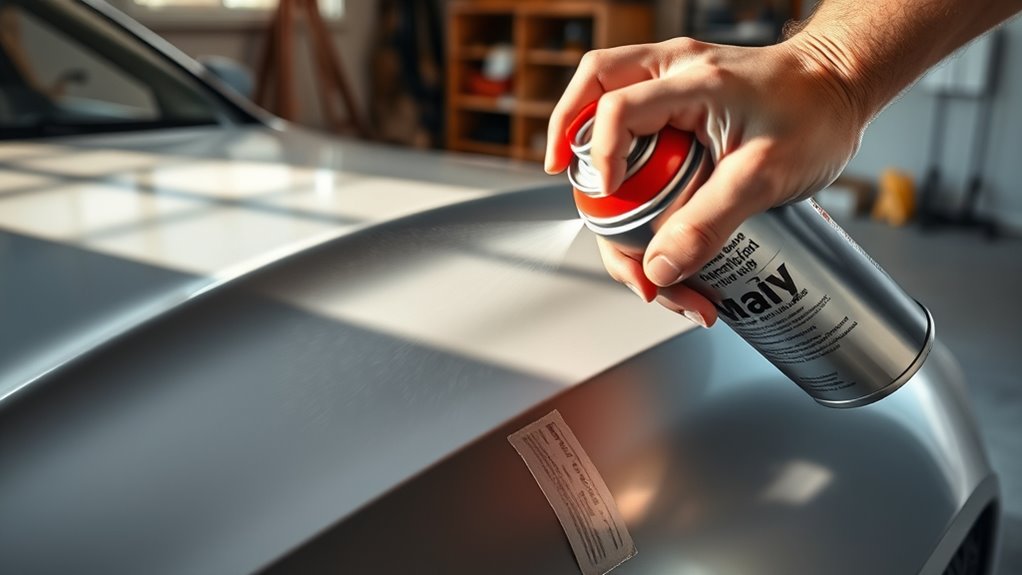
Before you start painting, thoroughly prepare your car by washing it to remove dirt, grease, and debris. This guarantees a clean surface for your prep work.
Start with a thorough wash to eliminate dirt and grease, ensuring a clean surface for painting prep.
Next, remove all detachable parts like headlights, bumpers, mirrors, and trim to make painting easier and more even.
Use 400-600 grit sandpaper to sand the existing paint surface; this creates the right texture for the primer to adhere properly.
Carefully apply masking tape and automotive masking paper to cover areas you don’t want to paint—avoid newspaper to prevent bleed-through.
Finally, clean the surface again with a degreaser and tack rag to remove dust, oils, and contaminants.
Applying Primer, Paint, and Clear Coat
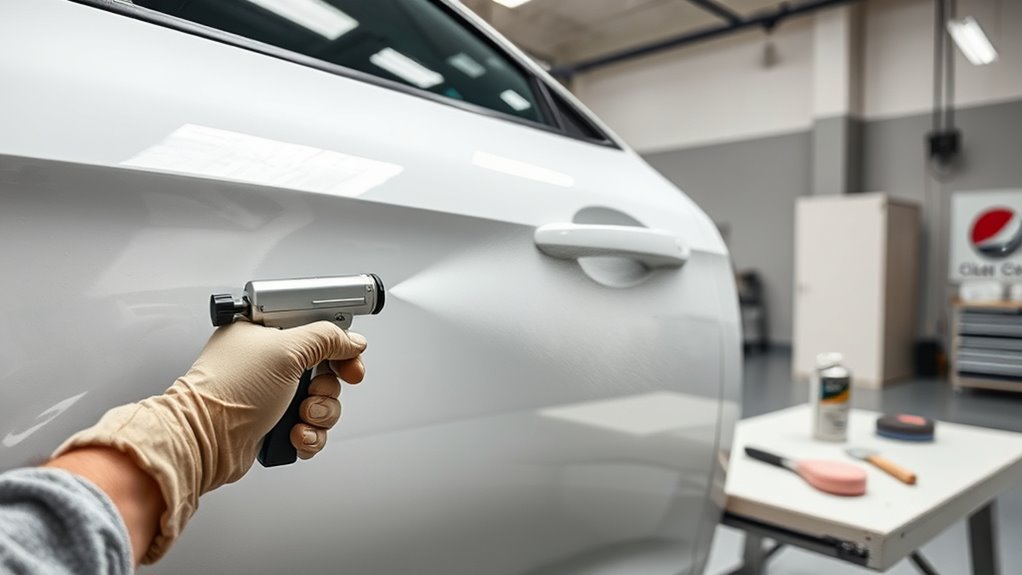
Once your car’s surface is prepped and masked, you’re ready to apply primer, paint, and clear coat. Use a paint gun to spray primer in thin, even wet coats, overlapping by 50%.
Sand lightly after drying.
Mix paint with mineral spirits for a milk-like consistency and apply multiple light layers, allowing time between each coat.
Finish with a clear coat in similar wet coats, then let it cure.
| Step | Details |
|---|---|
| Spray Primer | 10-inch distance, 50% overlap, wet coats |
| Sanding Lightly | Use 320 grit after primer dries |
| Apply the Paint | Multiple thin layers, 15-20 min apart |
| Clear Coat | Wet overlapping layers, 48 hrs curing |
Frequently Asked Questions
How to Spray Car Paint for Beginners?
You’ll start by cleaning and sanding your car thoroughly. Then, spray thin primer coats, followed by evenly applying your paint in overlapping passes.
Make sure to let each layer dry properly. After that, finish with a clear coat for protection.
How Can I Spray Paint My Car at Home?
You can spray paint your car at home by prepping a clean workspace, sanding and masking, applying primer, then multiple paint coats with proper drying time.
After that, finish with clear coat, sanding, and buffing for a smooth, glossy finish. It might sound like a lot, but taking it step by step makes it manageable. Just make sure you have all your materials ready before you start!
How Do I Paint My Car for Beginners?
Start by cleaning and sanding your car. Then, mask off areas you don’t want painted.
Next, apply primer and wait for it to dry. After that, spray thin coats of paint evenly.
Finally, finish up with wet sanding and polishing. This will give you a smooth, professional look.
What Are the Steps to Respray a Car?
You start by cleaning and sanding your car, then mask areas you don’t want painted.
Next, apply primer, spray several thin color coats, let each dry.
Finish with clear coat, and finally wet sand and buff.
Conclusion
Just like planting a garden, spray painting your car requires patience and care. You’ve tilled the soil by prepping your car, laid down the seeds with primer, and watched the vibrant paint bloom.
Finally, the clear coat acts like a protective glass, shielding your masterpiece from the elements. With each step, you’ve nurtured your car’s new look—now it’s ready to shine and turn heads, just like a garden in full bloom on a sunny day.
Spray painting a car isn’t just about applying paint; it’s an art that involves careful preparation, precise application, and protective finishing. By following these steps, you ensure a smooth, durable finish that enhances your car’s appearance and protects it from wear and tear. So, take your time, follow the process, and enjoy the satisfaction of a beautifully spray-painted car that looks fresh and vibrant for years to come.