Does a Paint Sprayer Use More Paint?
Yes, a paint sprayer typically uses about 25% to 33% more paint than a roller. That’s because sprayers create fine paint particles that often drift into the air, leading to overspray and wasted paint.
Rollers apply paint more directly and efficiently with minimal waste.
However, if you adjust your spray technique and equipment properly, you can reduce this waste. Keep exploring to find out which method suits your project best and how to save paint while spraying.
Key Takeaways
- Paint sprayers typically use 25%-33% more paint than rollers due to overspray and atomization losses. Spray painting disperses fine particles into the air, reducing the amount of paint reaching surfaces.
- Rollers provide better transfer efficiency by applying paint directly with minimal waste. Proper spray technique and equipment maintenance can reduce but not eliminate paint waste.
- Sprayers are faster for large areas but inherently consume more paint compared to rollers. So, if you’re looking to save paint, rollers might be your best bet.
How Paint Sprayers Compare to Rollers in Paint Usage
Although paint sprayers offer a faster application, they typically use 25% to 33% more paint than rollers because of overspray and atomization losses. When you choose a paint sprayer, you should expect increased paint waste since spray paint disperses fine particles into the air, lowering transfer efficiency.
This means less paint actually reaches the surface compared to rollers, which deposit paint directly with minimal overspray. While paint sprayers provide even paint coverage on complex surfaces, they inherently use more paint due to these losses.
Rollers, on the other hand, offer better transfer efficiency and reduce paint waste by applying paint more precisely. So, if your goal is to minimize paint consumption, rollers generally outperform sprayers in paint usage despite the speed advantage of spray paint.
Techniques to Reduce Paint Waste When Spraying
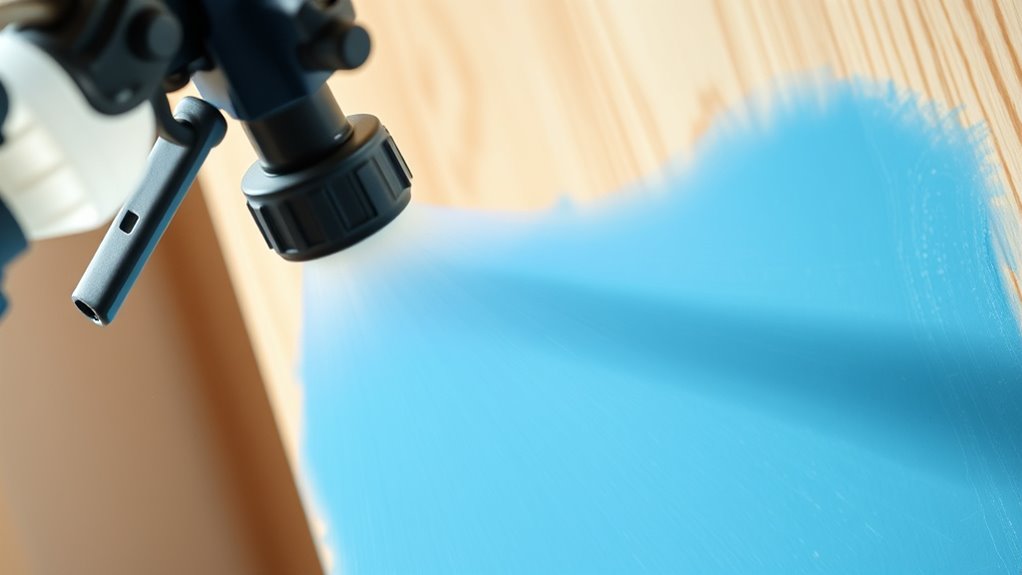
When you want to cut down on paint waste while spraying, using the right techniques makes a big difference. Start by replacing worn or rusted tips to maintain a consistent fan pattern, which improves paint efficiency.
Keep your spray pressure low but sufficient to achieve even coverage; this minimizes overspray and reduces paint waste. Pay close attention to your spray technique—hold the spray gun at the proper gun angle and maintain a consistent surface distance to avoid applying excess paint.
Maintain low spray pressure and steady technique to reduce overspray and save paint.
Avoid spraying in windy conditions to prevent paint drift and wasted material. Finally, strategically cover or stack nearby objects to catch overspray, allowing you to reuse paint and further reduce waste.
These steps enhance paint efficiency and help you get the most out of every can. It’s all about being mindful and making small adjustments that add up!
Choosing Between Spraying and Rolling for Different Projects
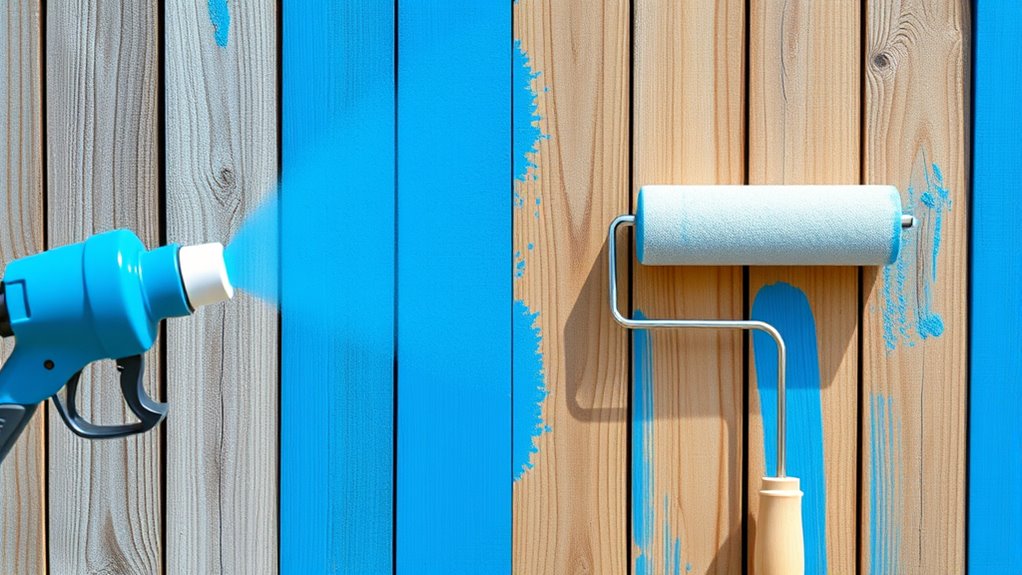
Mastering paint application techniques helps you control waste, but choosing the right tool for your project can make an even bigger difference. When deciding between spraying and rolling, consider these points:
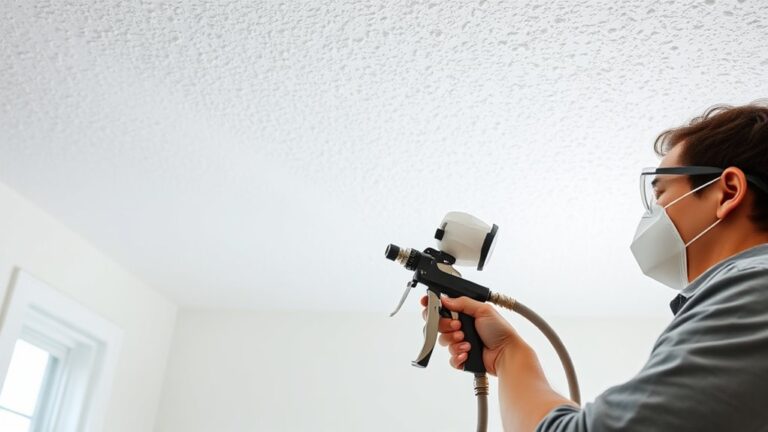
For large, open areas like walls and ceilings, using a paint sprayer speeds up the job. But keep in mind, it usually consumes much more paint because of overspray and atomization losses.
Rolling works best on smooth surfaces and smaller projects. It applies paint directly with minimal waste, which makes it ideal for walls requiring precision.
Professional painters often use drop cloths extensively when spraying. That’s because overspray can spread paint far beyond the areas you want to cover.
Frequently Asked Questions
What Are the Disadvantages of a Paint Sprayer?
You’ll face paint waste due to overspray, especially at high pressure or with worn tips. Spraying outdoors can cause paint loss in wind, and cleaning takes time.
Plus, you might need more skill to control the sprayer. It’s not always as straightforward as using a brush or roller. So, be ready to practice a bit before getting the hang of it.
Do Professional Painters Use Spray Guns?
Yes, you’ll find professional painters using spray guns often because they speed up coverage and deliver smooth finishes.
They’ll fine-tune settings and techniques to minimize waste while tackling large or detailed projects efficiently.
Why Does My Paint Sprayer Use so Much Paint?
Why do you think your paint sprayer uses so much paint? It’s often due to overspray, high pressure, or worn tips causing waste.
Try adjusting your settings and make sure to maintain your equipment. This can really help cut down on excess paint use.
Conclusion
When deciding whether a paint sprayer uses more paint, think of it like choosing between a fine-tipped pen and a broad brush—each has its purpose. Sprayers can cover large areas quickly but might waste a bit if you’re not careful.
By mastering your technique and picking the right tool for your project, you’ll paint with both efficiency and flair. So, channel your inner artist and spray smart to avoid turning your walls into a Jackson Pollock!
Paint sprayers are great for speed and even coverage, but using them wisely is key to preventing paint waste. When done right, a paint sprayer doesn’t necessarily use more paint—it just applies it differently. Remember, the best results come from a balance of skill, the right equipment, and knowing when to spray or brush.