
How Do I Get Spray Paint Off My Hands Quickly
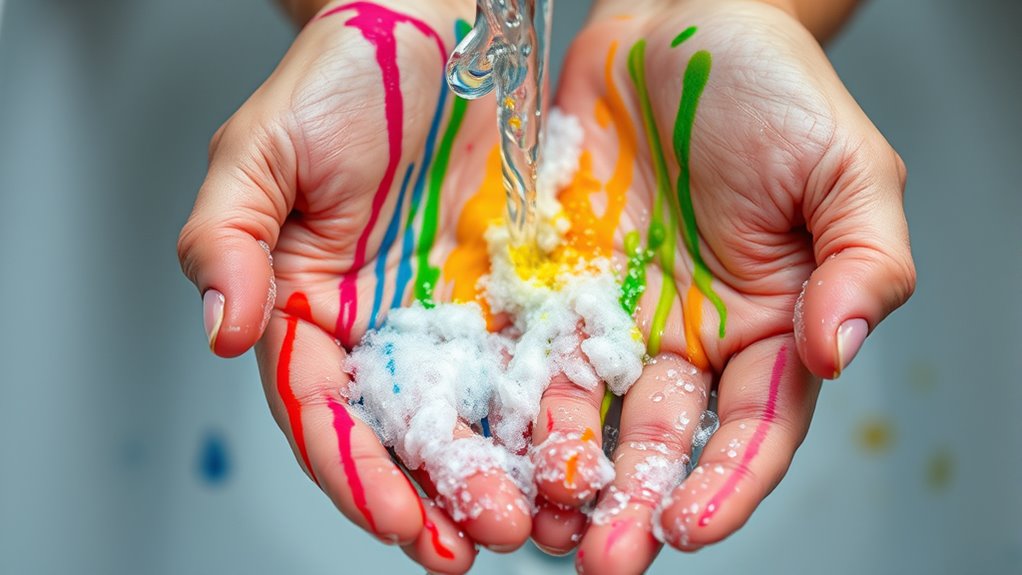
If you want to get spray paint off your hands quickly, start by rinsing them with warm water to prevent the paint from setting. This initial step helps soften the paint, making it easier to remove.
Then, use soap or natural oils like olive or coconut oil to gently loosen the paint. Focus on creases and textured areas with a soft cloth or brush to get into those tricky spots.
Avoid harsh chemicals at first to protect your skin from irritation.
Once most of the paint is gone, wash your hands thoroughly with soap and water. Don’t forget to moisturize afterward to keep your skin healthy and hydrated.
Keep reading for more tips on effective home remedies and commercial removal methods that work fast and safely. You’ll have your hands clean in no time!
Key Takeaways
- Rinse hands immediately with warm water and soap to prevent spray paint from setting on your skin.
- Gently rub natural oils like olive or coconut oil on painted areas to loosen the paint before washing.
- Use a soft brush or cloth for textured spots and creases to help remove paint without damaging skin.
- Avoid harsh chemicals initially; try dish soap and warm water for water-based spray paint removal.
- For stubborn paint, apply commercial hand cleaner or paint remover, following product instructions carefully.
Immediate Steps to Remove Spray Paint From Hands

If you want to prevent spray paint from setting on your skin, rinse your hands immediately with warm water. After a spray painting project, it’s essential to act fast to remove spray paint effectively.
Start by gently rubbing soap and water or using natural oils like olive or coconut oil on the paint on your hands. Let it sit for a minute to loosen the paint. Use a soft cloth or brush to clean spray paint from creases and textured areas carefully.
Avoid harsh paint thinner or nail polish remover initially, as these can irritate your skin. If stubborn spots remain, you can cautiously try nail polish remover or a commercial product.
Finally, wash thoroughly with hot water and soap, then moisturize to prevent dryness.
Effective Home and Commercial Methods for Paint Removal
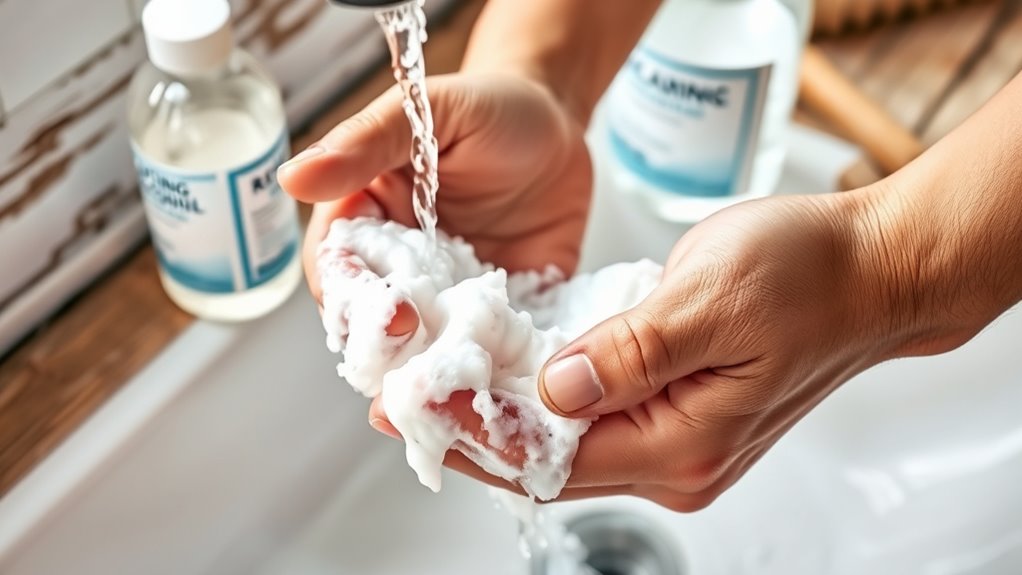
When immediate rinsing and gentle oils don’t fully remove spray paint from your hands, you’ll need more effective home or commercial solutions. For water-based paint, try using a small amount of dish soap and warm water with a cotton ball to gently lift the paint.
If that doesn’t work, apply a commercial paint remover or an industrial hand cleaner designed for paint removal. But always check the type of paint and follow safety instructions.
For stubborn stains, gently scrub with a scouring pad or an old toothbrush, especially around textured skin. Whether you’re tackling paint from a paint sprayer or a home improvement project, combining these methods will help you remove paint quickly and safely.
This way, you avoid harsh skin damage while getting your hands clean.
Frequently Asked Questions
What Removes Dried Spray Paint?
You’ll remove dried spray paint using acetone or rubbing alcohol; apply carefully and scrub with a brush.
If needed, try mineral spirits or commercial paint removers, but always test a small patch first to avoid irritation.
Just be careful with these chemicals, as they can be harsh on your skin and surfaces.
It’s always best to wear gloves and work in a well-ventilated area.
How Long Does It Take to Get Spray Paint off Your Skin?
How long do you think it takes to get spray paint off your skin?
Usually, fresh paint washes off in 1-5 minutes with soap and water. But if the paint has dried, it can take 10-20 minutes or more.
You might need to use solvents or do some scrubbing to get it all off. It’s a bit more work, but it’s definitely doable!
What Is the Best Paint Remover for Hands?
The best paint remover for your hands is a commercial hand cleaner designed for paint removal. It’s effective, safe for skin, and works quickly.
If you can’t find one, don’t worry. Natural oils or mineral spirits can also do the job gently and help get the paint off without harsh chemicals.
Will Spray Paint Come off My Hands?
Yes, spray paint will come off your hands if you act quickly. Use soap and warm water for fresh paint, and try rubbing alcohol or oils for dried paint.
Be gentle but persistent for best results. It might take a little time, but don’t worry—you’ll get it off!
Conclusion
Now that you know how to tackle spray paint on your hands, act quickly to rinse, scrub, and soothe your skin. Use soap and water to wash away surface paint. Then, reach for household items like olive oil or baking soda to break down stubborn stains.
If those don’t do the trick, try commercial removers for tougher spots. Clean thoroughly but care gently, so you don’t irritate your skin. Protect your skin during and after cleaning — it really makes a difference.
Because a little effort now means fresher hands, healthier skin, and a paint-free day ahead. Getting spray paint off your hands quickly isn’t just about looks, it’s about keeping your skin safe and comfortable. So, follow these tips to remove spray paint from your hands effectively and enjoy clean, soft skin in no time!



One Comment