Can You Sand Spray Paint?
You can sand spray paint, but only after it’s fully cured—usually waiting at least 24 hours guarantees you avoid damaging the finish. Sanding spray paint is a great way to smooth out any rough spots or imperfections, but timing is key. If you try to sand too soon, you risk ruining the surface.
Use fine-grit sandpaper, like 800 grit, and wet sand gently to smooth out imperfections without scratching. Wet sanding helps keep the paint cool and prevents dust from flying around.
Always clean the surface thoroughly after sanding to remove dust before applying more coats or polishing. This careful approach helps maintain a durable, glossy finish.
Taking these steps carefully ensures your spray paint job looks professional and lasts longer. Keep following to discover the best techniques for fixing and polishing painted surfaces. It’s easier than you think once you get the hang of it!
Key Takeaways
- You can sand spray paint only after it has fully cured, typically waiting at least 24 hours. It’s best to be patient here so you don’t mess up your finish.
- Use fine-grit sandpaper, around 800 grit, for gentle, controlled sanding. This helps avoid any damage to the surface.
- Wet sanding with water and soap is a smart move. It reduces dust and helps prevent scratches while you work.
- Make sure to clean the surface thoroughly after sanding. Getting rid of all that dust is key before you apply more coats or clear finishes.
- Try not to sand too early or use rough sandpaper. That way, you keep the paint durable and get a nice, smooth finish in the end.
When and How to Sand Spray Paint
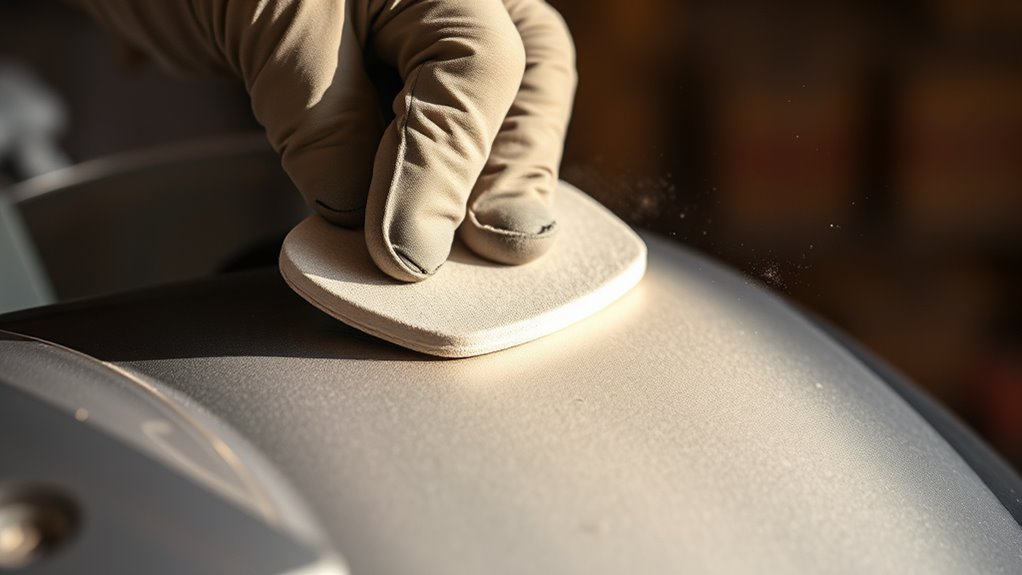
Although it might be tempting to sand spray paint right after application, you should wait at least 24 hours for it to fully cure. Sanding too soon can damage the finish and cause uneven surfaces.
When you do sand, use fine-grit sandpaper around 800 grit to gently smooth out imperfections like orange peel or overspray. Wet sanding is ideal because it reduces dust and helps achieve a smoother finish—add a few drops of soap to the water for better control.
After sanding, clean the surface thoroughly to remove any dust before applying additional coats or a clear coat. Following these steps ensures your spray paint looks professional and lasts longer without compromising the finish.
Techniques to Fix and Polish Painted Surfaces
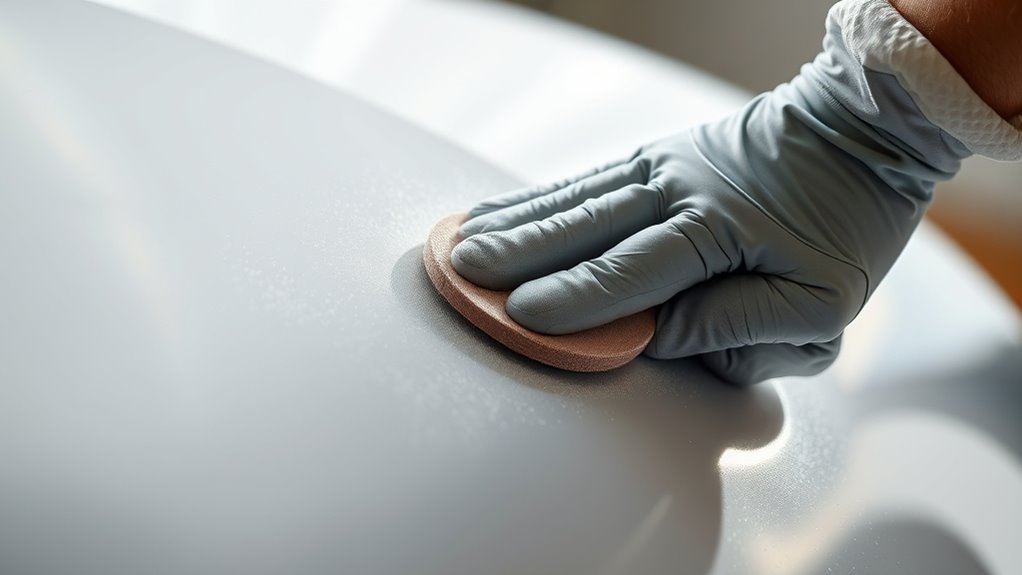
A key technique to fix and polish painted surfaces involves wet sanding with fine-grit sandpaper, usually between 600 and 800 grit. You’ll want to use water mixed with a few drops of soap to reduce friction and protect the base coat or new paint beneath.
Always let the paint fully cure before sanding to avoid damaging the finish. Wet sanding helps smooth imperfections like orange peel or overspray, improving the surface’s texture.
Allow paint to cure fully before wet sanding to smooth imperfections and enhance surface texture.
After sanding, thoroughly dry and clean the area, then polish to restore gloss and remove sanding marks. For the best results, repeat wet sanding and buffing several times.
Avoid dry sanding, as it can scratch or burn through the paint, compromising your work. Following these steps ensures a flawless, professional-looking finish.
Frequently Asked Questions
How to Smooth Out Uneven Spray Paint?
To smooth uneven spray paint, wait an hour before you start. Then, wet sand the area using 800-1500 grit sandpaper mixed with soapy water.
Use small circular motions as you sand. Remember to dry the surface often, and clean it thoroughly before you apply more coats or polish. It really helps to take your time with this step!
Can Rustoleum Spray Paint Be Wet Sanded?
You can wet sand Rustoleum spray paint once it’s fully cured, like polishing a gemstone to reveal its brilliance.
Use fine-grit paper with soapy water, gently smoothing imperfections for a flawless, glass-like finish.
What Grit Sandpaper Is Best for Sanding Spray Paint?
You should use 800 to 1000 grit sandpaper for smoothing spray paint.
For finer polishing, go with 1500 to 2000 grit. Always wet sand to avoid scratches and achieve a smooth, glossy finish.
How Do I Get a Smooth Finish After Spray Painting?
Want a flawless finish after spray painting? Wait an hour, then wet sand with 800-1000 grit paper using soapy water.
Dry often, don’t rush, and finish by polishing to bring out a smooth, glossy shine. It really makes a difference!
Conclusion
You might think sanding spray paint feels like rubbing away a fresh canvas, yet it’s exactly what sharpens your finish to perfection. When you gently smooth the surface, you’re not erasing mistakes—you’re polishing your work like a sculptor revealing hidden details.
So, next time you pick up that sandpaper, imagine you’re uncovering a glossy masterpiece beneath. Every stroke brings your spray paint closer to flawless brilliance. Sanding spray paint helps remove imperfections, smooths the texture, and prepares the surface for additional coats or clear finishes.
In short, yes—you can sand spray paint. Doing so carefully enhances the final look and durability of your project, making your spray-painted surface look professionally done. Just remember to use fine-grit sandpaper and work gently to avoid damaging the paint layer.