
How Much Does a Paint Sprayer Cost?
You can expect to spend between $50 and $250 for an entry-level paint sprayer, perfect for small DIY projects and light coatings. These budget-friendly models are great if you’re just starting out or only need to tackle minor touch-ups around the house.
If you need more power and versatility, mid-range models cost $250 to $800 and handle thicker paints with adjustable settings. They’re ideal for medium-sized projects where precision and control matter.
Professional-grade sprayers start around $1,000 and go much higher for heavy-duty, frequent use. These are built to last and deliver consistent results on large-scale jobs.
Your choice depends on project size and paint type, with more details coming up to help you pick the right one.
Key Takeaways
- Entry-level paint sprayers cost between $50 and $250. They’re ideal for small DIY projects and light coating tasks.
- Mid-range sprayers range from $250 to $800. These are great for thicker paints and medium-sized projects.
- Professional-grade sprayers typically start at $1,000 and can go beyond $5,000. They offer advanced features and durability for serious users.
- Price depends on factors like spray technology, adjustable pressure, usage frequency, and spray pattern requirements.
- When choosing a sprayer, it’s all about balancing your project size, paint type, and budget. That way, you get the best performance without overspending.
Entry-Level to Mid-Range Paint Sprayer Prices
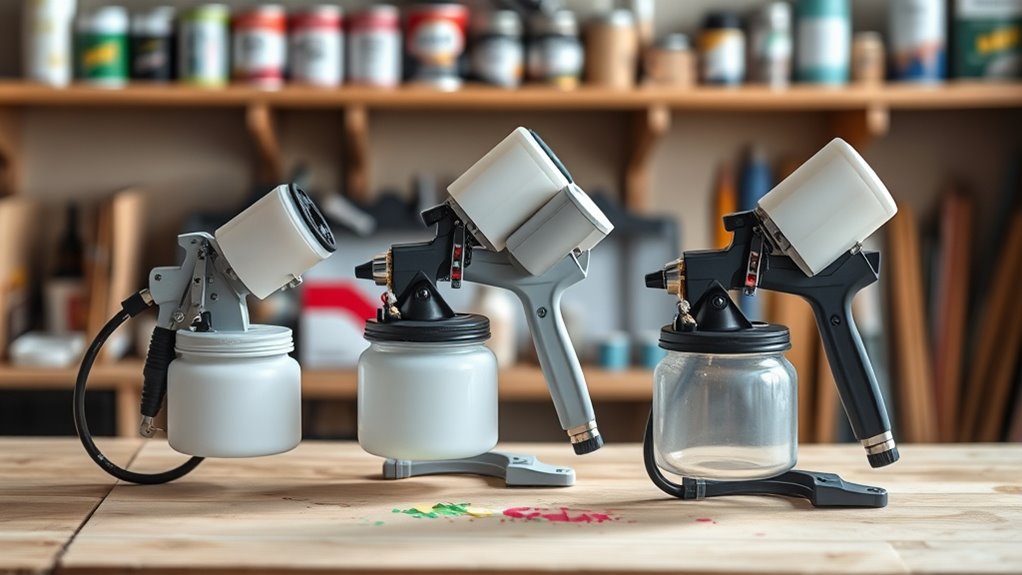
While entry-level paint sprayers typically cost between $50 and $250, they’re perfect for small DIY projects and light coatings. These sprayers are usually lightweight, electric handheld models or small HVLP units that make quick work of minor tasks.
If you need something a bit more robust, mid-range sprayers range from about $250 to $800. These often include airless technology, letting you spray thicker paints like latex or oil-based varieties with adjustable pressure settings.
Whether you’re tackling a weekend project or aiming for a more polished finish, these paint sprayers offer a solid balance of affordability and functionality. Choosing between entry-level and mid-range sprayers depends on your project size and paint type, ensuring you get the right tool without overspending.
Professional Paint Sprayers and Their Investment Value
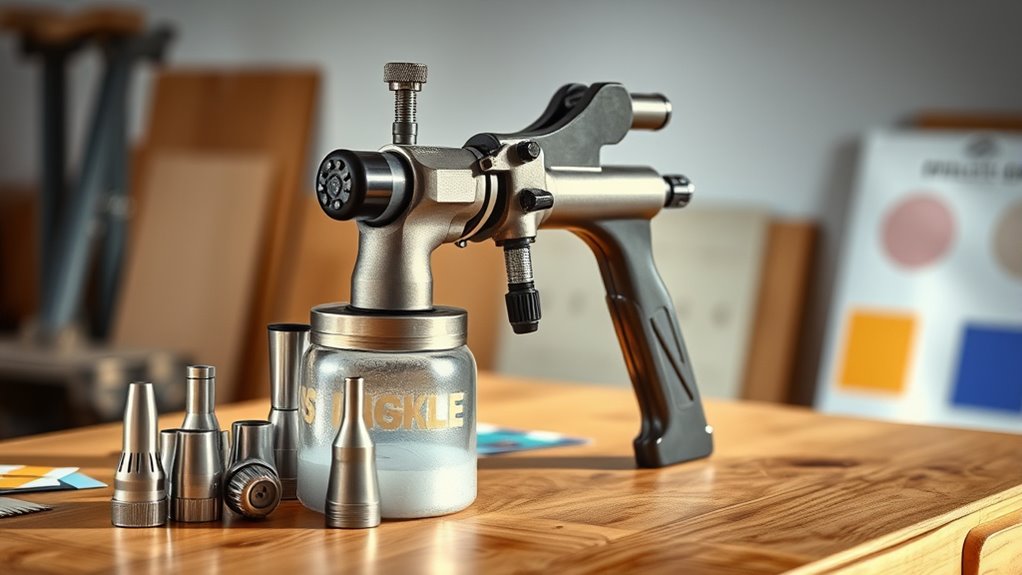
If you’re handling large-scale or frequent painting projects, investing in a professional-grade paint sprayer can transform your workflow. Professional paint sprayers often cost $1,000 or more, with high-end models like TriTech’s T15 exceeding $5,000.
For large or frequent projects, professional paint sprayers costing $1,000+ can significantly improve workflow and results.
This investment pays off when you rely on durability, advanced technology, and stainless steel components designed for high-volume use. These sprayers deliver consistent finishes and faster application times, boosting productivity and reducing labor costs over time.
Plus, they come with digital controls and lifetime warranties, making them a smart business asset. If you frequently tackle large projects, this level of reliability and efficiency justifies the upfront cost.
In the end, it ensures superior results and enhances your project’s quality and reputation.
Factors to Consider When Choosing Your Paint Sprayer Cost
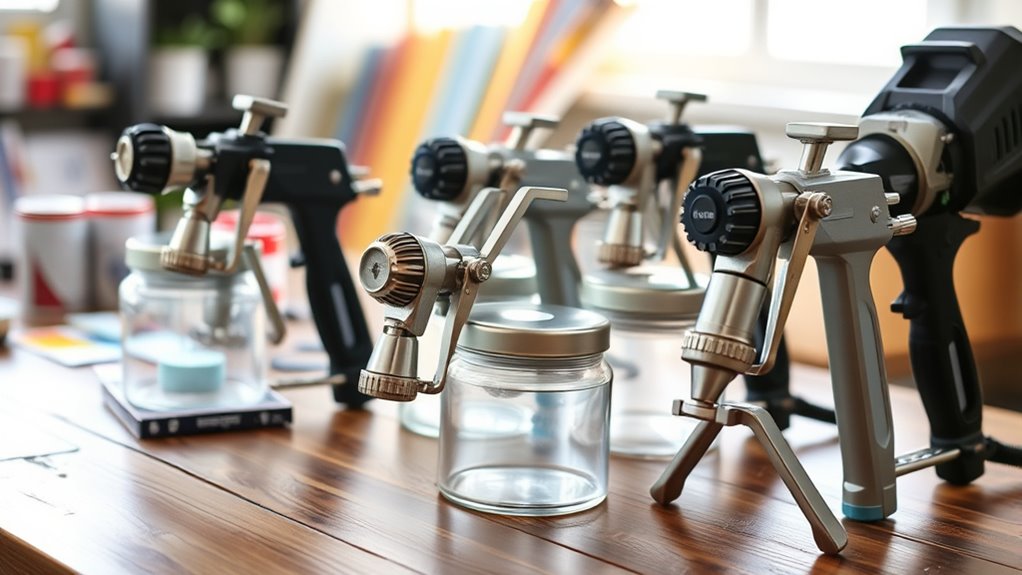
Because paint sprayers come in a wide price range, you’ll need to weigh several factors to find the right balance between cost and functionality. Start by considering how often you’ll use the sprayer; occasional DIY projects may not require expensive airless technology, while frequent or large jobs do.
Check if the sprayer offers adjustable pressure settings to control paint flow precisely. The spray pattern is also *essential*—some projects demand fine, detailed coverage, while others need broad, even coats.
Different sprayer types, like HVLP or airless, suit various materials and surfaces, affecting price. Don’t forget long-term expenses like maintenance and repairs.
Frequently Asked Questions
Is It Worth Getting a Paint Sprayer?
Yes, it’s worth getting a paint sprayer if you paint often or have large projects. You’ll save time, get a smoother finish, and avoid extra work.
But if you only paint occasionally, renting might be a smarter choice. That way, you don’t have to invest in something you won’t use much.
Can a Beginner Use a Paint Sprayer?
You’re perfectly equipped to handle a paint sprayer, especially beginner-friendly HVLP models. Don’t worry about tricky setups—just start small, follow instructions, and practice a bit.
You’ll soon create smooth, professional finishes with ease. It’s easier than you might think once you get the hang of it!
Do Paint Sprayers Waste a Lot of Paint?
Yes, paint sprayers can waste a lot of paint if you’re not careful. But don’t worry, it’s something you can manage.
What Is the Best Paint Sprayer for Beginners?
You’ll want a handheld HVLP sprayer like the Wagner FLEXiO 5000 or Graco TrueCoat 360. They’re lightweight and user-friendly, which makes them great for beginners.
Plus, they offer adjustable flow and help minimize overspray. That means you can get smooth, professional results without a big learning curve.
Conclusion
When choosing a paint sprayer, remember that over 60% of DIYers find mid-range models offer the best balance of price and performance. Whether you’re just starting or looking to upgrade, investing wisely can save you time and money in the long run.
Keep your project needs and budget in mind, and you’ll pick a sprayer that works perfectly for you. A good paint sprayer makes every paint job smoother and more efficient than ever before. So, take your time to find the right paint sprayer cost that fits your needs and ensures quality results every time.



One Comment