How You Throw Away Empty Spray Paint Cans Safely
To throw away empty spray paint cans safely, start by shaking them well. Then, spray outside until no paint or hissing sound remains. This ensures the cans are completely depressurized and safe to handle.
Never puncture or crush the cans yourself. Remove the caps before disposal, and be sure to follow your local recycling or hazardous waste guidelines.
This careful approach helps reduce risks to both you and the environment.
If you want to handle spray paint can disposal right every time, there’s more to learn about the rules and methods. Taking the time to understand local regulations can make a big difference in keeping your community safe.
Key Takeaways
- Shake and spray the can until no paint or hissing sound remains. This makes sure it’s completely empty and depressurized.
- If you still have leftover paint, spray it into a disposable container. Just make sure you do this in a well-ventilated area before you throw the can away.
- Never puncture or crush the can. Doing so can be super dangerous because of the leftover pressure inside.
- Once the can is fully empty, take off the nozzle and cap. This helps you stick to recycling rules.
- Always follow your local regulations. Dispose of empty cans in designated hazardous waste or recycling containers to keep things safe and eco-friendly.
Proper Steps for Emptying and Preparing Spray Paint Cans for Disposal
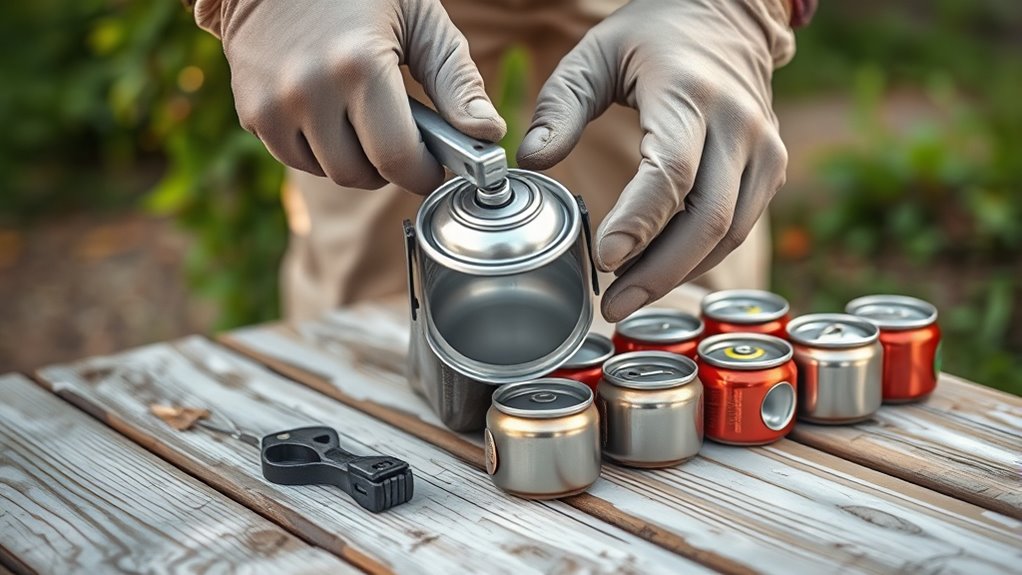
Before you dispose of spray paint cans, make sure you shake them vigorously for about a minute to mix all the paint and propellant.
Next, spray the can in a well-ventilated area until no more paint or hissing sound comes out. This guarantees your empty spray paint cans are completely empty and depressurized.
You should continue spraying into a disposable container or newspaper until the can releases nothing more. Never puncture or crush spray cans as residual pressure can cause explosions.
Once completely empty, remove the nozzle and cap. Then, follow local recycling aerosol guidelines or hazardous waste instructions.
Many areas have hazardous waste containers or recycling programs specifically for empty aerosol cans. Properly preparing your spray cans this way helps you safely dispose of aerosol cans while minimizing hazardous waste risks.
Safe Disposal Methods and Regulatory Guidelines for Empty Aerosol Cans
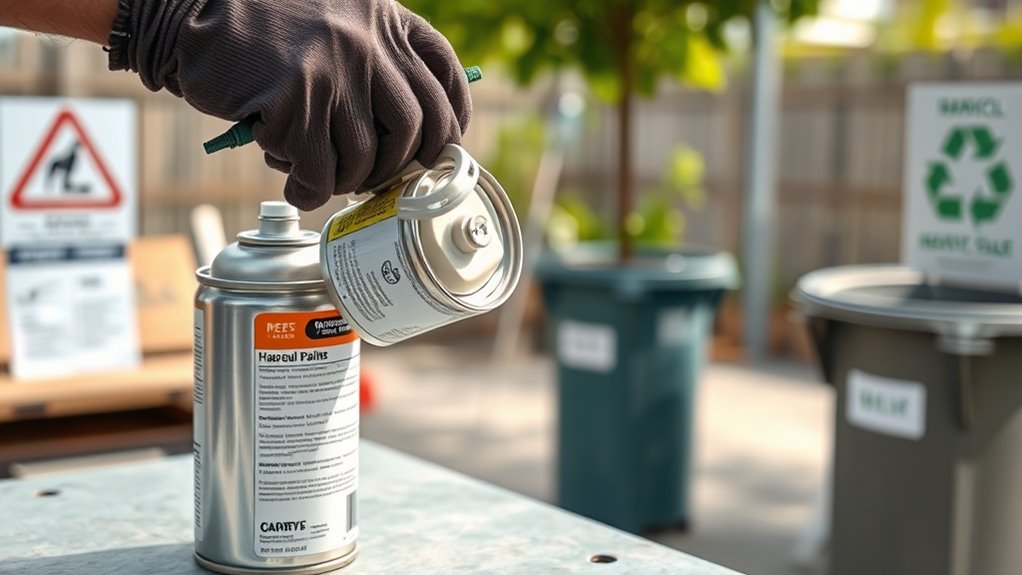
Although empty spray paint cans that have been fully depressurized and contain no leftover product can often go in your regular trash, you should always check local regulations first. Safe disposal means spraying the can until it’s completely empty and no hissing sound remains.
Never puncture or crush aerosol cans yourself, as they may still be hazardous. Instead, rely on certified waste facilities or recycling programs for safe handling.
| Condition | Recommended Disposal Method |
|---|---|
| Completely empty cans | Regular trash or recycling |
| Partially filled cans | Hazardous waste facility |
| Caps | Remove before recycling |
Always confirm with local authorities to ensure your empty cans meet safe disposal regulations. It’s better to be safe than sorry!
Frequently Asked Questions
Can I Put Empty Spray Paint Cans in the Bin?
Yes, you can usually put empty spray paint cans in the bin, but make sure they’re completely empty and depressurized first. Always check local rules, remove caps, and avoid disposing of partially full or pressurized cans in regular trash.
It’s important to be safe with these things. If you’re not sure, double-check your local guidelines—they can vary quite a bit. Better safe than sorry!
What to Do With Empty Aerosol Spray Cans?
You’ll want to wipe out waste wisely: make sure the can’s completely empty, remove the nozzle, then toss it in your trash if local rules allow.
Otherwise, take it to a hazardous waste site for safe handling. It’s always better to be safe than sorry!
How to Get Rid of Can Spray Paint?
You get rid of spray paint cans by ensuring they’re completely empty, then disposing of them according to your local waste guidelines.
Never puncture or crush them yourself; check for hazardous waste collection if paint remains.
Which Is the Best Way of Getting Rid of Aerosol Cans?
Oh sure, just toss aerosol cans wherever—because risking explosions is so fun!
But seriously, the best way is to use hazardous waste collection sites or events. Make sure the cans are empty and depressurized before disposal.
Conclusion
Now that you know how to empty and prepare your spray paint cans safely, you’re basically a hazardous waste superhero!
Tossing those cans without following the steps? That’s like inviting an explosion party in your trash bin—no one wants that chaos.
By taking a few simple precautions, you’re saving your home, the environment, and probably a few firefighters from an unnecessary dance with danger.
So go ahead, dispose of empty spray paint cans responsibly and feel like a safety legend! Proper disposal not only prevents accidents but also helps protect the environment from harmful chemicals.
Remember, following these safety tips when you throw away empty spray paint cans keeps everyone safe and reduces hazardous waste risks.