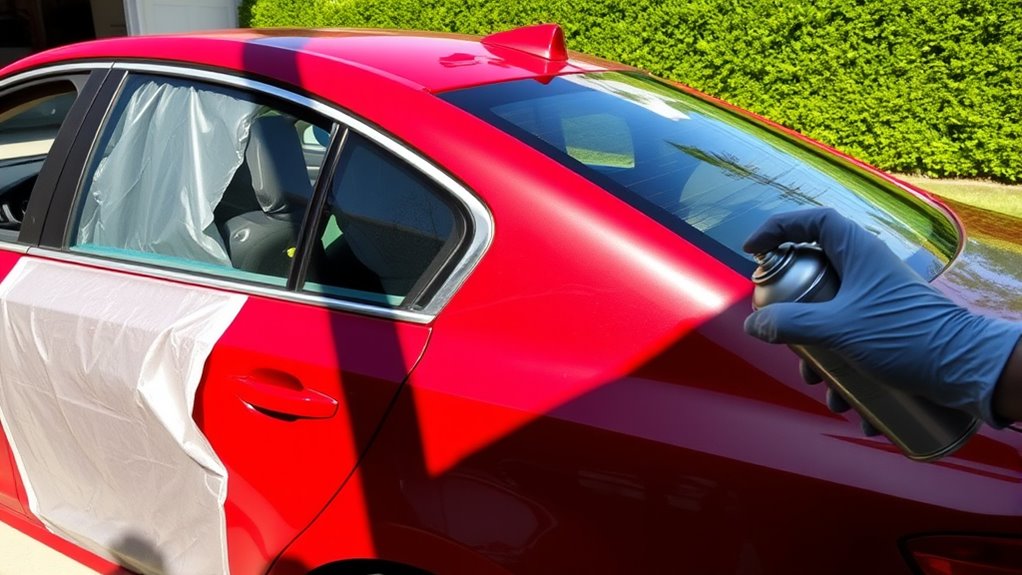
Can I Spray Paint My Car?
Yes, you can spray paint your car, but it’s important to prepare it well first for the best results. Proper preparation includes cleaning and sanding the surface to create a smooth base that helps the paint stick better.
Using quality automotive paint and primer is key because they improve adhesion and make your paint job last longer.
When you start painting, apply several thin coats instead of one thick layer. This helps avoid drips and uneven spots. Make sure to allow proper drying time between each coat—it really makes a difference.
Finally, finishing with a clear coat protects your paint and adds a nice shine. Take your time with each step, and you’ll be surprised at how professional your car will look.
Keep reading to learn about the best materials and techniques for spray painting your car.
Key Takeaways
- Yes, you can spray paint your car, but thorough surface preparation is essential for a smooth, lasting finish.
- Make sure to remove parts and sand the surface with 400-600 grit sandpaper before priming. This step helps the paint stick better and prevents rust.
- It’s best to use automotive-specific paints like Rustoleum High Gloss Enamel or OEM match aerosols. These give you better color accuracy and durability.
- When applying paint, go for multiple thin coats rather than one thick one. Allow proper drying time between layers to avoid drips and get even coverage.
- Finally, finish with a clear coat. If you want a really professional, glossy look, consider wet sanding and buffing afterwards.
Preparing Your Car for Spray Painting

Before you begin spray painting your car, you’ll need to prepare the surface thoroughly. Start with a thorough wash to remove dirt, grease, and debris, then allow ample dry time.
Remove all removable parts like headlights, trim, and mirrors to guarantee even coverage. Next, sand the existing paint or bare metal using 400-600 grit sandpaper to create a smooth surface that promotes adhesion.
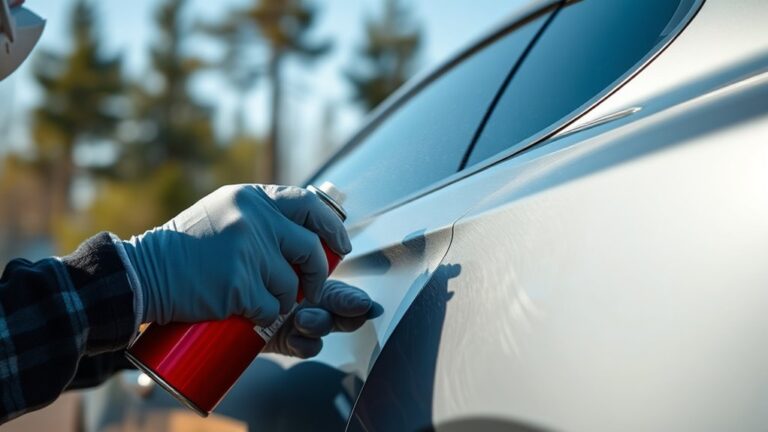
Use painter’s tape to protect areas you don’t want painted. Spot prime any exposed metal or chipped areas with spray primer to prevent rust and improve bonding.
When you start applying auto paint, remember to handle your paint cans carefully. After painting, finish with a clear coat for protection.
This prep work is essential for a professional-looking finish and long-lasting results. Trust me, taking the time here makes all the difference!
Choosing the Right Materials and Techniques

When selecting materials for spray painting your car, you’ll want to choose automotive-specific paints like Rustoleum High Gloss Enamel or OEM match aerosols. These guarantee proper adhesion and accurate color.
Proper surface preparation is key. Start with thorough cleaning, then sand the surface with 600 grit to ensure the primer sticks well.
Apply a quality primer before using your spray paint to create a smooth base. Whether you’re using a paint gun or aerosol cans, keep the paint thickness consistent by applying multiple thin coats.
Make sure to allow at least six hours between each layer. This prevents drips and uneven coverage, which can be a real pain to fix later.
Finish with a clear coat to protect the paint and enhance gloss. If you want to go the extra mile, optional wet sanding and buffing after the clear coat will give your car a professional finish you’ll be proud of.
Frequently Asked Questions
Is Spray Painting a Car a Good Idea?
Spray painting your car can be a good idea for small fixes or budget projects, but you’ll need proper prep, the right paint, and safety gear.
If you want flawless, long-lasting results, professionals often deliver better quality and durability. So, it really depends on what you’re aiming for.
How Much Does It Cost to Respray a Car?
You’ll typically spend between $1,000 and $5,000 to respray your car professionally. The cost depends on paint quality, size, and prep work.
If you’re thinking about doing it yourself, DIY options can cost $100 to $500. But keep in mind, they require more effort and skill.
Will Spray Paint Stick to My Car?
If your car’s surface were a picky cat, spray paint might just scratch its fur—unless you clean, sand, and prime it properly.
Then, your paint’ll cling like it’s stuck on for life, no drama guaranteed.
Can You Use Normal Spray Paint on a Car?
You can use normal spray paint on your car, but it won’t last long. It lacks durability, adhesion, and UV resistance, so your paint will likely peel or fade quickly.
Honestly, it’s better to go with automotive spray paint instead. It’s specially designed to hold up on cars and keep that fresh look for longer.
Conclusion
Now that you’re ready to spray paint your car, remember that preparation and the right materials are key. It’s funny how taking the time to clean and sand your car first not only makes the paint stick better but also saves you from extra work later.
So, by doing the groundwork carefully, you’ll end up with a finish that looks professional—even if you started just wanting a quick color change. Spray painting your car can be a rewarding DIY project, but it’s important to approach it with patience and attention to detail.
With the right prep, paint, and technique, you’ll transform your vehicle’s look and enjoy the satisfaction of a job well done. Just take it step by step, and you’ll see that spray painting your car is totally doable.


3 Comments