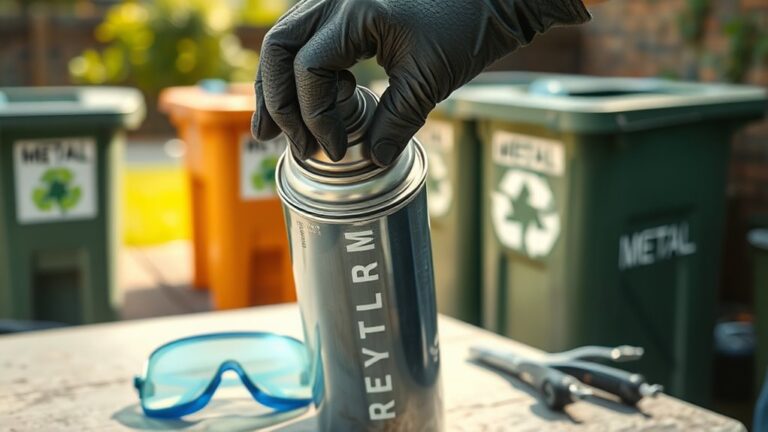
Can I Spray Paint in Cold Weather?
You can spray paint in cold weather, but you need to take extra care to get the best results. Cold temperatures slow down the drying process, especially below 60°F, which can lead to surface issues and poor adhesion. So, it’s important to consider the temperature before you start spraying.
Using heaters or working in a heated space can help keep the temperature above 50°F. Avoid spraying when it’s freezing outside because that can ruin your paint job.
Make sure to prepare your surfaces well and spray with controlled bursts to prevent runs and drips.
Once you’ve painted, keep your item indoors while it dries to ensure proper curing. If you want tips on handling these cold-weather challenges effectively, there’s definitely more to explore!
Key Takeaways
- Spray painting in cold weather below 50°F is not recommended because the paint dries slowly and doesn’t stick well.
- It’s best to use heaters or work in heated spaces to keep the temperature above 50°F while you’re painting and as the paint dries.
- Make sure to prepare the surfaces properly. Clean, dry, and prime them well to help the paint stick better, especially when it’s cold outside.
- Try to avoid spraying paint outdoors if it’s colder than 50°F. Cold temperatures can cause condensation and mess up the finish, leading to problems like blushing.
- Also, keep in mind that paint takes longer to dry in the cold. The solvents evaporate slower and the chemical curing process is delayed, so give it extra time to dry fully.
Challenges and Effects of Cold Weather on Spray Painting

When you spray paint in cold weather, you’ll notice the drying process slows down considerably because the lower temperatures reduce solvent evaporation and chemical reactions. This extended drying time can cause problems like surface imperfections and poor adhesion, especially when temperatures dip below 60°F.
Spray painting below 60°F slows drying, risking surface flaws and weak adhesion due to reduced evaporation.
Humidity and condensation may form on your surface in freezing conditions, leading to blushing or a dull paint finish. Slow evaporation also increases the risk of dust settling on the wet paint, which can affect the final look.
Additionally, improper curing in cold weather means your spray paint might remain sticky or uneven. To get the best results, you need to understand how temperature and humidity impact evaporation and curing.
These factors directly influence the quality and durability of your spray paint job, so it’s definitely worth paying attention to them.
Techniques and Precautions for Successful Cold Weather Spray Painting
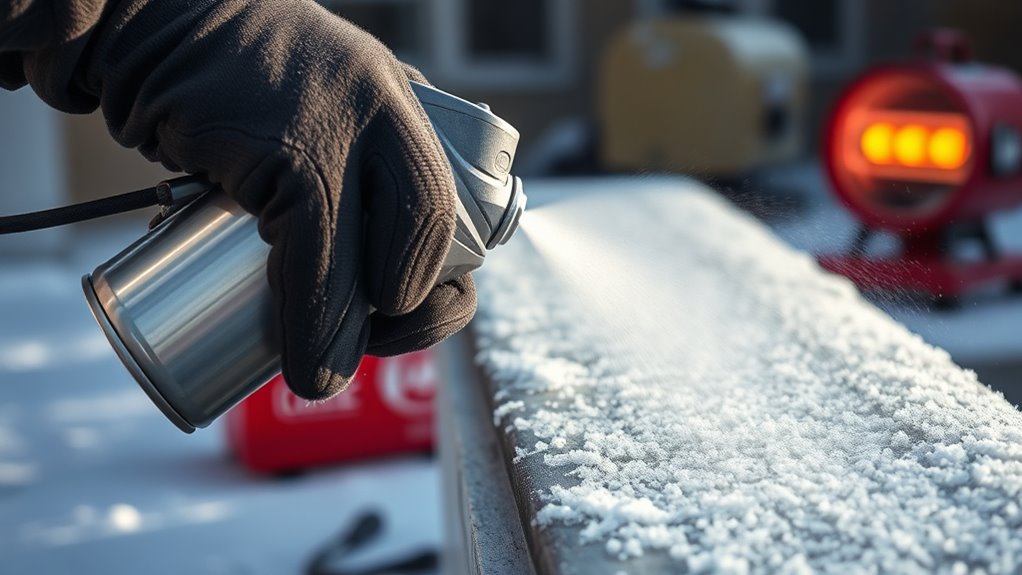
Cold weather can seriously affect how your spray paint dries and adheres, but you can take steps to overcome these challenges. Start by prepping the surface properly—clean, dry, and lightly sand it, then apply a suitable primer to boost adhesion in cold temperatures.
Use a small, enclosed spray booth or a bathroom with good ventilation to control fumes and temperature. Keep the environment above 50°F using portable heaters or heating pads to ensure proper drying time.
Spray paint in short bursts to avoid runs and uneven finishes caused by cold exposure. Bring your items outside only when ready to spray, then quickly move them indoors to dry.
Following these spray painting techniques will help you achieve a smooth, durable finish despite the cold.
Frequently Asked Questions
What Temperature Is Too Cold to Spray Paint?
You shouldn’t spray paint below 50°F (10°C), as colder temps cause poor adhesion and drying.
Below 40°F (4°C) is definitely too cold, risking uneven finish and longer drying times. Wait for warmer weather.
Will Paint Freeze at 32 Degrees?
Yes, paint can freeze at 32 degrees, especially water-based types. When that happens, the paint thickens or separates, ruining its quality.
You really shouldn’t spray paint in freezing temperatures. It can lead to poor results and damage the paint.
How Cold Is Too Cold to Paint?
If you paint below 40°F, you’re skating on thin ice—adhesion suffers, drying slows, and finishes get rough.
It’s best to wait for warmer days to make certain your paint job sticks and looks great.
Is Spray Paint Ruined if It Freezes?
Yes, spray paint can be ruined if it freezes. You’ll likely face clumping, poor adhesion, and nozzle clogging.
Even if it thaws, the quality usually suffers. So, it’s best to avoid using frozen spray paint.
Conclusion
Spray painting in cold weather isn’t impossible, but you’ve got to be careful. Temperatures below 50°F can cause paint to dry unevenly, leading to cracking or poor adhesion.
In fact, studies show paint dries up to 50% slower in cold conditions. To get the best results, make sure you prep your surface well, use slow-drying formulas, and keep your spray can warm before use.
With the right precautions, you can still achieve a smooth, durable finish. Remember, spray painting in cold weather requires extra attention to detail and patience, but it’s definitely doable. Just follow these tips, and you’ll get great results even when it’s chilly outside.