How Do You Dispose of Spray Paint Cans Safely?
You should fully empty spray paint cans by spraying until the sound and product stop.
Never puncture, crush, or burn them, as they contain pressurized gases and hazardous materials.
Once empty, you can safely dispose of cans in regular trash, but partially full or damaged cans must go to a hazardous waste facility or designated collection site.
Always follow your local guidelines to prevent accidents or environmental harm.
Keep going to find out how to handle these cans properly and stay safe.
Key Takeaways
- Ensure spray paint cans are fully empty by spraying until no product or hissing sound remains. This helps make sure there’s nothing left inside that could cause problems later.
- Never puncture, crush, or incinerate spray paint cans. Doing so can lead to leaks, fires, or even explosions, which is really dangerous.
- Store partially full or damaged cans upright in ventilated areas. Keep them away from heat or flames to prevent accidents.
- Take empty or partially full cans to designated household hazardous waste or recycling centers. These places know how to handle them safely.
- Always follow local regulations and universal waste rules. That way, you’re disposing of aerosol cans properly and legally.
Understanding the Hazards and Regulations of Aerosol Can Disposal

Because aerosol cans contain pressurized gases and hazardous substances like paints and solvents, you need to handle their disposal carefully. Aerosol cans that aren’t fully empty are classified as hazardous waste under disposal regulations due to risks of leaks, fires, or explosions.
In California, these cans fall under universal waste rules, letting you process them on-site if you follow safety guidelines. However, only fully empty aerosol cans can usually be thrown away in regular trash.
Partially full or damaged cans must go to hazardous waste collection to prevent environmental harm. Mishandling these cans poses serious dangers, so understanding these regulations and treating aerosol cans with caution ensures your safety and compliance with the law.
Safe Disposal Methods for Spray Paint and Aerosol Cans
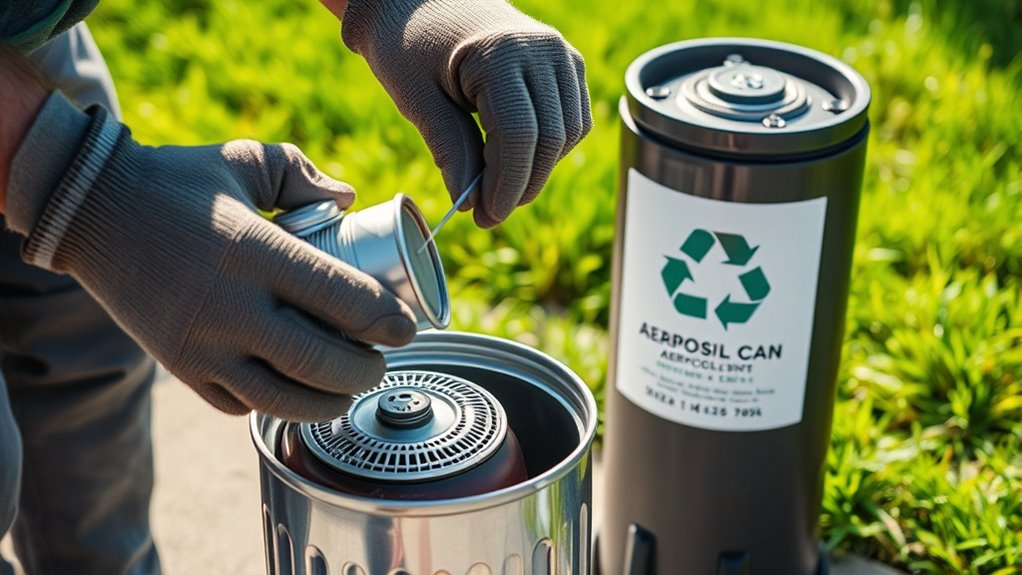
When disposing of spray paint and aerosol cans, you should first make sure they’re completely empty by spraying until the product and hissing sound stop. Proper disposal prevents accidents and environmental harm.
Ensure spray paint cans are fully empty before disposal to avoid accidents and protect the environment.
Follow these steps for safe handling:
- Never puncture, crush, or incinerate waste aerosol cans—they’re pressurized and can explode.
- Store partially used or damaged cans upright in a ventilated area, away from heat or flames.
- Take empty aerosol cans or those with residual spray paint to a household hazardous waste collection site or participate in a local recycling program.
Use hazardous waste containers designated for aerosol disposal and always follow local regulations. By doing this, you guarantee safe disposal while protecting yourself and the environment from hazardous waste risks.
Frequently Asked Questions
Does Home Depot Recycle Spray Paint?
Yes, Home Depot recycles spray paint cans. You just need to make sure your cans are completely empty before bringing them in.
You can drop them off during store hours, and they’ll handle the rest safely. It’s pretty simple!
Can I Put Empty Spray Paint Cans in the Bin?
Don’t toss empty spray paint cans in the bin like fragile glass; you’ve got to spray until silent, then toss.
If any hissing remains, treat them like ticking time bombs and take them to hazardous waste sites.
Which Is the Best Way of Getting Rid of Aerosol Cans?
The best way to get rid of aerosol cans is to fully empty them, then recycle through specialized programs or scrap metal centers.
Never crush or puncture unless using certified systems, and take partially full cans to hazardous waste sites.
How Do You Depressurize an Aerosol Can?
To depressurize an aerosol can, spray it in a well-ventilated area until the hissing stops and no product comes out.
Don’t puncture or crush it before it’s completely empty to avoid danger. It’s safer to take your time with this part.
Conclusion
Think of your spray paint can as a tiny dragon—powerful but dangerous if not handled right. Just like you wouldn’t release a dragon into your home, don’t toss that can in the trash carelessly.
Instead, tame it by emptying and recycling it properly, following local rules. This helps make sure you’re disposing of spray paint cans safely and responsibly.
By doing so, you’re not just throwing away waste—you’re protecting your world from fiery harm. Keeping the air clean and safe benefits everyone’s journey ahead.
Remember, safe spray paint can disposal is key to preventing environmental hazards and accidents. Always check your community’s guidelines for hazardous waste disposal to recycle or discard spray paint cans correctly. This small step helps protect our environment and keeps our neighborhoods safe.