Author: Admin

  • Why Is My Paint Sprayer Not Working and How Can I Fix It?

    If your paint sprayer isn’t working, start by checking for blockages from dried paint in the gun, hoses, or valves.

    Also, inspect the pump packings and ball valve for wear or sticking. Make sure your hoses aren’t kinked or damaged.

    Double-check that your pressure settings are correct and that your paint isn’t too thick.

    Regular cleaning and maintenance can prevent most issues.

    Keep going to discover detailed troubleshooting tips and simple maintenance habits that’ll keep your sprayer running smoothly.

  • How You Can Spray Paint Faucets Step by Step

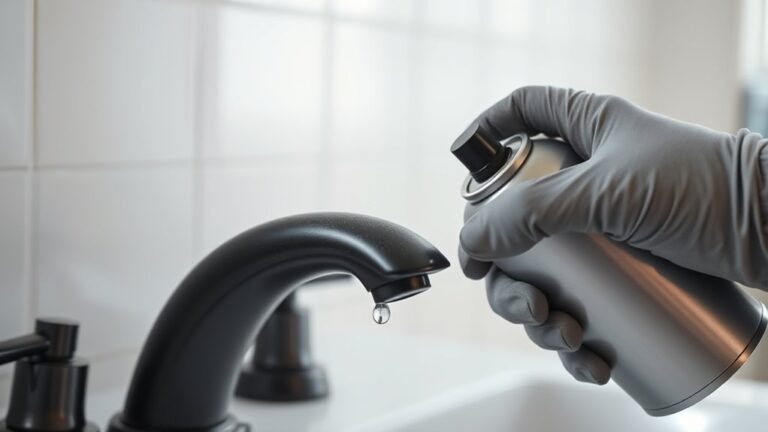
    To spray paint your faucet, first remove all hardware and clean it thoroughly with Lime-A-Way and Comet to eliminate grime. Lightly sand the surface with 150 grit sandpaper to help the primer stick.

    Mask off surrounding areas to avoid overspray, then apply light, even coats of automotive spray primer. Make sure to let each layer dry before adding the next one.

    Next, follow up with multiple thin coats of matte black spray paint. Allow ample drying time between coats to get that smooth finish.

    Once fully dried, reassemble your faucet for a sleek new look. Keep going to discover tips for a flawless, long-lasting finish!

  • How You Can Spray Paint Fake Flowers Step by Step

    Start by gently cleaning your fake flowers and letting them dry completely to make certain paint sticks well. Protect stems with painter’s tape, then shake your spray paint can thoroughly.

    Hold it 6-12 inches away, applying light, even coats while rotating the flowers. Wait 10-15 minutes between layers and let them dry for a few hours before adding a clear sealant for durability.

    Handle carefully once dry to avoid smudges. Keep going to uncover tips for a flawless, professional finish.

  • How Do You Put Polyurethane in a Paint Sprayer Step-by-Step?

    To put polyurethane in a paint sprayer, start by thinning it—mix about 2 parts polyurethane with 1 part appropriate thinner. Then strain the mixture to remove any lumps.

    Next, pour the filtered mixture into your sprayer’s container, but be careful not to overfill it. Attach the correct spray tip and adjust the flow control knob until you get an even stream.

    Before you dive in, test-spray on a scrap surface to make sure everything looks good. Keep a steady distance from the surface and use smooth, overlapping strokes to apply the polyurethane evenly.

    Follow these steps closely, and you’ll soon master a flawless finish. It’s easier than you might think once you get the hang of it!

  • How You Spray Paint Fabric Step by Step

    To spray paint fabric, first wash, dry, and iron it to create a smooth surface. Insert plastic backing inside to prevent bleed-through.

    Lightly sketch your design, then hold the spray can 6-8 inches away, applying thin, even coats to avoid drips. Let each layer dry before adding another, and let the final coat cure for 24-72 hours to set the paint.

    For detailed tips and tricks to perfect your project, keep exploring the process. You’ll get the hang of it in no time!

  • How Much More Paint Does a Sprayer Use?

    You’ll use about 25 to 33 percent more paint with a sprayer compared to a roller because spraying creates overspray and paint wastage.

    Factors like spray pressure, nozzle wear, and wind increase how much paint drifts or misses your surface, wasting paint.

    While adjusting your technique and equipment can reduce some loss, you can’t completely eliminate extra paint use.

    If you want to get the most out of your paint, there are smart strategies and tips you’ll want to know.

  • How You Can Spray Paint EVA Foam Without Damage

    To spray paint EVA foam without damage, start by heat sealing the surface with a heat gun and lightly sanding it to improve primer grip. Clean off dust, then apply a foam-specific primer like Plasti Dip for durability.

    Use flexible acrylic or foam-safe spray paints in multiple thin coats to avoid cracking or peeling. Make sure each layer dries fully before the next. Keep the coats thin and even, and you’ll get a smooth, long-lasting finish.

    If you want to perfect your technique, there’s more to discover. Just take your time, and you’ll be amazed at the results!

  • How You Can Spray Paint Door Knobs Step by Step

    To spray paint door knobs, first remove all hardware and screws carefully. Then clean the knobs with a degreaser to remove oils and dirt.

    Lightly sand the surface to create a texture for the primer to grip. Apply a self-etching primer in light coats and let it dry thoroughly.

    Next, spray multiple thin layers of metal-specific paint. Let each coat dry to avoid drips.

    Follow these steps well, and you’ll get a smooth, long-lasting finish. Keep going to master each detail perfectly.

  • Do I Need to Thin Paint for an Airless Sprayer?

    Yes, you usually need to thin latex paint when using an airless sprayer to avoid clogging and guarantee smooth, even coverage. Adding about 10-20% water per gallon helps the paint flow better through the sprayer’s nozzle.

    Too thick, and you risk uneven patterns or splattering; too thin, and coverage suffers. Start with a small amount, strain the paint, and test spray to find the right balance.

    Keep exploring to get the best results for your specific setup. It might take a little trial and error, but it’s worth it for that perfect finish.