How You Can Recycle Spray Paint Cans Safely and Effectively
To recycle spray paint cans safely and effectively, start by fully emptying the can. Keep spraying until no paint or propellant comes out. This step ensures the can is safe to handle and recycle.
Next, remove any plastic caps or nozzles. These parts need to be recycled separately because they are made from different materials.
Never try to puncture or crush the can yourself. Instead, use certified aerosol venting and recycling systems designed specifically for safely handling leftover contents.
Following these steps not only protects the environment but also keeps you safe from potential hazards.
Keep going to discover common pitfalls to avoid and more detailed disposal tips. Recycling spray paint cans properly is easier than you might think!
Key Takeaways
- Fully empty spray paint cans by spraying onto scrap material until no paint or propellant remains before recycling. This ensures the can is safe to handle.
- Do not puncture or crush cans manually. Instead, use certified aerosol venting systems like Aerosolv® to safely remove any leftover contents.
- Remove plastic caps and nozzles from cans before recycling. These parts need to be processed separately, so it’s important to take them off first.
- Dispose of partially filled or non-empty cans as household hazardous waste according to your local regulations. This helps keep the environment safe.
- Always handle and recycle cans carefully. Doing so prevents safety hazards and minimizes environmental pollution.
Proper Steps for Emptying and Disposing of Spray Paint Cans
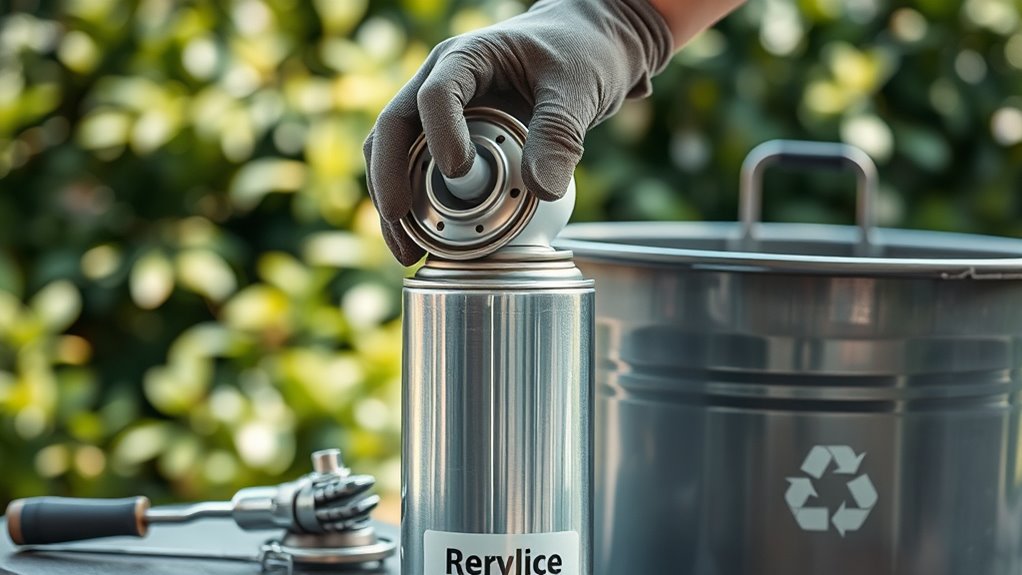
Before disposing of spray paint cans, make sure you completely empty them by spraying onto scrap material until nothing more comes out. Handling empty aerosol cans properly is vital to avoid safety risks.
Always fully empty spray paint cans by spraying on scrap before disposal to ensure safe handling.
Don’t try to puncture or crush the can yourself; instead, use certified aerosol can recycling systems like Aerosolv® to safely vent any residual contents. Remove plastic caps or nozzles before recycling, as they require different processing.
If cans aren’t completely empty, treat them as household hazardous waste and take them to a proper disposal facility. Always follow local disposal regulations to determine whether you can recycle aerosol cans or if they must be handled as hazardous waste.
Taking these safety precautions ensures you dispose of aerosol cans responsibly and protect the environment. It’s really about being careful and doing your part to keep things safe and clean.
Common Mistakes to Avoid When Recycling Aerosol Cans

Recycling aerosol cans properly takes attention to detail, and skipping key steps can lead to safety hazards or rejected materials. One common mistake is not ensuring the can is completely empty before recycling. Spray paint cans with pressurized contents pose risks if not fully used.
Never try to puncture or depressurize aerosol cans yourself—leave that to hazardous waste professionals. Removing the nozzle can also cause the can to burst, creating safety hazards.
Another error is ignoring local regulations; partially full cans often require disposal in hazardous waste containers rather than regular recycling. Finally, always remove plastic caps since plastic and metal are recycled separately.
Frequently Asked Questions
Which Is the Best Way of Getting Rid of Aerosol Cans?
The best way to get rid of aerosol cans is to fully empty them, remove the plastic cap, and recycle or take them to a hazardous waste facility.
Never puncture or crush cans yourself to stay safe. It’s just not worth the risk!
What to Do With Empty Aerosol Spray Cans?
You should fully empty aerosol spray cans, remove plastic parts, and check local recycling rules.
Never puncture them yourself; instead, take cans to hazardous waste facilities to recycle safely and avoid environmental hazards or fines.
How Do You Depressurize an Aerosol Can?
Like a wizard knows their spells, you shouldn’t depressurize an aerosol can yourself.
Instead, trust trained pros with special tools to safely release pressure, preventing explosions and keeping everyone safe.
Leave it to experts!
Can I Put Empty Spray Paint Cans in the Bin?
Yes, you can put empty spray paint cans in the bin if they’re completely depressurized and paint-free. Just remove the plastic cap first.
Always check your local rules, as some areas require special disposal for aerosol cans. It’s better to be safe than sorry!
Conclusion
By emptying your spray paint cans completely before recycling, you’re not only following the right steps but also preventing potential hazards—turns out, safety and responsibility go hand in hand.
Don’t make the common mistake of tossing half-full cans; that’s like leaving a surprise waiting to happen. So, take a moment to do it right.
You’ll protect the environment and maybe even avoid an unexpected mess. Recycling smartly really pays off! Properly recycling spray paint cans keeps harmful chemicals out of landfills and reduces the risk of explosions during waste processing.
So, next time you finish a project, remember to empty those cans completely. It’s a simple habit that makes a big difference for your safety and the planet.