How You Can Safely Throw Away Spray Paint Cans
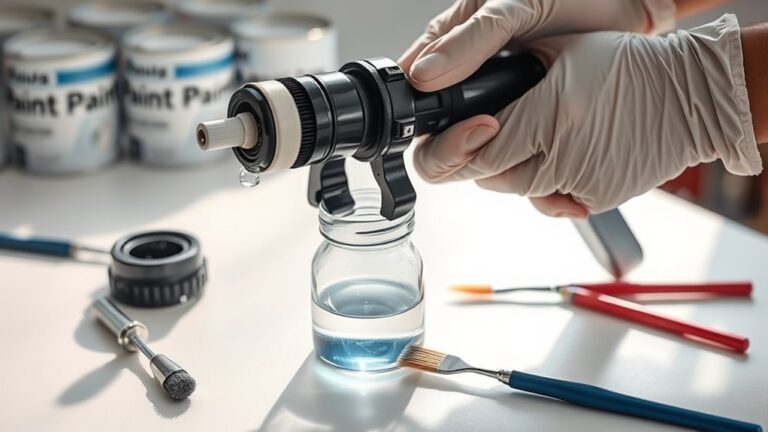
You should always fully empty spray paint cans by spraying until no paint or hissing sounds remain before disposal. This step is really important to make sure the cans are safe to throw away.
Never puncture or crush the cans, as this can be dangerous and might cause accidents.
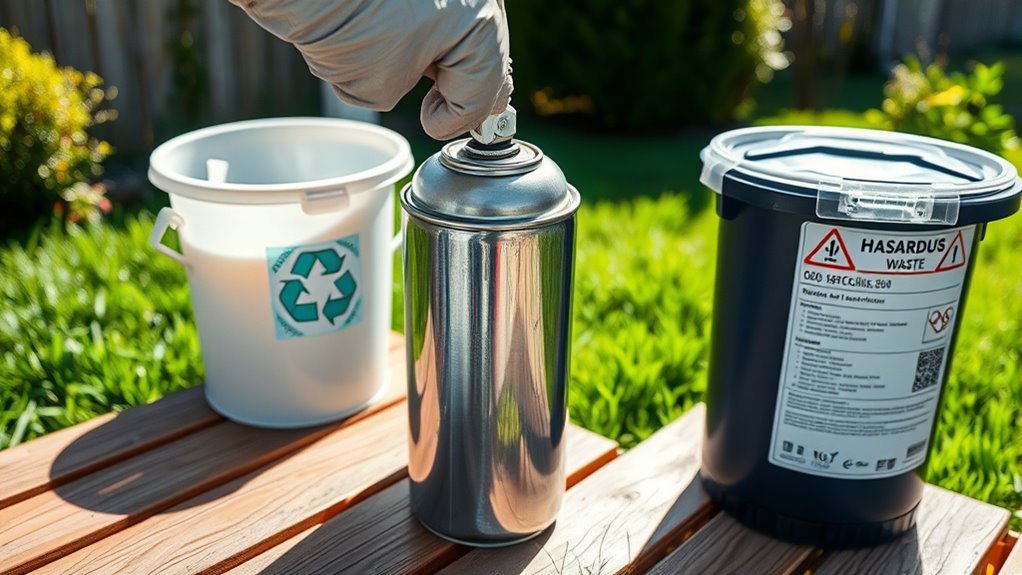
Check your local rules because empty cans are often not considered hazardous waste. However, they may still require special handling depending on where you live.
If you’re unsure, it’s a good idea to take them to a hazardous waste site or community collection event.
Following these steps keeps you safe and helps protect the environment. Keep going to discover more smart disposal tips and alternatives.
Key Takeaways
- Completely empty spray paint cans by spraying until no paint or hissing sound remains before disposal.
- Never puncture, crush, or tamper with aerosol cans to avoid leaks or explosions.
- Follow local regulations and use hazardous waste collection sites for disposal of partially full or uncertain cans.
- Avoid curbside recycling unless local guidelines specifically allow aerosol cans in the recycling stream.
- Utilize community hazardous waste programs or special collection events for safe disposal and recycling.
Proper Steps for Disposing of Spray Paint Cans
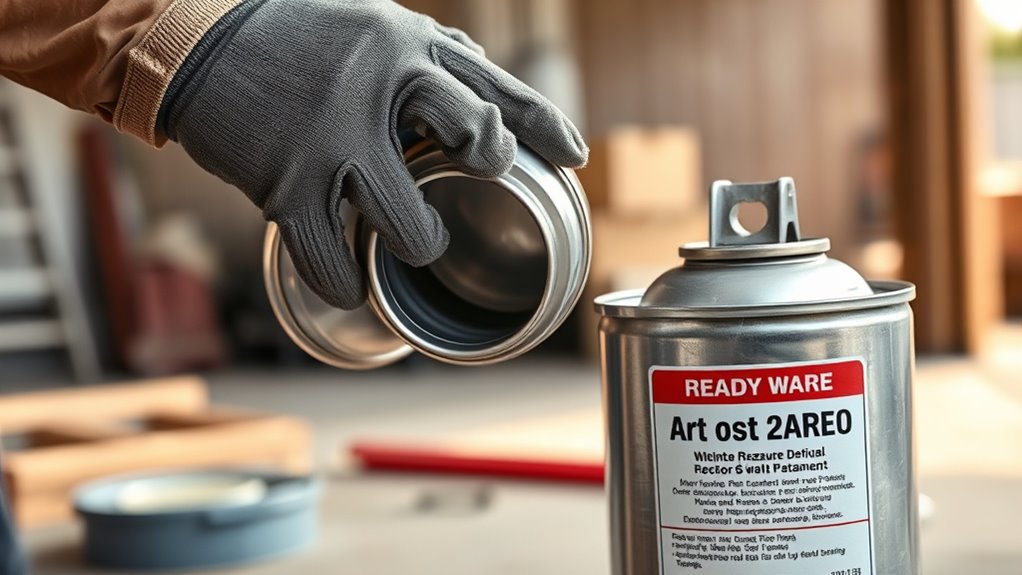
Before disposing of spray paint cans, make sure you’ve completely emptied them by spraying until no paint or hissing sounds come out. This step is vital to ensure the cans are safe for disposal.
Always fully empty spray paint cans until no paint or hissing remains before disposing of them safely.
Never puncture, crush, or tamper with aerosol cans, as this could cause dangerous leaks or explosions. If you’re unsure whether a can is entirely empty, don’t risk it—take it to a household hazardous waste collection site.
Typically, empty spray paint cans are not classified as hazardous waste, but you should still follow local disposal regulations. Always check your community’s guidelines, and if possible, opt for recycling programs that accept empty aerosol cans.
Proper disposal helps protect the environment and keeps you safe. So, it’s definitely worth taking a little extra care with these cans!
Alternatives and Recycling Options for Aerosol Cans
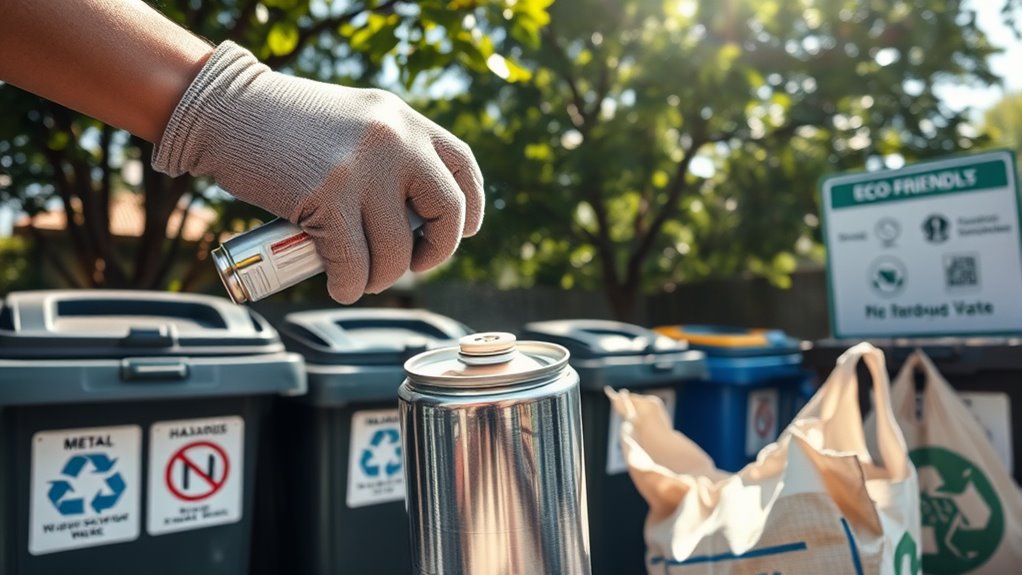
Once you’ve fully emptied your spray paint cans, you have several options beyond just tossing them in the trash. Since aerosol cans must be completely empty, avoid putting them in curbside recycling, which typically doesn’t accept them.
Instead, check for local recycling programs or household hazardous waste facilities that accept empty aerosol cans. These sites safely process or recycle the metal, preventing environmental harm.
You can also look for special collection events in your area designed for hazardous materials. If your cans still contain non-hazardous product, consider reuse by donating them to community groups or sharing with neighbors.
Always verify your local recycling options to ensure proper disposal. Take advantage of these alternatives to keep aerosol cans out of landfills.
Frequently Asked Questions
How to Get Rid of Can Spray Paint?
You should completely empty the spray paint can by spraying until it’s silent. Then, don’t puncture it.
Check local guidelines and take it to a hazardous waste site if you’re unsure. Always follow safety rules.
Can I Put Empty Spray Paint Cans in the Bin?
Yes, you can put empty spray paint cans in the bin if they’re completely empty and not pressurized. Just make sure you didn’t puncture or crush them.
Also, check your local rules to be certain. Different places might have different guidelines.
Which Is the Best Way of Getting Rid of Aerosol Cans?
You might worry about safety, but the best way to get rid of aerosol cans is to fully empty them.
Then, recycle them through scrap metal or take them to hazardous waste sites.
Just make sure to follow your local disposal rules carefully. It’s pretty important to do it right!
How Do You Depressurize an Aerosol Can?
You depressurize an aerosol can by spraying it outdoors in a well-ventilated area until no product or hissing noise remains.
Don’t puncture or pierce the can; make certain it’s completely empty before disposal.
Conclusion
Now that you know how to safely toss those spray paint cans, you’re ready to keep your space clean and eco-friendly—no need to call in a town crier!
Remember to fully empty the can, follow local disposal rules, and consider recycling options whenever possible. By doing this, you’re not just protecting yourself but also the environment.
So, next time you finish a project, handle those spray paint cans like a pro and paint the town green! Proper disposal of spray paint cans is key to safety and environmental care. Keeping your area tidy and following disposal guidelines helps reduce pollution and hazardous waste. Always check your local regulations for the best spray paint can disposal methods, and choose recycling whenever you can. This way, you’re doing your part for a cleaner, greener world while staying safe.