Blog

  • How to Clean an Airless Paint Sprayer in 7 Easy Steps

    First, turn off and unplug your sprayer, then depressurize it by triggering until no pressure remains. Disconnect hoses and carefully remove any excess paint.

    Wipe down all exterior surfaces to prevent buildup. Next, flush the system with water or a recommended cleaning fluid, pressurize, and run until residue clears.

    Clean the tip and filters thoroughly. Finally, fill with storage fluid and store in a dry, heated spot.

    Keep going to uncover detailed tips for each step.

  • How You Put Wood Stain in a Paint Sprayer

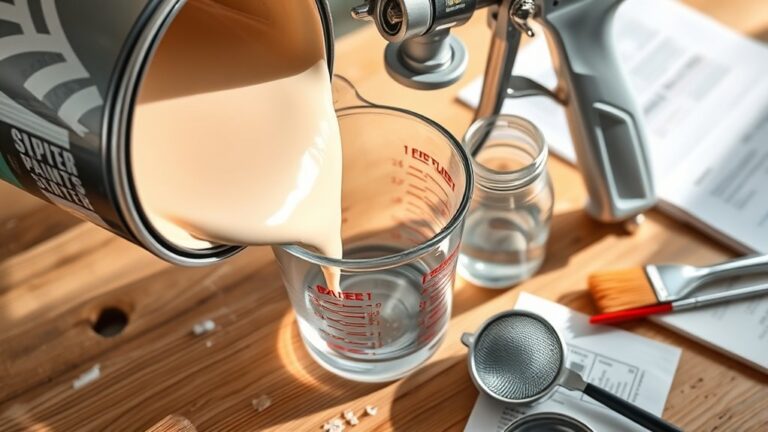
    To put wood stain in a paint sprayer, first stir it well and strain out any lumps. Then, thin the stain gradually with water, acetone, or alcohol until it flows smoothly.

    Pour it carefully into your sprayer, avoiding air bubbles. Use a small spray tip around 1 mm and adjust the air pressure for even coverage.

    Keep your distance steady and overlap passes for the best results. Stick around to explore how to fine-tune your technique for a flawless finish.

  • How to Thin Paint for a Sprayer in 5 Simple Steps

    To thin paint for a sprayer, first check its consistency by dipping a stick and watching the drip rate. Next, pick the right thinner—water for latex or mineral spirits for oil-based paints.

    Add the thinner slowly, about 10-15%, mixing thoroughly each time. Then, test the paint’s viscosity with a cup or spray sample to ensure smooth flow.

    Finally, strain the paint to remove lumps before spraying. Keep going, and you’ll find tips to accomplish the perfect finish every time.

  • How to Clean a Wagner Paint Sprayer in 10 Easy Steps

    To clean your Wagner paint sprayer, start by removing and inspecting the filter. If it’s clogged, give it a good soak to loosen up any paint residue.

    Next, detach the handle from the cup. Then, carefully unscrew and separate the connected parts.

    Now, disassemble the guard and the internal components. Use brushes and soapy water—or the right solvents—to clean each piece thoroughly.

    Don’t forget to move the suction tube around to get it spotless. Scrub the nozzle and any tight spots well, since paint can hide there easily.

    After that, flush the sprayer internally with a cleaning solution. Once that’s done, dry and inspect all parts.

    Finally, reassemble everything securely. Following these steps will keep your sprayer running smoothly and help you avoid future clogs.

    Keep at it, and you’ll pick up even more handy tips along the way!

  • How to Use an Airless Paint Sprayer in 7 Easy Steps

    Start by securely setting up your sprayer, tightening all connections. Next, prime it by submerging the suction tube in paint and pumping until the flow is steady.

    Choose the right spray tip for your paint and install it properly. Adjust the pressure for a smooth spray, then test on scrap material.

    Spray using steady, overlapping strokes about 12 inches from the surface. Finally, clean and store your sprayer carefully.

    If you want to master the details, keep on exploring.

  • How Does an Airless Paint Sprayer Work Step by Step

    To use an airless paint sprayer, first connect the paint container to the high-pressure pump. Then, secure the hose to both the pump and the spray gun.

    Next, submerge the suction tube in paint and set the priming knobs to circulate. Increase the pressure until paint flows steadily without bubbles.

    Now, switch to spray mode. Hold the gun about 10-12 inches from the surface, moving it steadily with overlapping strokes.

    You’ll get smooth, even coats quickly. Keep practicing, and you’ll master the setup and technique like a pro in no time!

  • How Does an HVLP Paint Sprayer Work?

    You operate an HVLP paint sprayer by using a high volume of air at low pressure—around 10 to 35 PSI—to atomize paint into a fine mist for smooth, even coverage. The sprayer mixes air with paint inside the reservoir, then pushes it through a nozzle, creating tiny droplets that reduce overspray and waste.

    Adjusting air volume, fluid flow, and spray pattern lets you tailor the finish perfectly. Keep exploring to discover how different air sources and settings impact your results.

  • How You Use Stain in a Paint Sprayer Safely

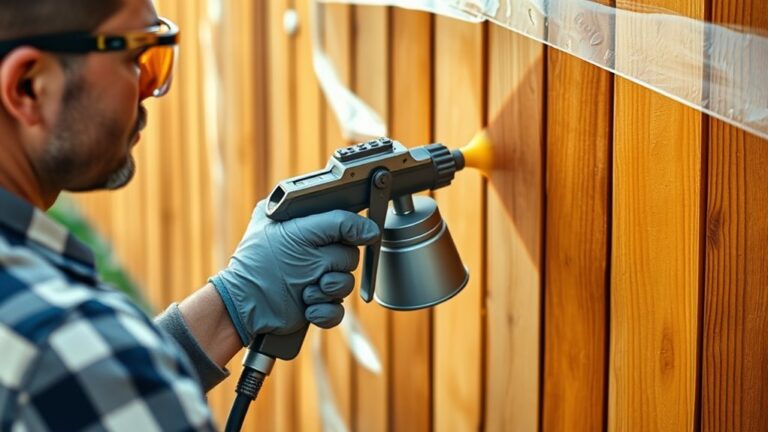
    To use stain in a paint sprayer safely, start by clearing your workspace and covering nearby surfaces to prevent overspray. Wear gloves, goggles, and a mask, and guarantee good ventilation.

    Hold the spray gun 8-12 inches from the surface, apply thin, even coats with steady movement, and back brush immediately for better coverage.

    Afterward, thoroughly clean your sprayer to avoid clogs and damage. Follow these steps, and you’ll create a smooth finish while protecting yourself and your equipment.

    Learn how to perfect the process with proper maintenance and techniques. You’ll get the best results when you keep things clean and work carefully.

  • What Is an HVLP Paint Sprayer and How to Use It

    An HVLP paint sprayer uses low pressure and high airflow to atomize paint into a fine spray, giving you precise control and less overspray for a smooth, professional finish.

    You’ll want to thin and strain your paint, adjust the air pressure and spray pattern, then test on a scrap surface to get it just right.

    With proper use and maintenance, you’ll achieve efficient, even coverage.

    Keep exploring to master tips and upkeep for best results.

  • 3 Reasons You Should Rent a Paint Sprayer Instead of Buying

    You should rent a paint sprayer instead of buying to save money, get professional-grade equipment, and avoid maintenance hassles. Renting costs less upfront and fits short-term projects without adding storage or repair expenses.

    Plus, you get access to top-quality sprayers that are always maintained and ready to use. Rental options give you flexibility and convenience, letting you focus on your project without gear worries.

    Keep exploring to discover how these benefits make your painting easier and smarter. It’s a simple way to get great results without the extra headaches.